

• HOME
  • NEWS
  • EXPLORE
    • CAREER
      • Companies
      • Jobs
    • EVENTS
    • iGEM
      • News
      • Team
    • PHOTOS
    • VIDEO
    • WIKI
  • BLOG
  • COMMUNITY
    • FACEBOOK
    • INSTAGRAM
    • TWITTER
Thursday, May 28, 2026
BIOENGINEER.ORG
No Result
View All Result
  • Login
  • HOME
  • NEWS
  • EXPLORE
    • CAREER
      • Companies
      • Jobs
        • Lecturer
        • PhD Studentship
        • Postdoc
        • Research Assistant
    • EVENTS
    • iGEM
      • News
      • Team
    • PHOTOS
    • VIDEO
    • WIKI
  • BLOG
  • COMMUNITY
    • FACEBOOK
    • INSTAGRAM
    • TWITTER
  • HOME
  • NEWS
  • EXPLORE
    • CAREER
      • Companies
      • Jobs
        • Lecturer
        • PhD Studentship
        • Postdoc
        • Research Assistant
    • EVENTS
    • iGEM
      • News
      • Team
    • PHOTOS
    • VIDEO
    • WIKI
  • BLOG
  • COMMUNITY
    • FACEBOOK
    • INSTAGRAM
    • TWITTER
No Result
View All Result
Bioengineer.org
No Result
View All Result
Home NEWS Science News Biology

Red Sea gene pool follows water flow

Bioengineer by Bioengineer
October 3, 2017
in Biology
Reading Time: 2 mins read
0
Share on FacebookShare on TwitterShare on LinkedinShare on RedditShare on Telegram
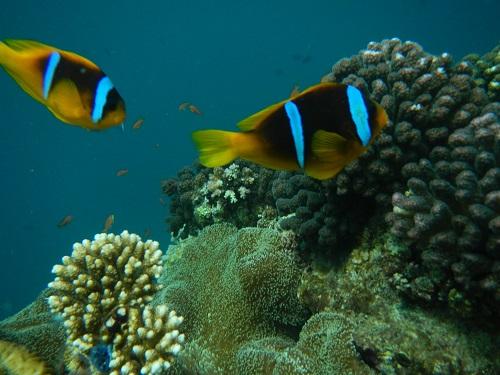
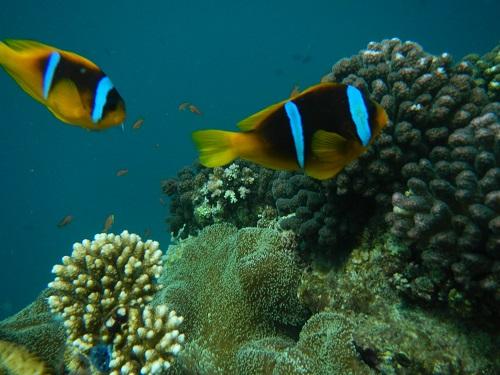
IMAGE

Credit: © 2017 Ibrahim Hoteit

A collaboration between KAUST and several UK institutes has revealed that surface currents are important pathways for gene flow in the Red Sea, a finding which will help guide marine management programs.

The team, led by KAUST professor Ibrahim Hoteit, combined satellite imagery and simulations to explore the role of currents in the Red Sea biosphere. Coral communities are relatively homogenous throughout most of the Red Sea, although a genetic break separates the southern communities.

The team used satellite measurements of the color and height of Red Sea surface waters to infer current flows. By estimating chlorophyll concentrations from the color data, they also determined which currents were able to carry biological material. Their analysis identified significant variability in Red Sea eddies which could facilitate transport and dispersal throughout the whole basin.

Building on their findings, the team simulated how these currents would disperse particles through the Red Sea. By calculating connectivity values between different sites, they showed that the central Red Sea is quite well connected to the rest of the basin, while the southern region is the least connected.

Next, the researchers compared the results of the circulation flow with genetic data from Red Sea clownfish. The genetic distance between clownfish populations correlated well with connectivity, suggesting that water circulation patterns played a significant role in determining the population's distribution. "It was exciting to establish that Red Sea connectivity can be characterized by flows based on satellite data, matching extremely well the patterns of clownfish gene data that were collected at the eastern coast," says Hoteit.

By improving our understanding of how circulation affects dispersal in the Red Sea ecosystem, these findings will help guide the conservation efforts and the designation of marine protected areas. "As satellite datasets are freely available globally, our analysis demonstrates a cost-effective tool to estimate biophysical connectivity remotely, which may support coastal management in data-limited regions," says lead author Dionysios Raitsos, now of Plymouth Marine Laboratory.

The researchers plan to continue investigating Red Sea circulation, combining long-term high-resolution models and observations to understand connectivity near the shore and in deeper regions, as well as between the Red Sea and the Indian Ocean. "Our goal is to unravel the main pathways of connectivity in the Red Sea and determine the most important source reefs, which we like to call 'mother reefs', and reveal regions that are most connected within or even outside the Red Sea," says Hoteit.

###

Media Contact

Carolyn Unck
[email protected]

http://kaust.edu.sa/

Original Source

https://discovery.kaust.edu.sa/en/article/427/red-sea-gene-pool-follows-water-flow http://dx.doi.org/10.1038/s41598-017-08729-w


Share12Tweet8Share2ShareShareShare2

Related Posts

Decoding the Chemical Blueprint Behind Next-Generation Water Filters — Biology

Decoding the Chemical Blueprint Behind Next-Generation Water Filters

May 28, 2026
Live Rattlesnake Cam in Pennsylvania Offers 24/7 Access to Timber Rattlesnake Observation—Third Installment Now Streaming — Biology

Live Rattlesnake Cam in Pennsylvania Offers 24/7 Access to Timber Rattlesnake Observation—Third Installment Now Streaming

May 27, 2026

“DNA ‘Nicks’ Enable Safer, More Precise Genetic Analysis”

May 27, 2026

Study Finds Archaic DNA Could Reduce Immunity to Common DNA Viruses in Modern Humans

May 27, 2026
Please login to join discussion

POPULAR NEWS

  • ESMO 2025: mRNA COVID Vaccines Enhance Efficacy of Cancer Immunotherapy

    318 shares
    Share 127 Tweet 80
  • New Study Reveals Plants Can Detect the Sound of Rain

    735 shares
    Share 293 Tweet 183
  • Common Food Preservatives Associated with Elevated Blood Pressure and Increased Heart Disease Risk

    56 shares
    Share 22 Tweet 14
  • AI-Powered Atlas Uncovers Extensive Whole-Body Damage Linked to Obesity

    53 shares
    Share 21 Tweet 13

About

We bring you the latest biotechnology news from best research centers and universities around the world. Check our website.

Follow us

Recent News

Upcycling PET Plastic into High-Value Chemicals Without External Hydrogen

AI and Multi-Enzyme Systems Propel Breakthroughs in Biocatalytic Plastic Depolymerization

Innovative Chemical Routes Unlock Closed-Loop Recycling for Polyurethane Consumer Goods

Subscribe to Blog via Email

Enter your email address to subscribe to this blog and receive notifications of new posts by email.

Join 82 other subscribers
  • Contact Us

Bioengineer.org © Copyright 2023 All Rights Reserved.

Welcome Back!

Login to your account below

Forgotten Password?

Retrieve your password

Please enter your username or email address to reset your password.

Log In
No Result
View All Result
  • Homepages
    • Home Page 1
    • Home Page 2
  • News
  • National
  • Business
  • Health
  • Lifestyle
  • Science

Bioengineer.org © Copyright 2023 All Rights Reserved.