• HOME
  • NEWS
  • EXPLORE
    • CAREER
      • Companies
      • Jobs
    • EVENTS
    • iGEM
      • News
      • Team
    • PHOTOS
    • VIDEO
    • WIKI
  • BLOG
  • COMMUNITY
    • FACEBOOK
    • INSTAGRAM
    • TWITTER
Monday, August 31, 2026
BIOENGINEER.ORG
No Result
View All Result
  • Login
  • HOME
  • NEWS
  • EXPLORE
    • CAREER
      • Companies
      • Jobs
        • Lecturer
        • PhD Studentship
        • Postdoc
        • Research Assistant
    • EVENTS
    • iGEM
      • News
      • Team
    • PHOTOS
    • VIDEO
    • WIKI
  • BLOG
  • COMMUNITY
    • FACEBOOK
    • INSTAGRAM
    • TWITTER
  • HOME
  • NEWS
  • EXPLORE
    • CAREER
      • Companies
      • Jobs
        • Lecturer
        • PhD Studentship
        • Postdoc
        • Research Assistant
    • EVENTS
    • iGEM
      • News
      • Team
    • PHOTOS
    • VIDEO
    • WIKI
  • BLOG
  • COMMUNITY
    • FACEBOOK
    • INSTAGRAM
    • TWITTER
No Result
View All Result
Bioengineer.org
No Result
View All Result
Home NEWS Science News Biology

Evolutionary crop research: Ego-plants give lower yield

Bioengineer by Bioengineer
October 2, 2017
in Biology
Reading Time: 2 mins read
0
Share on FacebookShare on TwitterShare on LinkedinShare on RedditShare on Telegram
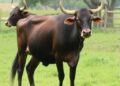
IMAGE

Credit: Copenhagen University

Survival of the fittest is a fundamental concept in Darwin's theory of natural selection which drives evolution.

However, when it comes to agriculture and plantbreeding, the traits which make a single plant individual a good competitor and increases its fitness as an individual is not necessarily the same characteristics that increase the total yield of a group of plants on the field.

These are the findings in a new study from Copenhagen University just published in the journal Ecology. Jacob Weiner, Professor in plant ecology, is responsible for new research within the area Evolutionary Agroecology or as it is also known, Darwinian Agriculture.

Together with a research team in China, Jacob Weiner planted 35 different wheat varieties on field plots in both monocultures (groups consisting of a single wheat variety) and polycultures (groups consisting of mixtures of all the varieties).

He explains how the results showed that competitive wheat varieties only gave mediocre yields when they were grown in groups of the same variety, as is the norm in agriculture.

On the contrary, less competitive varieties gave larger yields under the same conditions. If implemented within plant breeding these results may be used to increase agricultural production yields. Group dynamics beats individual performance Jacob Weiner explains that the results points towards the implementation of a new perspective within plant breeding.

In this perspective the concepts of group selection should be applied during the development of new plant breeds, instead of selecting based on individual fitness as it is often done within plant breeding and research.

"The crops can be compared to a sports team. If every player is rewarded for scoring the goals, the team will not score as many goals as it would, had the players cooperated. In the same way, we can't increase crop yields by selecting the most successful plant individuals for breeding," Jacob Weiner says.

One of the scientific hypotheses behind the research explains this. It is based on the fact that "selfish" individual plants – the best competitors – use a lot of resources to compete with each other and thereby have fewer resources left for producing higher yields compared to less competitive plants.

A plant breeding revolution

According to Jacob Weiner the results should lead to a shift of the general mindset within present day plant breeding.

The new principles should encourage selecting new plant breeds based on the characteristics of group selection, a phenomenon which is only rarely observed in nature.

Much plant breeding and especially genetic engineering is aimed at creating "better" plants, e.g. plants with more effective photosynthesis or that grow faster. According to evolutionary thinking, these efforts are not likely to succeed, because natural selection has been optimizing these attributes for millions of years.

"We can only better than natural selection if we try to do something natural selection will not do, such as breed unselfish plants" says Weiner.

###

Media Contact

Jacob Weiner
[email protected]
0045-35-33-28-22
@uni_copenhagen

http://www.ku.dk

Related Journal Article

http://dx.doi.org/10.1002/ecy.1934
Share14Tweet8Share2ShareShareShare2

Related Posts

Gastrointestinal Parasitism in Cattle and Water Buffaloes in Pakistan: Prevalence and Associated Risk Factors

Gastrointestinal Parasitism in Cattle and Water Buffaloes in Pakistan: Prevalence and Associated Risk Factors

August 31, 2026
Development of HPLC–PDA method for steviol glycosides analysis in food matrices

Development of HPLC–PDA method for steviol glycosides analysis in food matrices

August 31, 2026

Gut microbial alterations and functional shifts in patients with hypertriglyceridemia: insights from a northwestern Chinese metagenomic study

August 31, 2026

Ant colonies show varied disease susceptibility and grooming across social levels

August 31, 2026
Please login to join discussion

POPULAR NEWS

  • Development of a machine-learning risk stratification tool for vasoactive medication need after two-bolus fluid resuscitation in pediatric suspected sepsis

    29 shares
    Share 12 Tweet 7
  • Method for quantification of microplastic release from plastic-based materials during weathering

    29 shares
    Share 12 Tweet 7
  • Machine Learning Model Development and Evaluation for Non-contact Lower Limb Injury Risk Prediction in Elite Male Rugby Union: A Multi-team, Multi-season Analysis

    29 shares
    Share 12 Tweet 7
  • Gastrointestinal Parasitism in Cattle and Water Buffaloes in Pakistan: Prevalence and Associated Risk Factors

    29 shares
    Share 12 Tweet 7

About

BIOENGINEER.ORG

We bring you the latest biotechnology news from best research centers and universities around the world. Check our website.

Follow us

Recent News

Development of a machine-learning risk stratification tool for vasoactive medication need after two-bolus fluid resuscitation in pediatric suspected sepsis

Method for quantification of microplastic release from plastic-based materials during weathering

Machine Learning Model Development and Evaluation for Non-contact Lower Limb Injury Risk Prediction in Elite Male Rugby Union: A Multi-team, Multi-season Analysis

Subscribe to Blog via Email

Enter your email address to subscribe to this blog and receive notifications of new posts by email.

Join 85 other subscribers
  • Contact Us

Bioengineer.org © Copyright 2023 All Rights Reserved.

Welcome Back!

Login to your account below

Forgotten Password?

Retrieve your password

Please enter your username or email address to reset your password.

Log In
No Result
View All Result
  • Homepages
    • Home Page 1
    • Home Page 2
  • News
  • National
  • Business
  • Health
  • Lifestyle
  • Science

Bioengineer.org © Copyright 2023 All Rights Reserved.