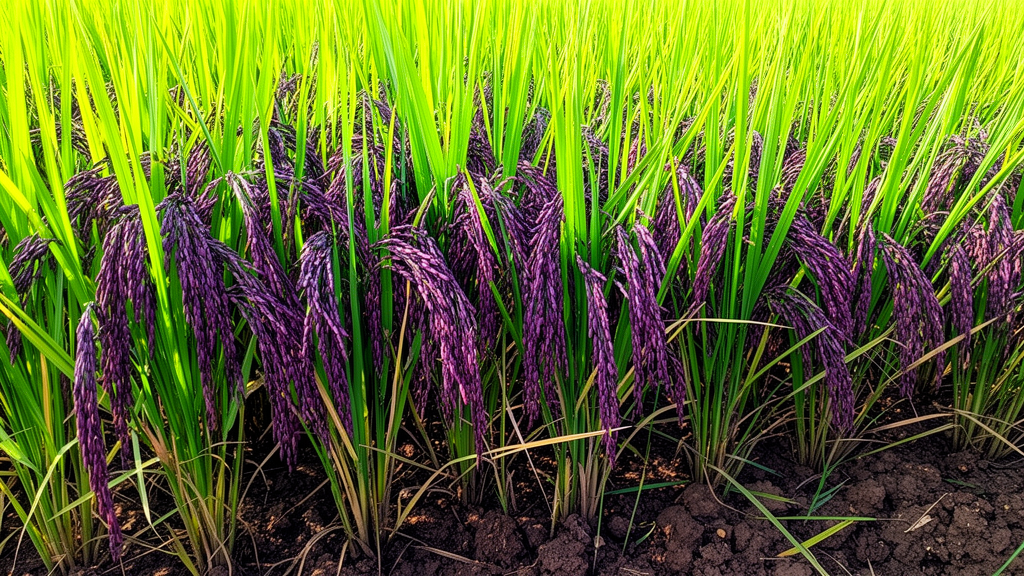
Researchers have successfully developed a high-yielding, semi-dwarf variety of ‘Chakhao,’ a black scented rice endemic to Manipur, India, by integrating advanced breeding methodologies such as Weighted Average of Average Seed-by-Generation (WAASB) and Multi-Gene Identification (MGIDI). This study, published in the Indian Journal of Genetics and Plant Breeding, addresses the traditional limitations of Chakhao, a variety prized for its mild, nutty flavor and distinctive aroma, which also exhibits a deep purple coloration upon cooking due to its high anthocyanin content. Traditionally, Chakhao varieties have been recognized for their unique sensory attributes but suffer from relatively low yields, typically ranging between 2000 and 2500 kilograms per hectare. The current research marks the first comprehensive attempt in India to breed a High Yield Variety (HYV) of scented Chakhao by systematically evaluating stability, performance across yield and yield-related traits, and geographical indication-related characteristics using these sophisticated analytical frameworks.
The resulting variety, designated RC Manichakhao 1, has demonstrated significant agronomic improvements over existing local cultivars. This semi-dwarf, HYV rice variety achieved a substantial yield increase of 56% when compared to Chakhao Poireiton and a 36% increase relative to Chakhao Amubi. Crucially, the development process ensured that the desirable quality traits of the original black scented rice were maintained alongside the yield gains. Specifically, the variety RC Manichakhao 1 exhibits an improved amylose content of 11% and an Amylose Segregation Value (ASV) of 5. Furthermore, the variety successfully preserves the characteristic aroma and the high anthocyanin content, which was measured at 326.48 milligrams per 100 grams, thereby aligning with the benefits associated with its Geographical Indication (GI) tag and meeting increasing market demands.
The potential impact of this development is substantial, as RC Manichakhao 1 offers a projected yield potential of 4500–5000 kilograms per hectare, effectively doubling the grain yield of traditional varieties. The application of WAASB and MGIDI methods was pivotal in this success, as these techniques allowed for a comprehensive evaluation of the genetic stability and performance of the developed lines across multiple generations, ensuring that the enhanced yield did not compromise the quality traits that define Chakhao.
The successful development of RC Manichakhao 1 represents a significant advancement in agricultural biotechnology within the region. The combination of semi-dwarf architecture, high yield potential, and the retention of critical quality markers like aroma and anthocyanin content positions this new variety as a vital resource for sustainable intensification of rice farming in Northeast India. This research underscores the effectiveness of integrating complex genomic and phenotypic evaluation tools, such as WAASB and MGIDI, into regional crop improvement programs to meet evolving market needs and enhance food security while preserving unique cultural and agricultural heritage.
Subject of Research: Development of a high-yielding variety of black scented rice (Chakhao) using WAASB and MGIDI breeding methods in Northeast India.
Article Title: Revolutionizing Northeast India’s Black Scented Rice, Chakhao (Oryza sativa L.) with MGIDI and WAASB Methods
Article References: Sarika, K., Singh, S. G., Devi, E. L., Devi, A. G., Verma, H., Umakanta, N., Singh, A. R., Kumar, A., Devi, C. P., & Singh, S. B. (2026). Revolutionizing Northeast India’s Black Scented Rice, Chakhao (Oryza sativa L.) with MGIDI and WAASB Methods. Indian Journal of Genetics and Plant Breeding. https://doi.org/10.1007/s44489-026-00057-6
Image Credits: AI Generated
DOI: 10.1007/s44489-026-00057-6
Keywords: Black Scented Rice, Chakhao, Rice Breeding, High Yield Variety, WAASB, MGIDI, Northeast India, Anthocyanins, Oryza sativa, Agricultural Biotechnology, Revolutionizing, Northeast
News Source: Alan Morgan. (October 27, 2026). New High-Yield Black Scented Rice Variety Developed Using Advanced Breeding Methods in Northeast India. Scienmag.