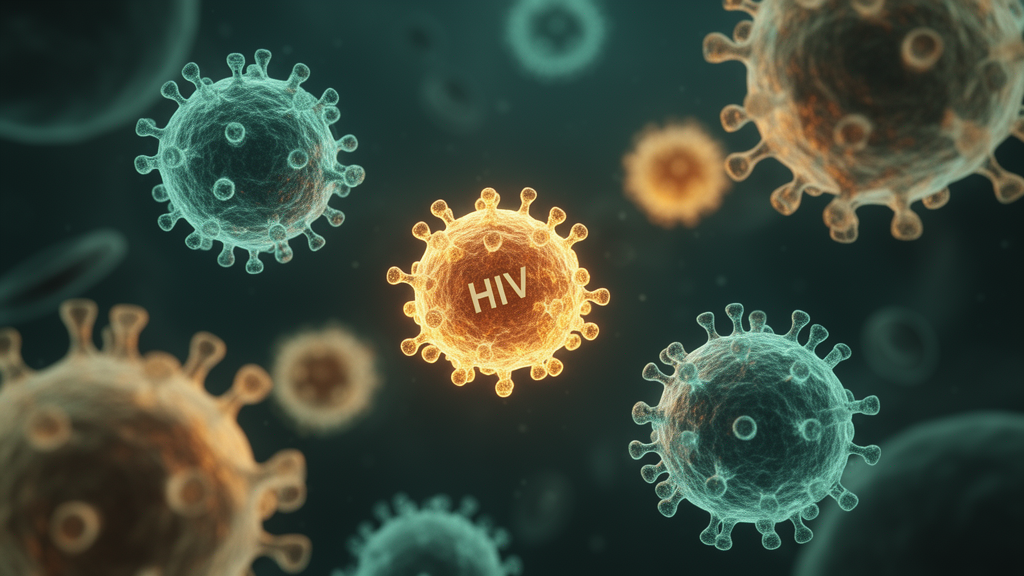
Researchers have engineered human natural killer cells with a chimeric antigen receptor that targets HIV, and the approach significantly delayed viral rebound after antiretroviral therapy was interrupted in humanized mice. The study, published in Nature Communications, also found that the engineered cells changed which dormant viruses re-emerged, reducing the number and diversity of rebounding viral lineages.
The team, led by Yuan Shi and Jocelyn T. Kim with colleagues at several institutions, created allogeneic human primary NK cells expressing a truncated CD4-based chimeric antigen receptor called D1D2 CAR. In laboratory tests, the D1D2 CAR NK cells selectively killed HIV-infected primary CD4 T cells.
To test the cells in living organisms, the researchers used humanized mice infected with barcoded CCR5-tropic HIV, meaning each viral lineage carried a unique genetic tag that could be tracked. After antiretroviral therapy was interrupted, mice treated with the CAR-NK cells showed significantly delayed viral rebound. Barcoded HIV tracking revealed that fewer distinct viral lineages rebounded, and that there was less sharing of rebound-associated proviral barcodes and integration sites between organs, suggesting fewer infected cells seeded the rebound from multiple tissues.
Integration site and chromatin analyses offered a possible explanation for the altered rebound pattern. Integration site and chromatin analyses suggested that rebound-associated proviruses remaining after D1D2 CAR-NK treatment were less frequently located in genic and transcriptionally active chromatin contexts.
The authors conclude that CAR-NK cells may target reactivating HIV-infected cells during the early phase of antiretroviral therapy interruption, thereby shaping the composition of the latent reservoir that contributes to rebound. The work was conducted in humanized mice and in vitro systems, so the findings represent preclinical evidence rather than results from human trials. Durable HIV remission remains a central goal of cure research, since the latent reservoir persists in patients despite continuous antiretroviral therapy. The study was published as an accepted manuscript under a shared early-release arrangement, and the version is subject to further editorial processing before the final version of record appears.
Subject of Research: CAR-engineered natural killer cells targeting HIV and their effect on viral rebound and reservoir composition in humanized mice
Article Title: NK cells engineered with a chimeric antigen receptor delay HIV rebound and reshape HIV reservoir composition
Article References: Shi, Y., Abbaali, I., Harvey, W., Kostelny, M., Chen, H., Gonzalez, A., Dimapasoc, M., Li, S., Montel-Hagen, A., Seet, C. S., Blish, C. A., Zack, J. A., & Kim, J. T. (2026). NK cells engineered with a chimeric antigen receptor delay HIV rebound and reshape HIV reservoir composition. Nature Communications. https://doi.org/10.1038/s41467-026-79036-0
Image Credits: AI Generated
DOI: 10.1038/s41467-026-79036-0
Keywords: HIV, CAR-NK cells, chimeric antigen receptor, viral rebound, latent reservoir, humanized mice, antiretroviral therapy, barcoded HIV, integration sites, chromatin, HIV cure research, cells
News Source: Ophelia Keating. (October 27, 2026). Engineered CAR-NK cells delay HIV rebound after treatment interruption in mice. Scienmag.