• HOME
  • NEWS
  • EXPLORE
    • CAREER
      • Companies
      • Jobs
    • EVENTS
    • iGEM
      • News
      • Team
    • PHOTOS
    • VIDEO
    • WIKI
  • BLOG
  • COMMUNITY
    • FACEBOOK
    • INSTAGRAM
    • TWITTER
Tuesday, October 27, 2026
BIOENGINEER.ORG
No Result
View All Result
  • Login
  • HOME
  • NEWS
  • EXPLORE
    • CAREER
      • Companies
      • Jobs
        • Lecturer
        • PhD Studentship
        • Postdoc
        • Research Assistant
    • EVENTS
    • iGEM
      • News
      • Team
    • PHOTOS
    • VIDEO
    • WIKI
  • BLOG
  • COMMUNITY
    • FACEBOOK
    • INSTAGRAM
    • TWITTER
No Result
View All Result
Bioengineer.org
No Result
View All Result
Home NEWS Science News Agriculture

Research report: Historical breeding reveals graph-based structure dynamics and intracellular DNA transfer in rice mitogenome

by
October 27, 2026
in Agriculture
Reading Time: 2 mins read
0
Research report: Historical breeding reveals graph-based structure dynamics and intracellular DNA transfer in rice mitogenome

Research report: Historical breeding reveals graph-based structure dynamics and intracellular DNA transfer in rice mitogenome

Share on FacebookShare on TwitterShare on LinkedinShare on RedditShare on Telegram

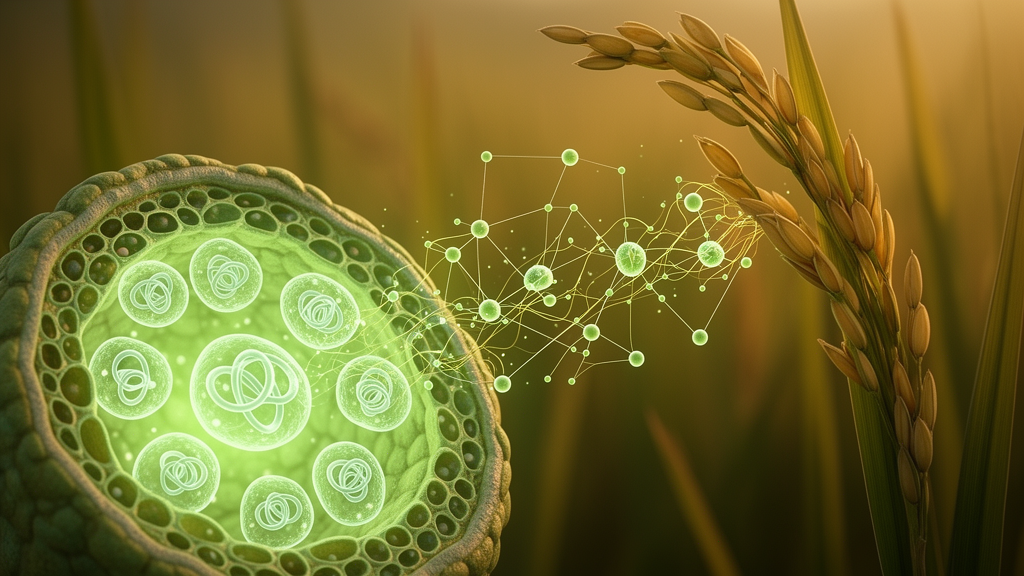
Plant mitochondrial genomes have long puzzled biologists because they mutate very slowly at the sequence level while rearranging dramatically in structure. A new study of ten rice cultivars, sampled across more than a century of modern japonica rice breeding from 1882 to 2011, has now traced how that paradox plays out within a documented breeding history. Using long-read sequencing and graph-based assembly, the researchers reconstructed the mitogenomes of cultivars spanning 129 years of artificial selection and compared their structural organization segment by segment.

The analysis showed that within one documented rice lineage in the sample set, the core master graph structure of the mitochondrial genome was conserved across the breeding period. In other words, despite the well-known capacity of plant mitogenomes to shuffle, the overall arrangement of the mitochondrial genome persisted along this branch of the breeding pedigree. The other two sampled breeding branches, however, displayed alternative graph connections, a pattern consistent with rearrangements mediated by repeats, the repetitive sequences that can pair up and recombine to swap genomic segments.

Graph-based assembly proved central to resolving these structures. One cultivar delivered an unexpected finding. Shennong265 is classified as japonica rice on the basis of its nuclear background, yet its mitochondrial genome clearly points to an indica maternal origin.

The study also examined intracellular DNA transfer, the movement of organellar DNA into the nuclear genome. Sequences of chloroplast origin inserted into the nuclear genome, known as NUPTs, and sequences of mitochondrial origin, known as NUMTs, were mapped across the ten nuclear genomes analyzed. The ultra-long organellar insertions, defined as those exceeding 10 kilobases, showed a clustered distribution rather than a random spread across chromosomes.

That clustering had a striking pattern: NUPTs were concentrated on chromosome 4, while NUMTs were enriched on chromosome 12. The most dramatic single example came from the cultivar Akitakomachi, where a 63-kilobase NUMT was supported by ultra-long reads. Detailed inspection showed that this insertion comprised six distinct mitochondrial segments, indicating that multiple independent insertion events contributed to building this very large NUMT rather than a single transfer of one contiguous mitochondrial block.

Such a structure demonstrates how nuclear reservoirs of organellar DNA can accumulate incrementally over time. By combining structural variation analysis with the study of intracellular DNA transfer within a historical breeding framework, the work offers a new perspective on how plant mitogenomes behave under artificial selection. Beyond mitochondrial biology, the authors argue that the approach establishes a foundation for reading crop breeding history from a cytoplasmic perspective.

Subject of Research: Structural dynamics and intracellular DNA transfer in rice mitochondrial genomes across historical breeding

Article Title: Historical breeding reveals graph-based structure dynamics and intracellular DNA transfer in rice mitogenome

Article References: Ma, Y., Zhangshuo, Huang, S., Zhao, Y., Liu, L., Xu, Q., Wu, Z., Nie, L., & Kong, J. (2026). Historical breeding reveals graph-based structure dynamics and intracellular DNA transfer in rice mitogenome. BMC Plant Biology. https://doi.org/10.1186/s12870-026-10144-1

Image Credits: AI Generated

DOI: 10.1186/s12870-026-10144-1

Keywords: rice, mitochondrial genome, japonica rice, long-read sequencing, graph-based assembly, NUMTs, NUPTs, DNA transfer, breeding history, structural variation, BMC Plant Biology, Historical

News Source: Alan Morgan. (October 27, 2026). Research report: Historical breeding reveals graph-based structure dynamics and intracellular DNA transfer in rice mitogenome. Scienmag.


Tags: BMC Plant Biologybreeding historyDNA transfergraph-based assemblyhistoricaljaponica ricelong-read sequencingMitochondrial genomeNUMTsNUPTsricestructural variation
Share12Tweet7Share2ShareShareShare1

Related Posts

Leaf-Canopy Decoupling: Why Healthy Leaves Can Still Mean Hungry Crops Under Nitrogen Stress

Leaf-Canopy Decoupling: Why Healthy Leaves Can Still Mean Hungry Crops Under Nitrogen Stress

October 27, 2026
Rice Gene LC2 Keeps Leaves Flat by Suppressing Rolling-Cell Growth Program

Rice Gene LC2 Keeps Leaves Flat by Suppressing Rolling-Cell Growth Program

October 27, 2026

Fractal Terrain Analysis Reveals How Micro-Topography Shapes Carbon Storage on Coal Mine Dumps

October 27, 2026

Genomic Prediction Shows Promise for Breeding Tetraploid Pot Carnation

October 27, 2026

POPULAR NEWS

  • Beyond Earth: Why Deep-Space Medicine Must Be Rebuilt From First Principles

    Beyond Earth: Why Deep-Space Medicine Must Be Rebuilt From First Principles

    29 shares
    Share 12 Tweet 7
  • Dual-Stream AI Network Predicts Battery Heat and Health to Warn of Thermal Risks Early

    29 shares
    Share 12 Tweet 7
  • Baby Boys Face Higher Odds of Acidemia and Neurological Complications at Birth, Swedish Cohort Finds

    29 shares
    Share 12 Tweet 7
  • STAM protein suppresses kidney cancer through a dual EGFR and AKT mechanism

    29 shares
    Share 12 Tweet 7

About

We bring you the latest biotechnology news from best research centers and universities around the world. Check our website.

Follow us

Recent News

Beyond Earth: Why Deep-Space Medicine Must Be Rebuilt From First Principles

Dual-Stream AI Network Predicts Battery Heat and Health to Warn of Thermal Risks Early

Baby Boys Face Higher Odds of Acidemia and Neurological Complications at Birth, Swedish Cohort Finds

Subscribe to Blog via Email

Enter your email address to subscribe to this blog and receive notifications of new posts by email.

Join 85 other subscribers
  • Contact Us

Bioengineer.org © Copyright 2023 All Rights Reserved.

Welcome Back!

Login to your account below

Forgotten Password?

Retrieve your password

Please enter your username or email address to reset your password.

Log In
No Result
View All Result
  • Homepages
    • Home Page 1
    • Home Page 2
  • News
  • National
  • Business
  • Health
  • Lifestyle
  • Science

Bioengineer.org © Copyright 2023 All Rights Reserved.