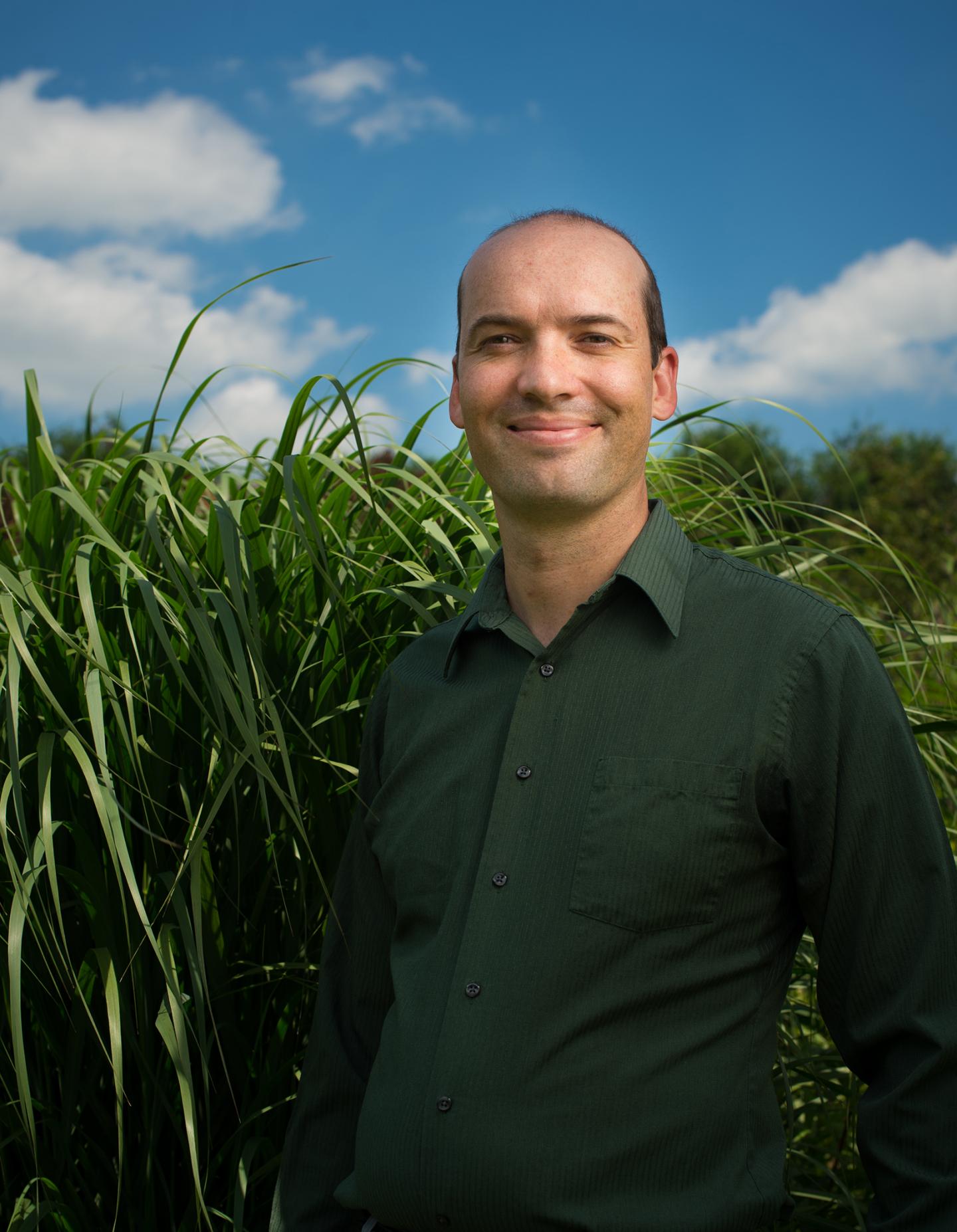
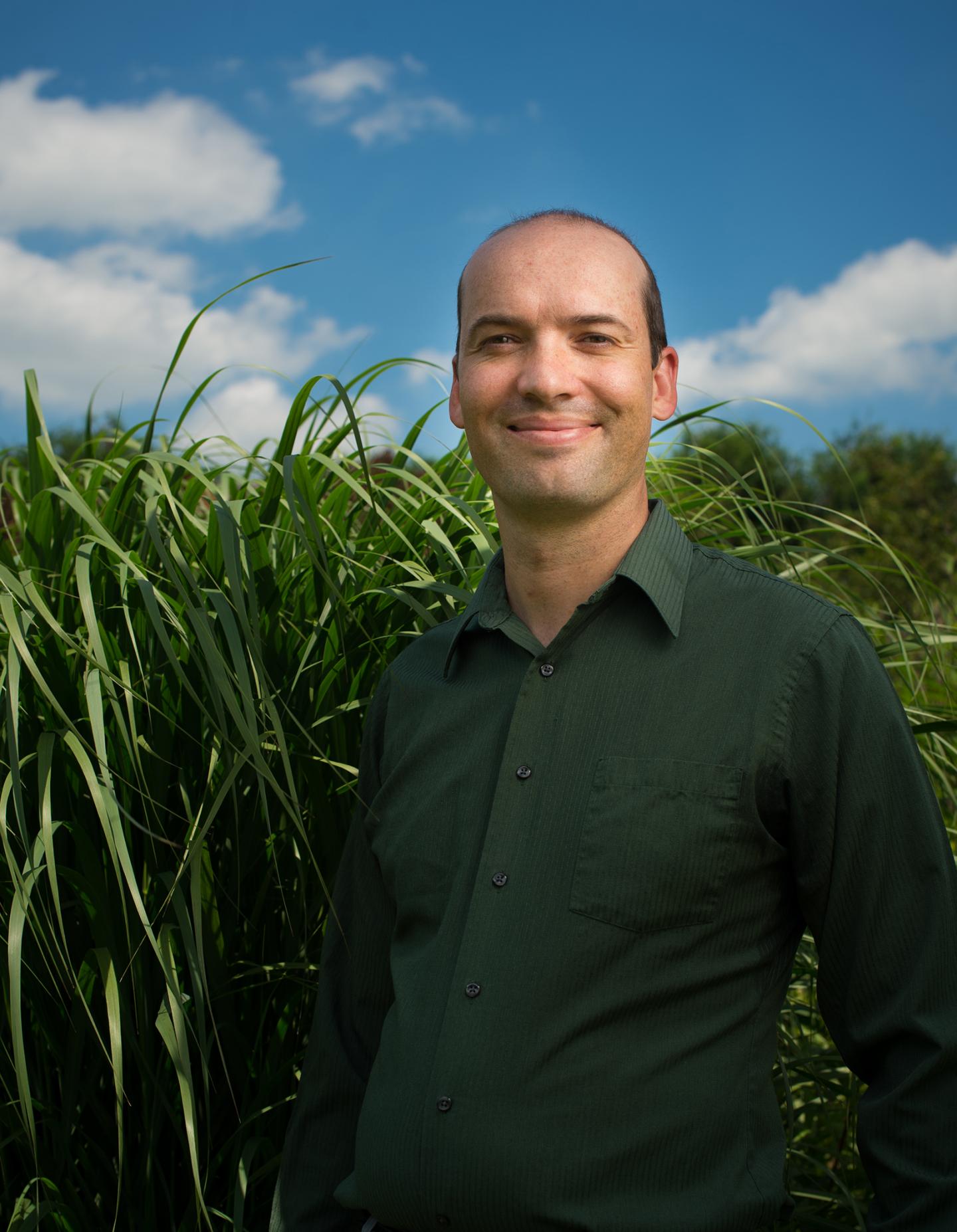
Credit: Photo by G.L. Kohuth
EAST LANSING, Mich. – Just as sequencing the human genome has netted major health and medical benefits, switchgrass genomics will pay dividends through the development of advanced liquid biofuels.
Researchers at Michigan State University will use a $1.1 million U.S. Department of Energy grant to fight disease in switchgrass by identifying regions of the genome that cause disease resistance. Locating these disease-fighting regions will help improve switchgrass' viability. Those thriving switchgrass plants could play a crucial role in the emerging bio-based economy by providing a consistent source of biofuels and diverse bioproducts.
"I am very interested in using evolutionary principles to improve biofuel crops," said David Lowry, MSU plant biologist and grant coordinator. "We'll identify the diseases that attack switchgrass across the United States and then uncover the genetic causes of resistance to those diseases. The end result will be regionally adapted switchgrass that can thrive in different regions of the U.S."
Switchgrass can be found across much of the eastern U.S. However, switchgrass plants have different traits in the north and the south. Southern switchgrass, for example, do well in heat and can fight off fungal diseases that thrive in warm, wet climates. Northern grasses survive freezing winter temperatures, but they wither when exposed to heat, drought or disease – elements that barely bother their southern cousins.
"With larger plantings of switchgrass in the future, diseases will become much more intense. Unless controlled, these diseases will drive major crop and economic losses. We are already seeing biofuel losses due to disease of over 50 percent in some test plots," Lowry said.
Breeding programs, ones that take advantage of natural genetic variation in disease resistance, have great potential to improve resistance.
"We are particularly interested in improving disease resistance of midwestern switchgrass by understanding why they are more susceptible to disease than plants from the southern U.S.," Lowry said.
Lowry and his team will utilize new genetic mapping populations to identify genomic regions responsible for divergence in disease resistance between northern upland and southern lowland switchgrasses. The scientists also will conduct a genome wide association study to identify genes involved in disease resistance. Together these approaches will uncover the causes of disease resistance in switchgrass and provide valuable insights that can be used by breeders to produce more resilient crops.
The seeds of this research have already been planted. Lowry has already established 10 growing sites across the central U.S., spanning 17 degrees of latitude from Texas to Michigan. The research will be conducted in collaboration with Gary Bergstrom at Cornell University.
###
Michigan State University has been working to advance the common good in uncommon ways for more than 150 years. One of the top research universities in the world, MSU focuses its vast resources on creating solutions to some of the world's most pressing challenges, while providing life-changing opportunities to a diverse and inclusive academic community through more than 200 programs of study in 17 degree-granting colleges.
For MSU news on the Web, go to MSUToday. Follow MSU News on Twitter at twitter.com/MSUnews.
Media Contact
Layne Cameron
[email protected]
517-353-8819
@MSUnews
http://msutoday.msu.edu/journalists/
Original Source
http://go.msu.edu/8jz