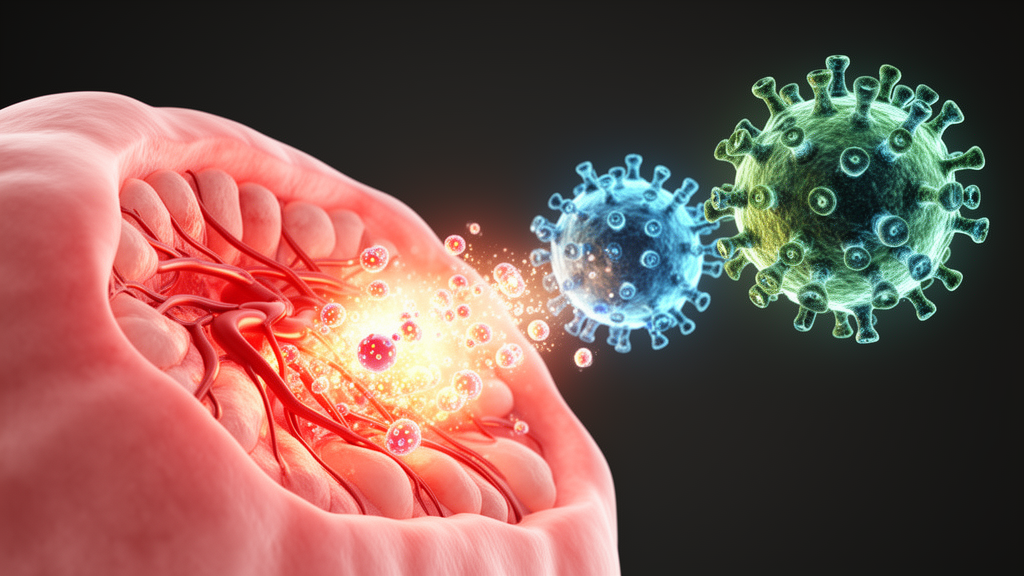
SARS-CoV-2 is best known as a respiratory pathogen, but the oral cavity has increasingly drawn attention as a site where viral activity, receptor expression, microbial communities, and inflammation intersect. A new study published open access in BMC Infectious Diseases on 26 October 2026 reports that periodontal disease, a chronic dysbiotic inflammatory condition of the tissues supporting the teeth, is associated with heightened activity of a non-canonical viral entry pathway that SARS-CoV-2 can potentially exploit. The research, led by Afsar Naqvi and colleagues, focused on the phosphatidylserine, or PS, dependent entry route, which involves the TIM family of receptors and related enzymes, and asked whether the inflamed gum environment characteristic of periodontitis primes this pathway.
The team examined expression of genes belonging to the PS-dependent pathway, including ADAM17, ATP11c, TIM1, TIM3, and TIM4, across three settings: gingival tissue, saliva, and human oral keratinocytes grown in the laboratory. In prepandemic gum biopsy samples, inflamed periodontal tissue showed significant upregulation of all of these non-canonical receptors compared with healthy tissue. According to the authors, this indicates that periodontal disease on its own establishes a molecular environment associated with PS-mediated microbial entry markers, independent of any exposure to SARS-CoV-2.
The researchers then turned to a post-vaccination cohort to look for the same molecular patterns in a clinical context. Salivary expression of the PS-dependent pathway genes was markedly elevated in individuals who tested positive for COVID-19 and also had periodontal disease. These same individuals showed significantly increased levels of phosphatidylserine in their saliva.
The authors interpret this as a co-occurring pattern of viral exposure and periodontal inflammation rather than proof that gum disease causes infection, and they frame the relationship as an association between COVID-19 and periodontal disease with implications for viral activity, immune dysregulation, and long-term oral health. To probe the mechanism more directly, the group performed in vitro experiments using primary human oral keratinocytes, the epithelial cells that line the mouth. When these cells were exposed to SARS-CoV-2 together with periodontal pathogens, specifically Porphyromonas gingivalis and Aggregatibacter actinomycetemcomitans, the combination induced robust and concordant activation of PS-dependent entry genes, with the TIM family receptors showing particularly strong responses.
This laboratory finding suggests that the co-presence of the virus and periodontal bacteria can drive the same molecular program observed in patient tissues, although results from cultured cells do not by themselves demonstrate that this occurs in the human body or that it increases actual viral infectivity. The study's design carries important limitations that shape how the findings should be read. The human data are observational: the prepandemic biopsies establish that inflamed gum tissue expresses more PS-pathway genes, and the cohort data show that COVID-19-positive individuals with periodontal disease carry higher salivary levels of those genes and of phosphatidylserine, but neither result establishes a causal chain from gum inflammation to viral entry.
The in vitro work demonstrates pathway activation under controlled co-exposure conditions rather than measured enhancement of SARS-CoV-2 infection. The published version is also an early-share, peer-reviewed accepted manuscript that remains subject to further edits before the final version of record appears. Even with those caveats, the work adds a specific molecular dimension to evidence linking oral health and COVID-19.
Rather than invoking general inflammation alone, the study identifies a defined receptor system, the PS/TIM axis, whose components are measurably elevated in diseased gum tissue, in the saliva of co-affected patients, and in oral epithelial cells challenged with both the virus and periodontal bacteria. The authors suggest that this inflammatory environment co-occurs with molecular conditions related to SARS-CoV-2 infection pathways in the oral mucosa, positioning periodontal status as a potential modifier of susceptibility at the viral entry surface itself.
Subject of Research: Association between periodontitis inflammation and phosphatidylserine-dependent non-canonical SARS-CoV-2 entry pathways in oral tissue, saliva, and keratinocytes
Article Title: Periodontitis modulates PS-dependent non-canonical entry pathways associated with SARS-CoV-2 susceptibility
Article References: Valverde, A., Capistrano, K., Naqvi, R. A., Elshourbagy, S., Etminan, S., Sandoval, G., Bambrilla, M., Nares, S., Schwartz, J., Shukla, D., Class, J., Richner, J., & Naqvi, A. (2026). Periodontitis modulates PS-dependent non-canonical entry pathways associated with SARS-CoV-2 susceptibility. BMC Infectious Diseases. https://doi.org/10.1186/s12879-026-14664-x
Image Credits: AI Generated
DOI: 10.1186/s12879-026-14664-x
Keywords: SARS-CoV-2, periodontitis, phosphatidylserine, TIM receptors, oral keratinocytes, gingival tissue, Porphyromonas gingivalis, viral entry, saliva biomarkers, COVID-19, oral mucosa, BMC Infectious Diseases
News Source: Kristina Jarvis. (October 26, 2026). Gum Disease Inflammation Activates Viral Entry Pathways Tied to SARS-CoV-2. Scienmag.