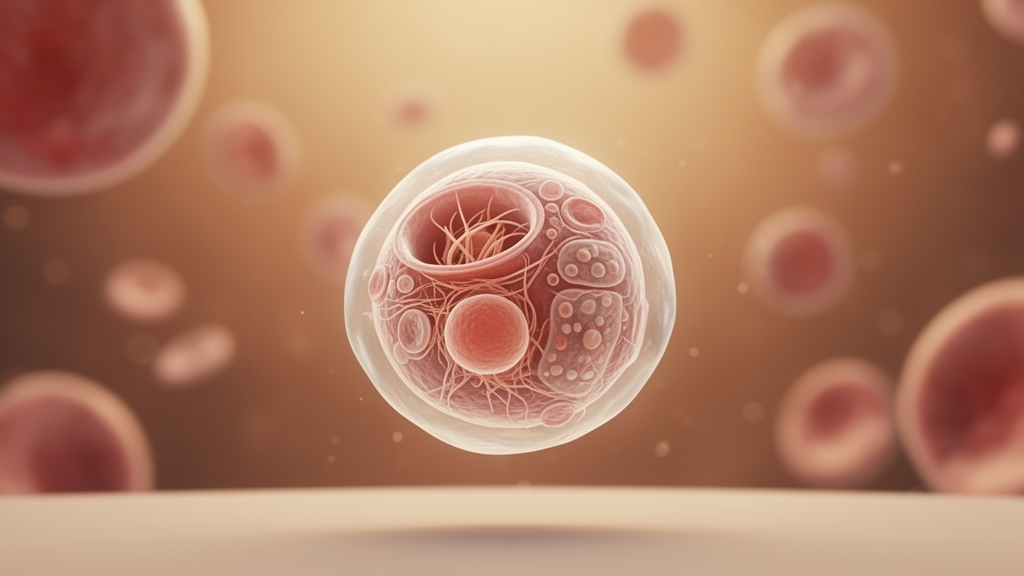
The single-celled parasite Trichomonas vaginalis, which causes trichomoniasis, the most common non-viral sexually transmitted infection, has long presented researchers with a puzzle: when conditions turn hostile, its motile trophozoite form converts into a rounded, non-motile state known as a pseudocyst. Whether this pseudocyst is a dormant but viable stage or simply a cell in the process of dying has been debated for years. A new study by Mari Shiratori, Francisco Callejas-Hernández, Jordan C. Orosco, Steven A. Sullivan, Carlos Carmona Fontaine and Jane M. Carlton now provides evidence that the pseudocyst is a genuine, stress-induced cell stage that can remain alive and transcriptionally active for days.
The team characterized the pseudocyst using flow cytometry, membrane integrity assays, transcriptomics and reversion studies. Pseudocysts were induced in the laboratory by culturing trophozoites in acidic media or in iron-depleted media, and these treatments produced a range of survival rates. Flow cytometry showed that pseudocysts retain intact cell membranes and express phosphatidylserine on their cell surface.
Fluorescence-activated cell sorting revealed distinct sub-populations within the induced cultures, a finding the authors highlight as underscoring the importance of using pure live pseudocyst cultures when testing whether pseudocysts can revert back to motile trophozoites. Transcriptomic profiling showed that pseudocysts remain transcriptionally active for several days. Compared with trophozoites, they consistently express increased levels of a subset of genes, while genes involved in metabolism show decreased transcription.
This pattern is consistent with a controlled stress response rather than the wholesale breakdown expected of a degenerating cell. Comparative transcriptomics of pseudocysts and trophozoites from two T. vaginalis strains confirmed that the two forms represent distinct cell states, and that this distinction holds across different parasite strains. Taken together, the results support the view that the pseudocyst is a stress-induced stage of T. vaginalis capable of remaining viable for days.
The authors note that these findings have implications for the parasite’s role in persistent infections. Trichomoniasis remains a neglected sexually transmitted infection, with low public awareness, limited research funding and no screening or control programs in the USA, where prevalence paradoxically increases with age and peaks among people in their 40s.
Subject of Research: The Trichomonas vaginalis pseudocyst is a viable cell stage with a distinct transcriptome and an intact membrane
Article Title: The Trichomonas vaginalis pseudocyst is a viable cell stage with a distinct transcriptome and an intact membrane
Article References: Shiratori, M., Callejas-Hernández, F., Orosco, J. C., Sullivan, S. A., Carmona Fontaine, C., & Carlton, J. M. (2026). The Trichomonas vaginalis pseudocyst is a viable cell stage with a distinct transcriptome and an intact membrane. PLOS Pathogens, 22(10), e1014739. https://doi.org/10.1371/journal.ppat.1014739
Image Credits: AI Generated
DOI: 10.1371/journal.ppat.1014739
Keywords: Trichomonas, vaginalis, pseudocyst, viable, cell, stage, distinct, transcriptome, intact, membrane, scientific research
News Source: Drew Townsend. (October 26, 2026). Trichomonas vaginalis pseudocyst is a viable, transcriptionally active cell stage. Scienmag.