• HOME
  • NEWS
  • EXPLORE
    • CAREER
      • Companies
      • Jobs
    • EVENTS
    • iGEM
      • News
      • Team
    • PHOTOS
    • VIDEO
    • WIKI
  • BLOG
  • COMMUNITY
    • FACEBOOK
    • INSTAGRAM
    • TWITTER
Saturday, February 7, 2026
BIOENGINEER.ORG
No Result
View All Result
  • Login
  • HOME
  • NEWS
  • EXPLORE
    • CAREER
      • Companies
      • Jobs
        • Lecturer
        • PhD Studentship
        • Postdoc
        • Research Assistant
    • EVENTS
    • iGEM
      • News
      • Team
    • PHOTOS
    • VIDEO
    • WIKI
  • BLOG
  • COMMUNITY
    • FACEBOOK
    • INSTAGRAM
    • TWITTER
  • HOME
  • NEWS
  • EXPLORE
    • CAREER
      • Companies
      • Jobs
        • Lecturer
        • PhD Studentship
        • Postdoc
        • Research Assistant
    • EVENTS
    • iGEM
      • News
      • Team
    • PHOTOS
    • VIDEO
    • WIKI
  • BLOG
  • COMMUNITY
    • FACEBOOK
    • INSTAGRAM
    • TWITTER
No Result
View All Result
Bioengineer.org
No Result
View All Result
Home NEWS Science News Biology

Researchers identify gene variants linked to a high-risk children’s cancer

Bioengineer by Bioengineer
September 25, 2017
in Biology
Reading Time: 2 mins read
0
Share on FacebookShare on TwitterShare on LinkedinShare on RedditShare on Telegram
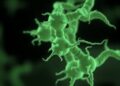
IMAGE

Credit: Children's Hospital of Philadelphia

Pediatric researchers investigating the childhood cancer neuroblastoma have identified common gene variants that raise the risk of an aggressive form of that disease. The discovery may assist doctors in better diagnosing subtypes of neuroblastoma.

Co-led by a genomics expert and a pediatric oncologist with expertise in neuroblastoma, a team from Children's Hospital of Philadelphia (CHOP) reported that common variants in the MMP20 gene are associated with deletions on chromosome 11q. "These inherited variants predispose to 11q deletions, which are a strong risk factor for an aggressive form of neuroblastoma," said co-study leader Hakon Hakonarson, MD, PhD, director of the Center for Applied Genomics at CHOP.

The study appeared online Sept. 18 in Nature Communications.

"We already knew that 11q deletions are biomarkers that predict poor outcomes in neuroblastoma," said co-study leader John M. Maris, MD, a pediatric oncologist at CHOP's Center for Childhood Cancer Research. "This new research helps us to more precisely predict how a neuroblastoma tumor will behave, so it improves our diagnostic capabilities."

A cancer of the peripheral nervous system that usually occurs as a solid tumor in a child's chest or abdomen, neuroblastoma is the most common cancer in infants. It accounts for a disproportionate share of cancer deaths in children.

The CHOP researchers previously identified six other genetic risk variants for neuroblastoma over the past decade, so the current investigation offers new insights into the genetic architecture of this complex form of cancer.

In the current study, the team performed a genome-wide association study in 113 tumors from neuroblastoma patients harboring 11q deletions, compared to 5,100 ancestry-matched controls. The research yielded common variants in the MMP20 gene, located on chromosome 11q22.2. A replication study in 44 independent cases and 1,900 controls found similar results.

The authors added that further studies should investigate the mechanisms by which MMP20 variants give rise to neuroblastoma tumors.

###

The National Institutes of Health supported this research (grants HG006830 and CA124709).

Xiao Chang, et al "Common variants in MMP20 at 11q22.2 predispose to 11q deletion and neuroblastoma risk," Nature Communications, published online Sept. 18, 2017. http://doi.org/10.1038/s41467-017-00408-8

About Children's Hospital of Philadelphia: Children's Hospital of Philadelphia was founded in 1855 as the nation's first pediatric hospital. Through its long-standing commitment to providing exceptional patient care, training new generations of pediatric healthcare professionals, and pioneering major research initiatives, Children's Hospital has fostered many discoveries that have benefited children worldwide. Its pediatric research program is among the largest in the country. In addition, its unique family-centered care and public service programs have brought the 546-bed hospital recognition as a leading advocate for children and adolescents. For more information, visit http://www.chop.edu

Media Contact

John Ascenzi
[email protected]
267-426-6055
@chop_research

http://www.chop.edu

Related Journal Article

http://dx.doi.org/10.1038/s41467-017-00408-8

Share18Tweet7Share2ShareShareShare1

Related Posts

New Study Uncovers Mechanism Behind Burn Pit Particulate Matter–Induced Lung Inflammation

New Study Uncovers Mechanism Behind Burn Pit Particulate Matter–Induced Lung Inflammation

February 6, 2026

DeepBlastoid: Advancing Automated and Efficient Evaluation of Human Blastoids with Deep Learning

February 6, 2026

Navigating the Gut: The Role of Formic Acid in the Microbiome

February 6, 2026

AI-Enhanced Optical Coherence Photoacoustic Microscopy Revolutionizes 3D Cancer Model Imaging

February 6, 2026
Please login to join discussion

POPULAR NEWS

  • Robotic Ureteral Reconstruction: A Novel Approach

    Robotic Ureteral Reconstruction: A Novel Approach

    82 shares
    Share 33 Tweet 21
  • Digital Privacy: Health Data Control in Incarceration

    63 shares
    Share 25 Tweet 16
  • Study Reveals Lipid Accumulation in ME/CFS Cells

    57 shares
    Share 23 Tweet 14
  • Breakthrough in RNA Research Accelerates Medical Innovations Timeline

    53 shares
    Share 21 Tweet 13

About

We bring you the latest biotechnology news from best research centers and universities around the world. Check our website.

Follow us

Recent News

Neg-Entropy: The Key Therapeutic Target for Chronic Diseases

Multidisciplinary Evidence-Based Guidelines for Therapeutic Drug Monitoring of Biologics in Inflammatory Bowel Disease

Early Tuberculosis Treatment Lowers Sepsis Mortality in People with HIV

Subscribe to Blog via Email

Enter your email address to subscribe to this blog and receive notifications of new posts by email.

Join 73 other subscribers
  • Contact Us

Bioengineer.org © Copyright 2023 All Rights Reserved.

Welcome Back!

Login to your account below

Forgotten Password?

Retrieve your password

Please enter your username or email address to reset your password.

Log In
No Result
View All Result
  • Homepages
    • Home Page 1
    • Home Page 2
  • News
  • National
  • Business
  • Health
  • Lifestyle
  • Science

Bioengineer.org © Copyright 2023 All Rights Reserved.