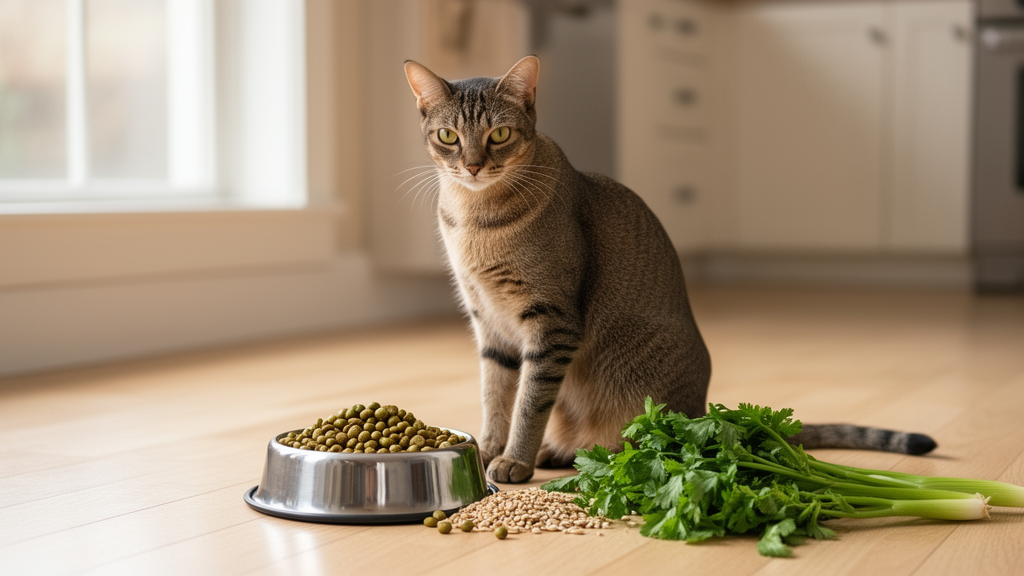
A large cross-sectional survey of cat carers has found that cats fed vegan diets had lower rates of overweight and related body weight problems than cats fed conventional meat-based diets, although the difference fell short of statistical significance. The study, published in Frontiers in Animal Science, analysed carer-reported veterinary assessments for 1,305 cats that had been fed either a conventional meat-based diet, which accounted for roughly 90 percent of the sample, or a vegan diet, accounting for about 10 percent, for at least one year. After accounting for factors including age, sex, neuter status, activity levels and feeding practices, the researchers calculated that vegan-fed cats had 34 percent lower odds of being assessed as overweight.
However, this difference was not statistically significant, in part because relatively few cats in the survey were fed vegan diets. For several body weight-related problems, no vegan-fed cats were affected at all. The authors describe the results as an interesting trend that warrants further investigation rather than a conclusive finding.
Overweight and obesity are common in domestic cats, with veterinary studies estimating that around 30 to 60 percent of cats are overweight or obese. Study author Professor Andrew Knight, Adjunct Professor at Griffith University's School of Environment and Science in Australia, said the findings, while not conclusive, showed interesting trends. "Carers feeding cats vegan diets also reported lower rates of body weight-related disorders such as osteoarthritis and other musculoskeletal and mobility problems.
However, the relatively small number of vegan-fed cats mean these results cannot be considered conclusive," he said. One aspect of the results surprised the researchers. "Interestingly, most vegan-fed cats were eating predominantly dry food and were more likely to have food available throughout the day.
These are feeding patterns normally associated with increased overweight risk. Yet we still observed lower rates of overweight in this group," Knight said. This contrast suggests that whatever is driving the pattern, it may not simply be explained by the feeding regimes that vegan-fed cats typically experience.
The study also noted that diet is not the only determinant of a cat's weight. Other factors consistently associated with overweight risk include age, sex, neuter status, activity levels and feeding practices, all of which were considered in the statistical analysis. Why vegan-fed cats showed lower rates of overweight remains uncertain.
The survey did not analyse the foods themselves, but the authors note that some commercial vegan cat foods may be higher in fibre and lower in calories or fat than comparable meat-based foods, which could help with weight control. Differences in L-carnitine, a nutrient involved in energy metabolism and in maintaining lean body tissue, could also potentially play a role, although this remains speculative at this stage. Knight emphasised that the findings should be seen as a starting point rather than a recommendation.
"We can't conclude from this study that vegan diets definitely protect cats against becoming overweight, but we have found a consistent pattern that is worth further investigation. An ideal next step would be a larger, prospective study that directly measured what cats are eating, their energy intake and their body condition," he said. The exploratory cross-sectional design means the results rely on carer-reported veterinary assessments rather than direct measurements taken by the researchers, and the small number of vegan-fed cats limits the precision of the estimates.
A prospective study with larger numbers, direct dietary measurement and objective body condition scoring would be needed to test whether the observed trend holds up. In the meantime, the researchers stress that any carer considering a vegan diet for their cat should prioritise nutritional completeness. "Additionally, cat carers should always ensure their cats receive nutritionally complete diets, choosing commercial vegan foods that are appropriately supplemented to provide all essential nutrients," Knight said.
Subject of Research: Feline nutrition and body weight
Article Title: Study finds lower rates of overweight among vegan-fed cats
Article References: Study finds lower rates of overweight among vegan-fed cats. Original publication (Bibliographic details unavailable.)
Image Credits: AI Generated
DOI: Not provided
Keywords: cats, vegan diet, overweight, obesity, feline nutrition, cross-sectional survey, pet health, Frontiers in Animal Science, Griffith University, body weight, finds, lower
News Source: Daisy Hatcher. (October 26, 2026). Cats on vegan diets show lower overweight rates in large survey. Scienmag.