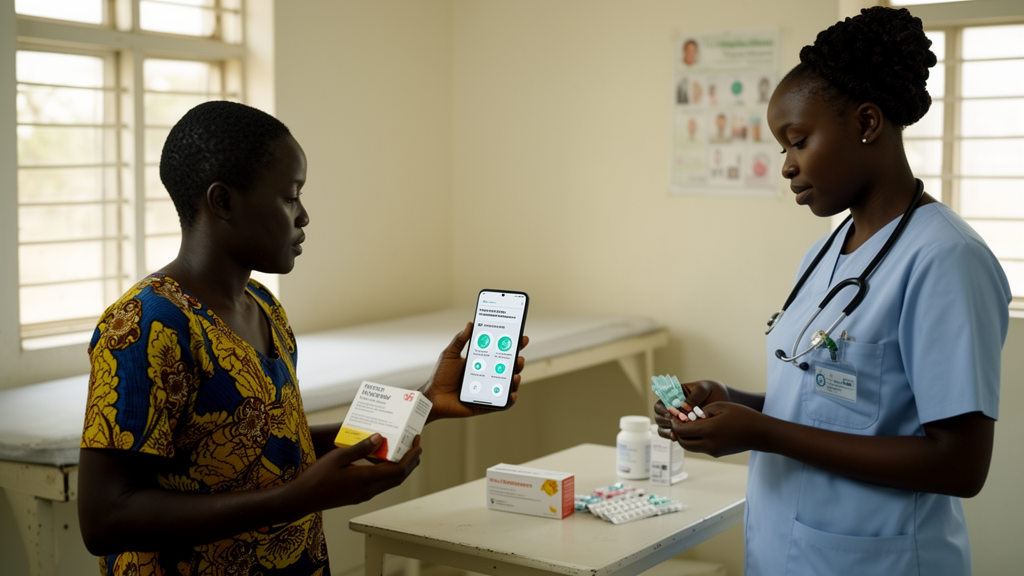
A six-month mobile health intervention was associated with substantially better adherence to tuberculosis medication among adults receiving first-line treatment at two hospitals in Imo State, Nigeria. In the quasi-experimental study, adherence reached 86.6% at the Federal University Teaching Hospital in Owerri, where the intervention was offered, compared with 41.4% at the Imo State Specialist Hospital in Umuguma, which served as the control group. The findings were reported in BMC Infectious Diseases in an article published online on September 1, 2026.
The researchers enrolled 262 adults with pulmonary tuberculosis who had been diagnosed within the previous month and had started first-line treatment within the two weeks before the study began. Recruitment took place between June and November 2024 at the Federal University Teaching Hospital, which enrolled 134 participants, and the Imo State Specialist Hospital, which enrolled 128. Using a coin toss, the investigators assigned the hospital sites to the intervention and control groups.
The study therefore compared the two hospitals rather than randomly assigning individual patients to intervention or control conditions within the same site. The mobile health package included short message service messages, voice calls, video-assisted therapy and WhatsApp audio messages. Medication adherence was assessed using questionnaires, video-observed therapy and pill counts.
The researchers analyzed the data with regression methods, reporting odds ratios and adjusted odds ratios with 95% confidence intervals, and used a p-value threshold below 0.05 to determine statistical significance. At the completion of the study, adherence was markedly higher at the intervention hospital. After adjustment for sociodemographic characteristics, the analysis found that participants at the Federal University Teaching Hospital were 12.9 times more likely to adhere to their anti-tuberculosis medication than participants at the Imo State Specialist Hospital.
The reported adjusted odds ratio was 12.91, with a 95% confidence interval of 5.55 to 30.05 and p < 0.001. One death occurred in the intervention group and five occurred in the control group during the study. The confidence interval for the adjusted association extended from 5.55 to 30.05, indicating uncertainty in the estimated magnitude of the difference.
The study design also limits the extent to which the association can be attributed solely to the mobile health intervention. Because the intervention and control conditions were delivered at different hospitals, differences in patient composition, clinical services or routine practices between the sites may have contributed to the observed contrast in adherence. Among the sociodemographic variables assessed, occupation was the only variable significantly associated with non-adherence between the two hospitals.
The article’s abstract reported greater non-adherence among people working in private firms and traders, with adjusted odds ratios of 0.09 and 0.17, respectively; the corresponding p-values were 0.001 and 0.017. The results therefore identified occupation as a factor related to treatment-taking behavior in this study population, although the abstract did not provide additional detail about the occupations of participants in each group. The findings support mobile health approaches as possible components of hospital-based tuberculosis care, but they do not establish which part of the combined intervention produced the observed association.
The package included several forms of communication and support—text messages, voice calls, video-assisted therapy and WhatsApp audio messages—yet the reported comparison did not separate their individual effects. The scale of the difference was substantial: more than four in five participants in the intervention group adhered to treatment, while fewer than half of those in the control group did so. Tuberculosis treatment interruption is important because the study’s background identifies non-adherence as a factor that can contribute to therapeutic failure, sustained infectiousness and the emergence of drug-resistant strains.
Within the limits of this two-hospital quasi-experimental comparison, the results provide evidence that mobile health support may accompany higher medication adherence among adults receiving first-line pulmonary tuberculosis treatment, while the site-based design leaves the precise causal contribution of the intervention unresolved.
Subject of Research: A quasi-experimental study of mobile health support and tuberculosis medication adherence at two hospitals in Imo State, Nigeria.
Article Title: Effect of mobile health intervention to medication dosage adherence among people with tuberculosis in selected hospitals in Imo State, Nigeria
Article References: Ezelote, C. J., Izuchukwu, B., Okeke, K. N., Chukwu, R. O., Osuoji, J. N., Nwokeleme, C. O., Udujih, I. H., Obasi, C. C., Ezenwa, C. J., & Mbachu, A. J. (2026). Effect of mobile health intervention to medication dosage adherence among people with tuberculosis in selected hospitals in Imo State, Nigeria. BMC Infectious Diseases. https://doi.org/10.1186/s12879-026-14353-9
Image Credits: AI Generated
DOI: 10.1186/s12879-026-14353-9
Keywords: tuberculosis, medication adherence, mobile health, Nigeria, text messaging, video-assisted therapy, WhatsApp, quasi-experimental study, digital health, public health, Effect, mobile
News Source: Phoebe Ingram. (October 26, 2026). Mobile support linked to higher tuberculosis medication adherence in two Nigerian hospitals. Scienmag.