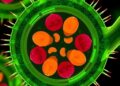
Credit: Sudhakar KeerthiPriyaa
A synthetic DNA-targeting molecule could pave the way for tissue regeneration.
Stem cells can be triggered to change into heart muscle cells by a new method involving synthetic molecules. The method overcomes challenges facing current approaches and can be fine-tuned to prompt the formation of a variety of cell types.
Human induced pluripotent stem cells (hiPSCs) are generated from adult cells and can be programmed to change into any cell type in the body. The cell type conversion is controlled by coordinated regulation of signalling cues and genes. Molecules that switch ON and OFF these diverse signals involved in organ development have been used to control the fate of hiPSCs. But molecules that can directly switch OFF the desired signalling genes have not been found. Currently available protocols involve the introduction of foreign genetic material, which could be risky to patients.
Junichi Taniguchi and Ganesh Pandian Namasivayam at Kyoto University's Institute for Integrated Cell-Material Sciences (iCeMS) in Japan constructed a synthetic molecule that can recognize and bind with a specific DNA sequence involved in the differentiation of hiPSCs into mesoderm, an intermediary cell type that can be stimulated into changing into heart muscle cells.
When the synthetic molecule, called PIP-S2, binds to its target DNA sequence, it prevents a protein, called SOX2, from binding to the same site. SOX2 is highly expressed in hiPSCs and is responsible for keeping them in their 'pluripotent' state, meaning it stops them from converting into other cell types. In the study, PIP-S2 bound to DNA, leading to the conversion of hiPSCs to mesoderm. The team then added to the hiPSC cell culture another signalling inhibitor molecule that is a known driver for heart muscle cell formation. Heart muscle cells demonstrating the ability to contract and retract were formed within a total period of 12 days.
"To our knowledge, this work reports the first DNA-binding synthetic molecule capable of guiding the differentiation of hiPSCs into a particular cell lineage," writes Hiroshi Sugiyama, the principal investigator of the study published in the journal Nucleic Acids Research.
This strategy could be used to design additional synthetic molecules that target various DNA sequences, inducing hiPSCs to develop into different cell types, the researchers conclude.
###
The paper "A synthetic DNA-binding inhibitor of SOX2 guides human induced pluripotent stem cells to differentiate into mesoderm" appeared on July 31, 2017 in Nucleic Acids Research, with doi: 10.1093/nar/gkx693
The Institute for Integrated Cell-Material Sciences (iCeMS) at Kyoto University in Japan aims to advance the integration of cell and material sciences, both traditionally strong fields at the university, in a uniquely innovative global research environment. iCeMS combines the biosciences, chemistry, materials science and physics to create materials for mesoscopic cell control and cell-inspired materials. Such developments hold promise for significant advances in medicine, pharmaceutical studies, the environment and industry. http://www.icems.kyoto-u.ac.jp
Media Contact
Izumi Mindy Takamiya
[email protected]
81-757-539-755
@KyotoU_News
http://www.kyoto-u.ac.jp/en
Related Journal Article
http://dx.doi.org/10.1093/nar/gkx693