• HOME
  • NEWS
  • EXPLORE
    • CAREER
      • Companies
      • Jobs
    • EVENTS
    • iGEM
      • News
      • Team
    • PHOTOS
    • VIDEO
    • WIKI
  • BLOG
  • COMMUNITY
    • FACEBOOK
    • INSTAGRAM
    • TWITTER
Monday, October 26, 2026
BIOENGINEER.ORG
No Result
View All Result
  • Login
  • HOME
  • NEWS
  • EXPLORE
    • CAREER
      • Companies
      • Jobs
        • Lecturer
        • PhD Studentship
        • Postdoc
        • Research Assistant
    • EVENTS
    • iGEM
      • News
      • Team
    • PHOTOS
    • VIDEO
    • WIKI
  • BLOG
  • COMMUNITY
    • FACEBOOK
    • INSTAGRAM
    • TWITTER
No Result
View All Result
Bioengineer.org
No Result
View All Result
Home NEWS Science News Health

Healthcare provider opinions and work experiences toward diagnosing, treating, or caring for individuals with hypermobile Ehlers-Danlos syndrome (hEDS), hypermobility spectrum disorders (HSD), and vulvar pain disorders: a qualitative study

by
October 26, 2026
in Health
Reading Time: 3 mins read
0
Healthcare provider opinions and work experiences toward diagnosing, treating, or caring for individuals with hypermobile Ehlers-Danlos syndrome (hEDS), hypermobility spectrum disorders (HSD), and vulvar pain disorders: a qualitative study

Healthcare provider opinions and work experiences toward diagnosing, treating, or caring for individuals with hypermobile Ehlers-Danlos syndrome (hEDS), hypermobility spectrum disorders (HSD), and vulvar pain disorders: a qualitative study

Share on FacebookShare on TwitterShare on LinkedinShare on RedditShare on Telegram

Healthcare providers caring for people with vulvar pain disorders described substantial uncertainty when assessing and treating patients with hypermobile Ehlers-Danlos syndrome (hEDS) and hypermobility spectrum disorders (HSD). In a qualitative study of 14 providers in the United States, participants reported limited training, fragmented referral pathways, trial-and-error treatment and an emphasis on adaptive, whole-body and trauma-informed care. The study documents professional experiences rather than the effectiveness of a treatment or changes in patient outcomes.

The researchers conducted semi-structured interviews by Microsoft Teams with eight pelvic floor physical therapists and six medical doctors working in obstetrics, gynecology and urology. These providers diagnosed, treated or cared for people with vulvar pain disorders. The team analyzed the interviews using Braun and Clarke’s reflexive thematic analysis alongside an interpretative phenomenological lens.

The design was intended to illuminate how participants understood their clinical roles, described their work experiences and navigated care for people with both hypermobility-related conditions and vulvar pain disorders. Because the study was qualitative and small, it did not provide comparative effectiveness data, prevalence estimates or controlled evidence about clinical outcomes. Five themes emerged.

The first, described in the study as practicing in uncertainty, reflected providers’ accounts of having little or no formal training on hEDS, HSD and the relationship between hypermobility and vulvar pain. The second involved whole-body approaches to care. Building trust through trauma-informed care formed a fourth theme.

Participants emphasized adapting care to individual needs and treating patients in a way that supported trust within an uncertain and fragmented healthcare system. The fifth theme concerned referral networks and research. Providers described shortcomings in the pathways connecting clinicians who treat vulvar pain with those familiar with hypermobility-related conditions, alongside limited research available to guide their practice.

The researchers said these findings show how providers specializing in women’s health and vulvar pain navigate uncertainty, complexity and rapidly shifting care models among people with hEDS and HSD. The study’s findings support calls for more research, greater interdisciplinary collaboration and stronger referral networks for patients with hEDS, HSD, vulvar pain disorders and associated symptoms. The evidence comes from 14 U.S.-based clinicians: eight pelvic floor physical therapists and six physicians in obstetrics, gynecology and urology.

That narrowly defined professional sample limits how broadly the findings can be applied to other healthcare settings, specialties or patient populations. The interviews capture reported experiences and perceived service gaps, not proof that a particular clinical model improves symptoms or health outcomes. The work was published as open-access research in BMC Health Services Research on 16 September 2026, and the authors stated that more adaptable, trauma-informed and tailored approaches to care are needed.

Subject of Research: Provider experiences caring for people with hypermobility conditions and vulvar pain disorders

Article Title: Healthcare provider opinions and work experiences toward diagnosing, treating, or caring for individuals with hypermobile Ehlers-Danlos syndrome (hEDS), hypermobility spectrum disorders (HSD), and vulvar pain disorders: a qualitative study

Article References: Niedenfuehr, J., Cuccaro, P., Markham, C., & Schick, V. (2026). Healthcare provider opinions and work experiences toward diagnosing, treating, or caring for individuals with hypermobile Ehlers-Danlos syndrome (hEDS), hypermobility spectrum disorders (HSD), and vulvar pain disorders: a qualitative study. BMC Health Services Research. https://doi.org/10.1186/s12913-026-15605-9

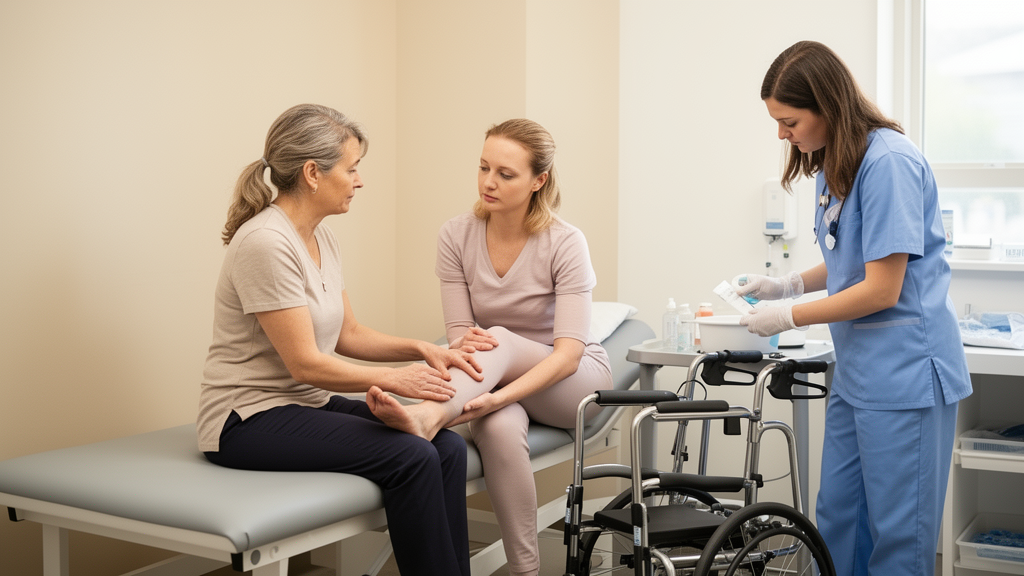
Image Credits: AI Generated

DOI: 10.1186/s12913-026-15605-9

Keywords: hEDS, HSD, vulvar pain, qualitative research, pelvic floor therapy, trauma-informed care, healthcare provider training, referral networks, interdisciplinary care, women's health, Healthcare, provider

News Source: Ophelia Keating. (October 26, 2026). Healthcare provider opinions and work experiences toward diagnosing, treating, or caring for individuals with hypermobile Ehlers-Danlos syndrome (hEDS), hypermobility spectrum disorders (HSD), and vulvar pain disorders: a qualitative study. Scienmag.


Tags: healthcarehealthcare provider traininghEDSHSDInterdisciplinary carepelvic floor therapyproviderqualitative researchreferral networksTrauma-Informed Carevulvar painwomen's health
Share12Tweet7Share2ShareShareShare1

Related Posts

China’s congenital anomaly mortality fell as regional relative inequalities rose

China’s congenital anomaly mortality fell as regional relative inequalities rose

October 26, 2026
Tshwane managers identify continuous support for quality-of-care regulations

Tshwane managers identify continuous support for quality-of-care regulations

October 26, 2026

Single-centre analysis finds hybrid operating room break-even, conditional capital recovery

October 26, 2026

Student-Led Clinic Shows Functional Gains in Disadvantaged Community

October 26, 2026

POPULAR NEWS

  • China’s congenital anomaly mortality fell as regional relative inequalities rose

    China’s congenital anomaly mortality fell as regional relative inequalities rose

    29 shares
    Share 12 Tweet 7
  • Healthcare provider opinions and work experiences toward diagnosing, treating, or caring for individuals with hypermobile Ehlers-Danlos syndrome (hEDS), hypermobility spectrum disorders (HSD), and vulvar pain disorders: a qualitative study

    29 shares
    Share 12 Tweet 7
  • Multicancer blood test detects cancer signals across 17 tumor types

    29 shares
    Share 12 Tweet 7
  • Fossil and molecular study traces marmot evolution from North America to Eurasia

    29 shares
    Share 12 Tweet 7

About

We bring you the latest biotechnology news from best research centers and universities around the world. Check our website.

Follow us

Recent News

China’s congenital anomaly mortality fell as regional relative inequalities rose

Healthcare provider opinions and work experiences toward diagnosing, treating, or caring for individuals with hypermobile Ehlers-Danlos syndrome (hEDS), hypermobility spectrum disorders (HSD), and vulvar pain disorders: a qualitative study

Multicancer blood test detects cancer signals across 17 tumor types

Subscribe to Blog via Email

Enter your email address to subscribe to this blog and receive notifications of new posts by email.

Join 85 other subscribers
  • Contact Us

Bioengineer.org © Copyright 2023 All Rights Reserved.

Welcome Back!

Login to your account below

Forgotten Password?

Retrieve your password

Please enter your username or email address to reset your password.

Log In
No Result
View All Result
  • Homepages
    • Home Page 1
    • Home Page 2
  • News
  • National
  • Business
  • Health
  • Lifestyle
  • Science

Bioengineer.org © Copyright 2023 All Rights Reserved.