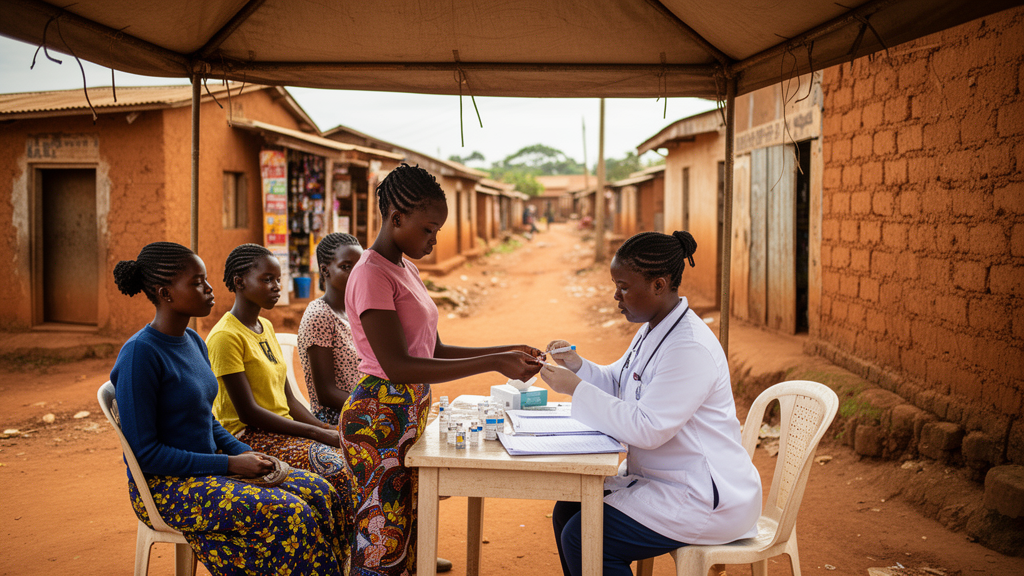
Human papillomavirus (HPV) vaccination coverage was low among adolescent girls and young women living in urban slums in Kampala, Uganda, according to a cross-sectional, concurrent mixed-methods study of 290 participants aged 15–24 years. Of the participants, 30.7% reported receiving the HPV vaccine, while 19.0% had completed the two-dose schedule. The most commonly reported barriers were lack of awareness, fear of side effects and limited access to vaccination services.
The researchers recruited participants through multistage sampling between August and October 2025. They gathered quantitative data with a semi-structured questionnaire, analyzed the results using descriptive statistics and logistic regression in Stata 16.0, and examined focus group discussions through thematic analysis. The participants had a mean age of 19.76 years, with a standard deviation of 3.00 years. The design captured vaccination status and reported experiences at one point in time, so it can identify associations but cannot establish that particular factors caused low uptake or completion.
Qualitative findings indicated that knowledge gaps and misconceptions about HPV and vaccination were among the reported obstacles. Parental influence on vaccination decisions also featured prominently in the focus group discussions. Participants described health-system barriers including poor communication, inconsistent availability of vaccination services and negative healthcare experiences. Distance to vaccination sites and limited transport options created additional structural constraints for some residents. These findings explain reported experiences within the study population; they do not establish the prevalence of each barrier across all young women in Kampala’s urban slums.
Two factors were associated with lower adjusted odds of remaining unvaccinated. Participants who lived near a vaccination clinic had an adjusted odds ratio of 0.35 for being unvaccinated, with a 95% confidence interval of 0.21–0.60, compared with participants who did not have that proximity. Those who reported receiving counselling from a healthcare worker also had lower adjusted odds of remaining unvaccinated, with an adjusted odds ratio of 0.19 and a 95% confidence interval of 0.11–0.34. These are adjusted statistical associations rather than evidence that clinic proximity or counselling alone caused vaccination or completion.
The study did not test a vaccination intervention or demonstrate that any proposed strategy had increased coverage in Kampala. Its authors identified community sensitisation, improved healthcare-worker communication and expanded community- and school-based delivery as possible approaches to improving equitable access, while stating that further research would be needed to assess their effectiveness in this setting. The results are also limited to the sampled urban-slum areas and to adolescent girls and young women aged 15–24 years, meaning they should not automatically be applied to other age groups, locations or HPV vaccination programs.
Subject of Research: HPV vaccine uptake and barriers among adolescent girls and young women in Kampala’s urban slums
Article Title: HPV vaccine uptake and barriers among adolescent girls and young women living in the urban slums of Kampala, Uganda
Article References: Segawa, M. C., Okade, T., Namiiro, A. M., Okello, M. O., Kanth, J. S. J., Kiberu, D., Nakandi, R. K., Nsereko, V., Kitaka, S. B., & Olum, R. (2026). HPV vaccine uptake and barriers among adolescent girls and young women living in the urban slums of Kampala, Uganda. BMC Public Health. https://doi.org/10.1186/s12889-026-29825-5
Image Credits: AI Generated
DOI: 10.1186/s12889-026-29825-5
Keywords: HPV vaccination, adolescent girls, young women, Kampala, Uganda, urban slums, vaccine uptake, vaccine access, healthcare counselling, public health, vaccine, uptake
News Source: Ophelia Keating. (October 26, 2026). HPV vaccination remains low among young women in Kampala’s urban slums. Scienmag.