• HOME
  • NEWS
  • EXPLORE
    • CAREER
      • Companies
      • Jobs
    • EVENTS
    • iGEM
      • News
      • Team
    • PHOTOS
    • VIDEO
    • WIKI
  • BLOG
  • COMMUNITY
    • FACEBOOK
    • INSTAGRAM
    • TWITTER
Monday, October 26, 2026
BIOENGINEER.ORG
No Result
View All Result
  • Login
  • HOME
  • NEWS
  • EXPLORE
    • CAREER
      • Companies
      • Jobs
        • Lecturer
        • PhD Studentship
        • Postdoc
        • Research Assistant
    • EVENTS
    • iGEM
      • News
      • Team
    • PHOTOS
    • VIDEO
    • WIKI
  • BLOG
  • COMMUNITY
    • FACEBOOK
    • INSTAGRAM
    • TWITTER
No Result
View All Result
Bioengineer.org
No Result
View All Result
Home NEWS Science News Technology

Phase-aware pose modeling sharpens throw-distance prediction from broadcast video

by
October 26, 2026
in Technology
Reading Time: 2 mins read
0
Phase-aware pose modeling sharpens throw-distance prediction from broadcast video

Phase-aware pose modeling sharpens throw-distance prediction from broadcast video

Share on FacebookShare on TwitterShare on LinkedinShare on RedditShare on Telegram

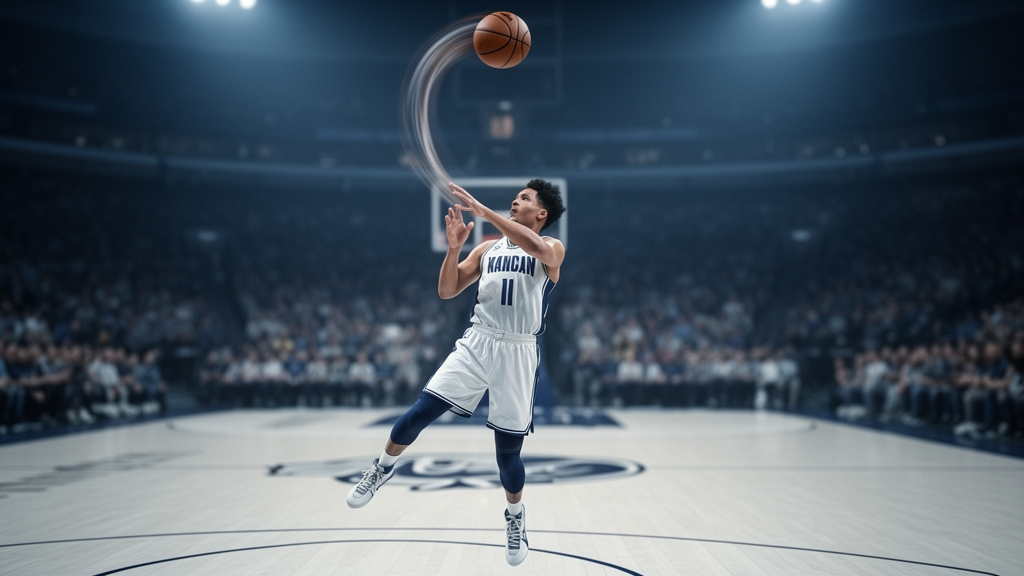
Researchers have built a machine-learning framework that predicts how far an elite athlete will throw by reading the athlete’s body movements directly from broadcast video, and they report that explicitly labeling the phases of a throw makes those predictions measurably more accurate. The work, published in Sports Engineering, introduces Throwing4, a curated dataset of 500 clips of elite throwing attempts across four disciplines: javelin, discus, hammer, and shot put. Each clip is paired with two-dimensional pose sequences extracted from the footage, frame-level annotations of technique phases, and the official recorded throw distance, giving the models an objective continuous target to learn from.

The central question the team posed was whether treating a throw as one unstructured motion sequence is the best way to estimate its outcome, or whether the natural biomechanical structure of the movement carries information that generic sequence models leave on the table. To test this, the researchers formulated throw-distance prediction from broadcast-derived pose as a regression problem. They compared a baseline approach that models the full sequence of body poses against a phase-conditioned approach that partitions each attempt into four technique stages and fuses the motion representations learned from each stage before making a prediction.

Across multiple graph-based pose encoders, the phase-aware models consistently reduced prediction error relative to the full-sequence baselines. According to the authors, this pattern indicates that phase-aligned modeling yields a more stable representation of throwing motion than treating the entire action as an undifferentiated stream of poses. In practical terms, the improvement suggests that knowing where in the throw a given body configuration occurs, such as during the preparatory stages or the delivery itself, acts as a useful inductive prior that helps the models map movement to distance.

The study was conducted under realistic broadcast conditions, meaning the pose data derive from footage of the kind available to broadcasters rather than from laboratory motion-capture rigs. That choice matters for scalability: if performance models can work from ordinary video, they can in principle be applied to large archives of competition footage without specialized instrumentation. The authors position the dataset and protocol as a foundation for future work on fine-grained technique analysis, interpretable sports analytics, and robust modeling from broadcast video, extending the utility of the approach beyond score prediction alone.

Subject of Research: Phase-aware pose modeling for predicting throw distances of elite javelin, discus, hammer, and shot put athletes from broadcast video

Article Title: Throwing4: phase-aware pose modeling for throw-distance prediction in elite athletics

Article References: Badatya, B. K., Tiwari, K., Amin, J., & Hegde, R. (2026). Throwing4: phase-aware pose modeling for throw-distance prediction in elite athletics. Sports Engineering, 29(2), Article 42. https://doi.org/10.1007/s12283-026-00573-4

Image Credits: AI Generated

DOI: 10.1007/s12283-026-00573-4

Keywords: sports engineering, biomechanics, pose estimation, machine learning, throwing events, javelin, discus, hammer throw, shot put, regression, broadcast video, sports analytics

News Source: Denise Maddox. (October 26, 2026). Phase-aware pose modeling sharpens throw-distance prediction from broadcast video. Scienmag.

Tags: Biomechanicsbroadcast videodiscushammer throwjavelinMachine Learningpose estimationregressionshot putsports analyticsSports Engineeringthrowing events
Share12Tweet7Share2ShareShareShare1

Related Posts

AI Framework Spots Unsafe Miner Behavior in Real Time with Dual Attention Pose Network

AI Framework Spots Unsafe Miner Behavior in Real Time with Dual Attention Pose Network

October 26, 2026
Adaptive Probability Maps Sharpen AI Human Pose Estimates Under Occlusion

Adaptive Probability Maps Sharpen AI Human Pose Estimates Under Occlusion

October 26, 2026

New Workflow Sizes Aircraft Flap Structures in Minutes to Guide Early Wing Design

October 26, 2026

AI is rewriting social engineering, from phishing defenses to autonomous machine deception

October 26, 2026

POPULAR NEWS

  • AI Framework Spots Unsafe Miner Behavior in Real Time with Dual Attention Pose Network

    AI Framework Spots Unsafe Miner Behavior in Real Time with Dual Attention Pose Network

    29 shares
    Share 12 Tweet 7
  • Dance and Music Hold Real Potential for Health in Later Life, Editorial Argues

    29 shares
    Share 12 Tweet 7
  • Adaptive Probability Maps Sharpen AI Human Pose Estimates Under Occlusion

    29 shares
    Share 12 Tweet 7
  • New Alzheimer’s Microsimulation Model Translates Slowed Cognitive Decline into Years of Independence

    29 shares
    Share 12 Tweet 7

About

We bring you the latest biotechnology news from best research centers and universities around the world. Check our website.

Follow us

Recent News

AI Framework Spots Unsafe Miner Behavior in Real Time with Dual Attention Pose Network

Dance and Music Hold Real Potential for Health in Later Life, Editorial Argues

Adaptive Probability Maps Sharpen AI Human Pose Estimates Under Occlusion

Subscribe to Blog via Email

Enter your email address to subscribe to this blog and receive notifications of new posts by email.

Join 85 other subscribers
  • Contact Us

Bioengineer.org © Copyright 2023 All Rights Reserved.

Welcome Back!

Login to your account below

Forgotten Password?

Retrieve your password

Please enter your username or email address to reset your password.

Log In
No Result
View All Result
  • Homepages
    • Home Page 1
    • Home Page 2
  • News
  • National
  • Business
  • Health
  • Lifestyle
  • Science

Bioengineer.org © Copyright 2023 All Rights Reserved.