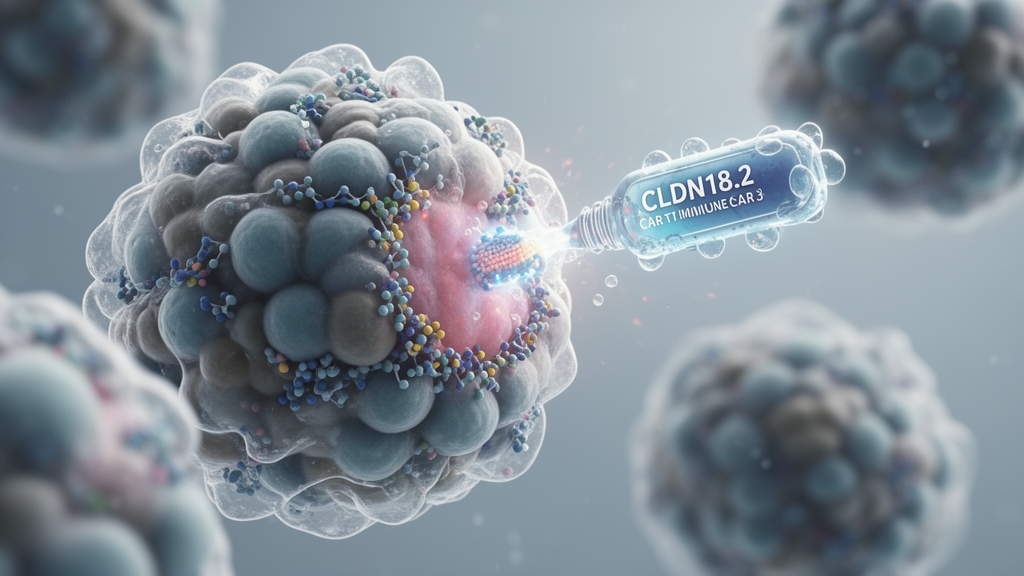
Colorectal mucinous adenocarcinoma, a subtype in which extracellular mucin makes up at least half of the tumor volume, has long frustrated oncologists. It accounts for roughly 10 to 20 percent of all colorectal cancers, arises more often in the proximal colon, and is diagnosed at more advanced stages than the conventional non-mucinous form. A new review published in Frontiers in Pharmacology argues that a protein better known for its role in gastric cancer, the tight-junction protein CLDN18.2, may offer a way to stratify these patients, while cautioning that the evidence remains far from clinical validation.
The review, authored by Wei Yu, Shengyu Wei, Shiqin Wan, Yiming Chen and Qiao Huang of China Three Gorges University, synthesizes pathology-based cohort studies showing that CLDN18.2 expression is uncommon in unselected conventional colorectal adenocarcinoma but markedly enriched in mucinous tumors, mucin-rich colorectal cancer, and tumors with gastric-type or foregut-like differentiation. In one study of 423 colorectal adenocarcinoma samples, overall CLDN18.2 positivity was just 2.4 percent, yet it reached 27.3 percent in the mucinous adenocarcinoma subgroup. A second cohort of 1,404 digestive tract adenocarcinomas, including 1,175 colorectal cancers, tested with the clinically validated Ventana CLDN18 (43-14A) RxDx assay found an overall colorectal positivity rate of 3.4 percent, with positive cases concentrated in tumors showing mucinous features, proximal colonic origin, and a deficient mismatch repair phenotype.
CLDN18.2 is the gastric isoform of the CLDN18 gene, produced through tissue-specific promoter usage. Under normal conditions it is stably expressed in mature gastric epithelial cells, while normal colorectal mucosa shows little or none. It is a four-pass transmembrane protein whose first extracellular loop is the structural domain recognized by monoclonal antibodies, antibody-drug conjugates, chimeric antigen receptor T cells and T-cell engagers. In healthy gastric tissue the protein is largely confined to tight junctions that circulating drugs cannot easily reach, but malignant transformation disrupts epithelial polarity and exposes these membrane epitopes, creating the therapeutic window that has made the target so attractive in gastric oncology.
Why would a gastric protein appear in colorectal tumors? The review proposes a working model it calls gastric-lineage reprogramming: the aberrant acquisition of gastric-type mucin markers, foregut-like differentiation programs, and gastric-derived membrane proteins during colorectal tumor evolution. Mucinous colorectal cancers frequently overlap with the serrated neoplasia pathway, characterized by BRAF or KRAS driver mutations, sustained MAPK signaling, CpG island methylator phenotype-high status, and methylation-mediated silencing of tumor suppressor genes, including MLH1 promoter methylation that produces the dMMR/MSI-H phenotype. Some of these tumors express gastric-type mucin markers such as MUC5AC and MUC6, suggesting partial activation of foregut-like lineage programs. The authors stress that this model remains hypothetical: direct functional evidence linking CIMP-high status, MLH1 methylation, gastric-type mucin markers and CLDN18.2 expression is still insufficient, and the enrichment in BRAF V600E-mutant and dMMR tumors may reflect a shared serrated and gastric-lineage phenotype rather than direct regulation by either alteration.
Cross-tumor expression patterns lend circumstantial support. Beyond gastric cancer, CLDN18.2 has been reported in pancreatic ductal adenocarcinoma, cholangiocarcinoma, ovarian mucinous carcinoma, lung adenocarcinoma including its mucinous variant, and some small bowel adenocarcinomas, all tumors with gastric-type, foregut-like or upper gastrointestinal differentiation features to varying degrees. By contrast, positivity is markedly uncommon in unselected conventional colorectal adenocarcinoma. This suggests CLDN18.2 is not simply a pan-mucinous marker but may help define a mucinous subgroup with foregut-like differentiation. Candidate upstream regulators such as the GATA and FOXA transcription factor families, important in gastrointestinal lineage specification, have been proposed, but direct data on their expression in colorectal mucinous adenocarcinoma remain sparse.
The clinical stakes are considerable. Mucinous metastatic colorectal cancer has shown lower response rates to first-line chemotherapy than non-mucinous disease, 18.4 percent versus 49.0 percent in one reported comparison, and dMMR/MSI-H mucinous tumors also responded less well to immune checkpoint inhibitors, 48.0 percent versus 65.1 percent. Synchronous mucinous peritoneal metastases were associated with shorter disease-specific survival after cytoreductive surgery plus hyperthermic intraperitoneal chemotherapy, 22.4 versus 36.3 months. The current precision oncology framework for advanced colorectal cancer, built around dMMR/MSI-H, BRAF V600E, HER2 amplification, KRAS G12C and NTRK fusion, was developed largely in conventional adenocarcinoma and does not address the mucin barrier or lineage-specific differentiation that characterize many mucinous tumors, particularly those that are mismatch repair proficient and lack established targetable drivers.
Yet measuring CLDN18.2 reliably in mucinous tumors is itself a formidable diagnostic challenge. Abundant mucin pools, low tumor-cell density and pronounced spatial heterogeneity mean that tissue microarrays or single-site biopsies can fail to capture the full distribution of membranous expression and may misclassify target status. Expression can differ between tumor cells floating in mucin pools, cells at the invasive front, gland-forming regions and poorly differentiated components. Data from gastric cancer illustrate the problem: intratumoral heterogeneity was observed in 38.5 percent of surgical specimens in one cohort, and roughly 20 percent of paired primary and metastatic lesions were discordant for CLDN18.2 positivity. Although these figures come from gastric and gastroesophageal cancers and cannot be directly extrapolated, they demonstrate that expression should not be assumed spatially stable within a tumor or across metastatic sites.
The review therefore proposes a three-part companion diagnostic framework for mucinous colorectal cancer: analytical standardization harmonizing antibody clones, staining platforms and membranous interpretation criteria; spatially representative assessment using whole-section or multi-region evaluation whenever feasible, with documentation of specimen source and lesion type; and platform-specific clinical calibration, since a single universal positivity threshold would be premature in the absence of disease-specific efficacy data. The authors argue that assessment should move beyond a binary positive-or-negative result toward quantitative, spatially resolved and platform-calibrated evaluation, reporting staining intensity, positive-cell proportion, sampling region and concordance between primary tumors and metastases.
On the therapeutic side, the strongest clinical evidence for CLDN18.2 targeting comes from gastric and gastroesophageal junction adenocarcinomas. The pivotal phase 3 SPOTLIGHT and GLOW trials, enrolling 565 and 507 patients respectively, showed that first-line zolbetuximab combined with chemotherapy improved progression-free and overall survival in patients with CLDN18.2-positive, HER2-negative advanced disease. The CAR-T cell product satricabtagene autoleucel has been approved in China for CLDN18.2-positive gastric cancer after at least two prior lines of therapy, and the antibody-drug conjugate tecotabart vedotin has entered a phase III trial in gastric cancer. But the review is emphatic that these successes cannot be considered direct clinical evidence in colorectal mucinous adenocarcinoma, which differs in tissue origin, lineage programs, mucinous architecture, metastatic pattern and standard treatment.
The mucin-rich architecture of these tumors also poses physical barriers that vary by platform. Monoclonal antibodies such as zolbetuximab, which kill through antibody-dependent cellular cytotoxicity and complement activation, are most plausible when membranous expression is strong, spatially continuous and homogeneous; patchy expression separated by mucin can weaken drug-target contact. Antibody-drug conjugates offer bystander killing that can partially offset antigen heterogeneity, but both penetration of the intact conjugate and diffusion of the released payload through MUC2-rich mucin pools remain uncertain, and intratumoral imaging has shown that the binding-site barrier can restrict conjugate penetration. Engineered cell therapies face infiltration barriers through mucin and stroma, although preclinical work showing that mucinase- or heparanase-engineered effector cells gain improved penetration in colorectal models suggests a possible direction. The review concludes that CLDN18.2 should currently be regarded as a candidate stratification biomarker for biomarker-enriched investigation in mucinous colorectal cancer, not an established therapeutic, prognostic or predictive target, and that progress will require disease-specific preclinical models, standardized membranous scoring and prospective trials integrating expression with molecular subtype and tumor microenvironment features.
Subject of Research: CLDN18.2 as a lineage-associated biomarker and translational target in colorectal mucinous adenocarcinoma
Article Title: CLDN18.2 in colorectal mucinous adenocarcinoma: a lineage-associated biomarker and emerging translational target
Article References: Yu, W., Wei, S., Wan, S., Chen, Y., & Huang, Q. (2026). CLDN18.2 in colorectal mucinous adenocarcinoma: a lineage-associated biomarker and emerging translational target. Frontiers in Pharmacology, 17, Article 2001935. https://doi.org/10.3389/fphar.2026.2001935
Image Credits: AI Generated
DOI: 10.3389/fphar.2026.2001935
Keywords: CLDN18.2, colorectal mucinous adenocarcinoma, colorectal cancer, biomarker, immunohistochemistry, zolbetuximab, antibody-drug conjugates, CAR-T cells, dMMR/MSI-H, BRAF V600E, gastric-lineage reprogramming, companion diagnostics
News Source: Nathaniel Bowman. (October 26, 2026). Gastric protein CLDN18.2 emerges as candidate biomarker in mucinous colorectal cancer. Scienmag.