• HOME
  • NEWS
  • EXPLORE
    • CAREER
      • Companies
      • Jobs
    • EVENTS
    • iGEM
      • News
      • Team
    • PHOTOS
    • VIDEO
    • WIKI
  • BLOG
  • COMMUNITY
    • FACEBOOK
    • INSTAGRAM
    • TWITTER
Monday, October 26, 2026
BIOENGINEER.ORG
No Result
View All Result
  • Login
  • HOME
  • NEWS
  • EXPLORE
    • CAREER
      • Companies
      • Jobs
        • Lecturer
        • PhD Studentship
        • Postdoc
        • Research Assistant
    • EVENTS
    • iGEM
      • News
      • Team
    • PHOTOS
    • VIDEO
    • WIKI
  • BLOG
  • COMMUNITY
    • FACEBOOK
    • INSTAGRAM
    • TWITTER
No Result
View All Result
Bioengineer.org
No Result
View All Result
Home NEWS Science News Technology

New dataset and protein language models sharpen T cell receptor binding prediction

by
October 26, 2026
in Technology
Reading Time: 2 mins read
0
New dataset and protein language models sharpen T cell receptor binding prediction

New dataset and protein language models sharpen T cell receptor binding prediction

Share on FacebookShare on TwitterShare on LinkedinShare on RedditShare on Telegram

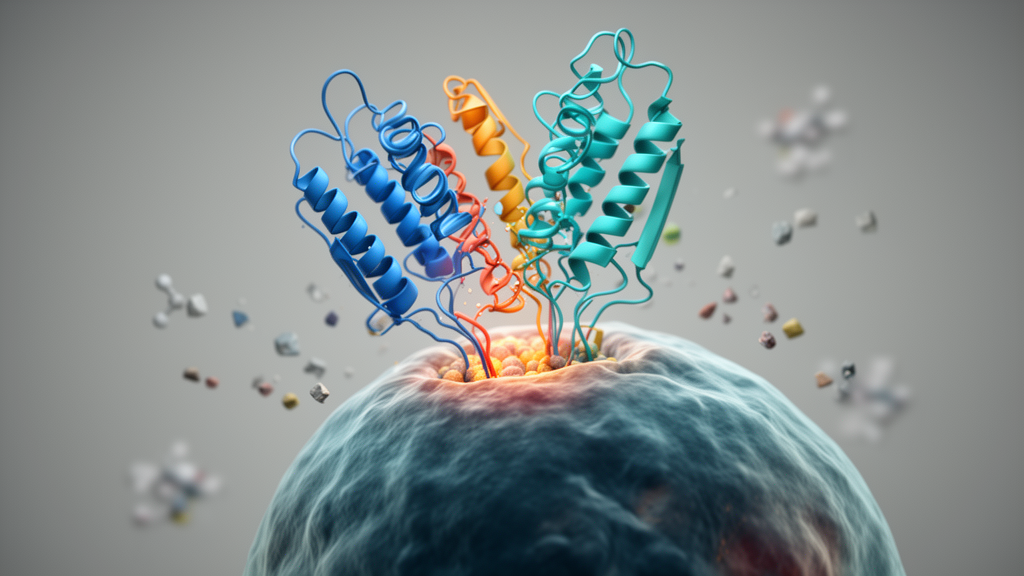
A new resource for predicting how T cell receptors recognize peptide–human leukocyte antigen (pHLA) complexes has been published in Nature Computational Science. The resource, called Hi-TPH, is a large-scale hierarchical dataset built specifically for T cell receptor–pHLA binding prediction, and it is paired with Hi-TPH-PLMs, a collection of fine-tuned protein language models. According to the authors, the models achieve a 19.2% performance gain over state-of-the-art tools on an external wet-lab test set. Both the dataset and the model collection are publicly released.

The resource addresses two limitations that the authors identify in existing machine learning tools for this task: incomplete sequence data and biased nonbinding examples. Hi-TPH tackles the second problem with an on-the-fly selection method for generating nonbinding data, producing negative examples dynamically rather than relying on a fixed set. The dataset is also hierarchical in structure, a property the authors use both for training and for analysis. The construction and benchmarking strategy for TCR–pHLA binding prediction is documented as part of the resource.

Hi-TPH-PLMs consist of protein language models with varied architectures and scales, all fine-tuned on the Hi-TPH dataset. The benchmarking results reported for the collection cover three areas: generalization to unseen peptides, the effect of the on-the-fly selection of nonbinding data, and the contribution of individual molecular components to prediction performance. Together, these evaluations describe how the models behave on data beyond their training examples and which parts of the receptor–pHLA complex drive their predictions.

Beyond raw accuracy, the hierarchical structure of Hi-TPH enables detailed analyses that dissect how different molecular components contribute to binding prediction and reveal their synergistic interplay. One example the authors highlight concerns the HLA component: its prediction contribution relies on the presence of full T cell receptor chains. This finding links the informational value of one part of the complex to the completeness of another, and it is presented by the authors as an observation about how the components of a TCR–pHLA interaction jointly shape what the models can learn.

The authors state that Hi-TPH and Hi-TPH-PLMs are publicly released to support the development of more reliable tools for advanced immunoinformatics research and personalized immunotherapy. By pairing a large-scale, hierarchically organized dataset with a dynamic negative-example strategy and a family of fine-tuned protein language models, and by reporting performance on an external wet-lab test set, the resource provides the field with both training data and a benchmark. The reported 19.2% gain over prior state-of-the-art tools on that external test set is the measured result against which the collection’s performance is documented.

Subject of Research: Machine learning dataset and benchmark for T cell receptor–pHLA binding prediction

Article Title: Machine learning dataset and benchmark for accurate T cell receptor–pHLA binding prediction

Article References: Zhu, X., Lu, J., Lu, Y., Zhang, Y., & Feng, F. (2026). Machine learning dataset and benchmark for accurate T cell receptor–pHLA binding prediction. Nature Computational Science. https://doi.org/10.1038/s43588-026-01073-y

Image Credits: AI Generated

DOI: 10.1038/s43588-026-01073-y

Keywords: T cell receptor, pHLA binding, machine learning, protein language models, benchmark dataset, immunoinformatics, Hi-TPH, Nature Computational Science, personalized immunotherapy, binding prediction, Machine, learning

News Source: Drew Townsend. (October 26, 2026). New dataset and protein language models sharpen T cell receptor binding prediction. Scienmag.


Tags: benchmark datasetbinding predictionHi-TPHimmunoinformaticslearningmachineMachine LearningNature Computational SciencePersonalized ImmunotherapypHLA bindingprotein language modelsT cell receptor
Share12Tweet7Share2ShareShareShare1

Related Posts

Thermal-aware AI sharpens UAV infrared small target detection

Thermal-aware AI sharpens UAV infrared small target detection

October 26, 2026
Nine years of wind tunnel data on turbine wakes released to the public for the first time

Nine years of wind tunnel data on turbine wakes released to the public for the first time

October 26, 2026

Carbon Nitride and Carbon Dot Hybrid Electrode Powers a Symmetric Supercapacitor

October 26, 2026

Rare Japanese Moth Turns Up in Cambodia, Redrawing Its Known Range

October 26, 2026

POPULAR NEWS

  • Low Vitamin D After Bariatric Surgery Tracks With Fat-Infiltrated Muscle

    Low Vitamin D After Bariatric Surgery Tracks With Fat-Infiltrated Muscle

    29 shares
    Share 12 Tweet 7
  • Troponin Kinetics and Emerging Biomarkers May Help Untangle Myocarditis, Heart Attacks, and Sepsis-Related Heart Injury

    29 shares
    Share 12 Tweet 7
  • Bioengineering strategies expand the promise of prenatal therapy

    29 shares
    Share 12 Tweet 7
  • New dataset and protein language models sharpen T cell receptor binding prediction

    29 shares
    Share 12 Tweet 7

About

We bring you the latest biotechnology news from best research centers and universities around the world. Check our website.

Follow us

Recent News

Low Vitamin D After Bariatric Surgery Tracks With Fat-Infiltrated Muscle

Troponin Kinetics and Emerging Biomarkers May Help Untangle Myocarditis, Heart Attacks, and Sepsis-Related Heart Injury

Bioengineering strategies expand the promise of prenatal therapy

Subscribe to Blog via Email

Enter your email address to subscribe to this blog and receive notifications of new posts by email.

Join 85 other subscribers
  • Contact Us

Bioengineer.org © Copyright 2023 All Rights Reserved.

Welcome Back!

Login to your account below

Forgotten Password?

Retrieve your password

Please enter your username or email address to reset your password.

Log In
No Result
View All Result
  • Homepages
    • Home Page 1
    • Home Page 2
  • News
  • National
  • Business
  • Health
  • Lifestyle
  • Science

Bioengineer.org © Copyright 2023 All Rights Reserved.