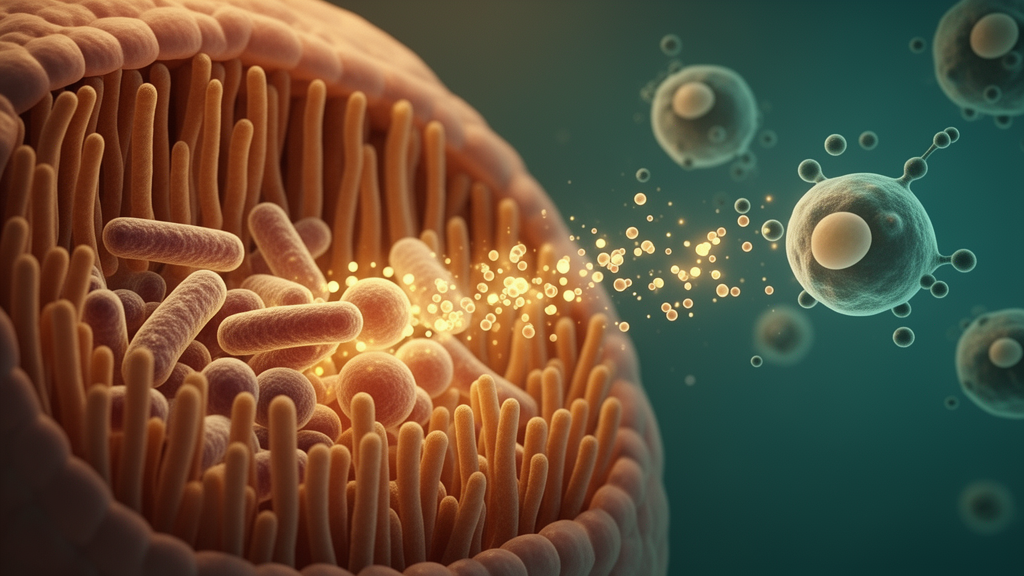
Sepsis and critical illness do more than trigger a storm of inflammation. According to a narrative review published in Frontiers in Microbiology by Chongchong Wu and Rui Liu of the Second Affiliated Hospital of Zhejiang Chinese Medical University, they can profoundly disturb the intestinal microbiota–metabolite–host immune axis through the combined effects of shock, hypoxia, altered nutrition, antimicrobial exposure, organ dysfunction, and impaired epithelial barrier integrity. These disruptions reshape microbial metabolic capacity, host co-metabolism, and systemic metabolite exposure, while the host simultaneously displays overlapping features of hyperinflammation, immune tolerance, lymphocyte dysfunction, impaired antimicrobial defense, and tissue repair. Metabolites generated through microbial metabolism or shared microbial–host pathways may therefore contribute to immune reprogramming, although their effects are highly context dependent and cannot be regarded as uniformly beneficial or detrimental.
A central interpretive challenge the authors highlight is that critical illness does not correspond to a single immunological state. Even during the first days, anti-inflammatory circuits, lymphocyte apoptosis, monocyte deactivation, and inhibitory checkpoint signaling may develop alongside hyperinflammation. Postmortem tissues from patients who died of sepsis showed profound loss and functional impairment of immune effector cells, increased inhibitory receptor expression, and diminished cytokine production despite ongoing infection. Persistently low monocyte HLA-DR has been associated with nosocomial infection, while patients developing chronic critical illness exhibited sustained lymphopenia, increased soluble PD-L1, and more secondary infections than rapid recoverers. Circulating myeloid-derived suppressor cells may remain expanded for weeks and correlate with poor outcomes. Longitudinal studies have prompted reassessment of the traditional model of a uniform transition from systemic inflammation to delayed compensatory anti-inflammatory phase, replacing it with heterogeneous and overlapping immune trajectories.
Critical illness is often accompanied by a rapid decline in microbial diversity, expansion of opportunistic pathogens, and disruption of cross-feeding networks that normally generate short-chain fatty acids, indoles, secondary bile acids, and polyamines. Oxygen exposure, vasopressors, bowel hypoperfusion, fasting, interruptions of enteral nutrition, antimicrobial therapy, proton-pump inhibitors, opioids, sedatives, renal replacement therapy, and hepatic dysfunction can alter both microbial metabolic output and host metabolism and clearance. Prolonged ICU stays can be associated with ultra-low-diversity communities dominated by a single pathogen, and prospective studies in mechanically ventilated patients have linked gut dysbiosis with mortality. The biologically relevant exposure, the authors argue, is better understood not as the abundance of an individual taxon or the concentration of a single circulating metabolite, but as a dynamic flux shaped by microbial metabolic capacity, substrate availability, epithelial transport, host biotransformation, organ clearance, and tissue-specific receptor expression.
Among the metabolite classes examined, short-chain fatty acids illustrate the host-defense trade-off most clearly. Acetate, propionate, and butyrate are produced predominantly through microbial fermentation and signal through FFAR2, FFAR3, and HCAR2, while butyrate and propionate can also inhibit histone deacetylases. Foundational studies showed that butyrate promotes colonic regulatory T-cell differentiation through enhanced histone acetylation at the Foxp3 locus, and GPR109A signaling in colonic macrophages and dendritic cells restrains inflammation. Yet immune restraint does not necessarily imply enhanced antimicrobial defense. Butyrate altered neutrophil maturation, reduced NADPH oxidase components and secondary granule enzymes, and impaired early control of Pseudomonas aeruginosa in the lung despite increased neutrophil recruitment. In contrast, butyrate enhanced macrophage ROS-dependent killing in experimental leptospirosis through an MCT–HDAC3 axis. These divergent findings suggest that consequences of SCFA exposure vary according to pathogen identity, immune-cell type, exposure duration, tissue compartment, and the antimicrobial mechanism involved.
Tryptophan metabolism lies at the intersection of microbial and host pathways, and the review insists on separating them. Host indoleamine 2,3-dioxygenase generates kynurenine, whereas gut microorganisms generate indole, indole-3-aldehyde, indole-3-propionic acid, and indole-3-acetic acid, many of which signal through the aryl hydrocarbon receptor or pregnane X receptor. Microbial indole-3-aldehyde activates AhR in innate lymphoid cells and supports IL-22-dependent mucosal protection, and indole metabolites can engage intestinal PXR to restrain TLR4 signaling and maintain barrier integrity. Preclinical work has linked microbiota-derived IPA to enhanced macrophage phagocytosis and attenuated septic injury, and Limosilactobacillus reuteri-derived indole-3-carboxaldehyde enhanced macrophage bactericidal activity through DUSP1/ERK/NOX2/ROS signaling. Meanwhile, kynurenine is primarily a host inflammatory metabolite: higher kynurenine-to-tryptophan ratios were associated with immune and microvascular dysfunction in sepsis, and greater kynurenine-pathway activity was associated with hospital mortality in ARDS. Analyses that combine microbial indoles and host kynurenine products within a single microbiota pathway may therefore obscure biologically distinct processes.
Succinate and lactate demonstrate why source and anatomical compartment matter. Intracellular succinate accumulates in activated macrophages when the tricarboxylic-acid cycle is remodeled; it inhibits prolyl hydroxylases, stabilizes HIF-1α, and promotes IL-1β production. Extracellular succinate is sensed through SUCNR1/GPR91, and gut microbiota-derived succinate aggravated intestinal ischemia–reperfusion-associated lung injury, whereas myeloid SUCNR1 supported an anti-inflammatory macrophage program in metabolic inflammation. Critical illness may increase host-derived succinate through hypoxia and mitochondrial dysfunction while simultaneously increasing luminal microbial succinate through disruption of succinate-consuming cross-feeding networks, so plasma concentrations alone are unlikely to distinguish these sources. Lactate, predominantly a host marker of hypoperfusion and glycolysis in critical illness, can suppress innate inflammatory signaling through GPR81, but the same negative feedback can become maladaptive: Enterococcus faecalis-derived lactic acid suppressed macrophage activation and facilitated persistent polymicrobial wound infection, and experimental stimulation of pyruvate dehydrogenase complex activity improved bacterial clearance and survival in septic mice.
The remaining classes reinforce the same message of molecular and contextual specificity. Secondary bile acids generated by microbial transformation of hepatic primary bile acids signal through FXR, TGR5, and VDR; specific species inhibit Th17 differentiation or promote Treg differentiation, and bile-acid activation of TGR5 can suppress NLRP3 inflammasome activation, yet chenodeoxycholic acid activated NLRP3 and contributed to cholestatic fibrosis in mice. TMAO, a meta-organismal product of microbial trimethylamine followed by hepatic oxidation, can increase platelet responsiveness and thrombosis potential, but in 95 mechanically ventilated patients with sepsis, lower rather than higher plasma TMAO was associated with poorer nutritional status and longer prior antibiotic exposure. Polyamines such as spermidine arise from both host and microbial arginine/ornithine metabolism and support efferocytosis, epithelial repair, and T-cell regulation while also suppressing dendritic-cell activation. Aromatic microbial–host co-metabolites such as phenylacetylglutamine, p-cresyl sulfate, and indoxyl sulfate engage distinct inflammatory programs, and PAGln acts as an endogenous allosteric modulator of β2-adrenergic receptors, potentially relevant in catecholamine-treated critically ill patients.
Human studies in critically ill populations have linked dysbiosis and metabolomic alterations with secondary infection, prolonged organ support, and mortality, but most have not been able to resolve microbial source attribution or establish causal mediation. Integrated intestinal microbiome and urinary metabolome data have been used to predict secondary infection, and host–microbe multiomic profiling has associated sepsis mortality with neutrophil degranulation and reduced T-cell signaling. Yet a circulating or fecal metabolite may improve prognostic discrimination because it reflects renal dysfunction, hepatic impairment, nutritional substrate, antimicrobial exposure, or tissue hypoxia rather than because the metabolite itself mediates immune dysfunction. Many available datasets are single-center, lack pre-illness baselines, rely on limited sampling time points, or measure stool and circulating metabolites asynchronously. Current intervention data, including a large randomized trial finding no reduction in ventilator-associated pneumonia with Lactobacillus rhamnosus GG, were not primarily designed to stratify patients by immune state or quantify intended metabolite exposure.
Against this background, the review proposes a source–state–exposure–competence framework: interpretation of any metabolite signal depends on whether it is predominantly microbial, host derived, or generated through microbial–host co-metabolism; on the prevailing immune context; on concentration, duration, and anatomical compartment; and on whether the observed immune response remains compatible with effective antimicrobial defense. Microbiome-directed interventions may be most appropriately investigated as context-dependent modulators of host defense rather than as broadly anti-inflammatory strategies. Future work would benefit from integrating longitudinal microbiome, metabolome, immune-function, and organ-clearance measurements with source-resolved approaches, including isotope tracing, as well as state-specific and trajectory-informed clinical endpoints. The central translational question, the authors conclude, is not simply which microbial metabolite is beneficial, but which metabolic pathway, arising from which source and exposure, and acting within which immune context, is associated with preserved or impaired host defense—and whether that pathway can be modified without compromising antimicrobial competence.
Subject of Research: Gut microbiota–host co-metabolism in sepsis and critical illness
Article Title: Gut microbiota–host co-metabolism in sepsis and critical illness: source, compartment, immune state, and host defense
Article References: Wu, C., & Liu, R. (2026). Gut microbiota–host co-metabolism in sepsis and critical illness: source, compartment, immune state, and host defense. Frontiers in Microbiology, 17, 1975307. https://doi.org/10.3389/fmicb.2026.1975307
Image Credits: AI Generated
DOI: 10.3389/fmicb.2026.1975307
Keywords: microbiota, host, co-metabolism, sepsis, critical, illness, source, compartment, immune, state, defense, scientific research
News Source: Morgan Morrow. (October 26, 2026). Gut Microbial Metabolites Reshape Immunity in Sepsis, Review Finds. Scienmag.