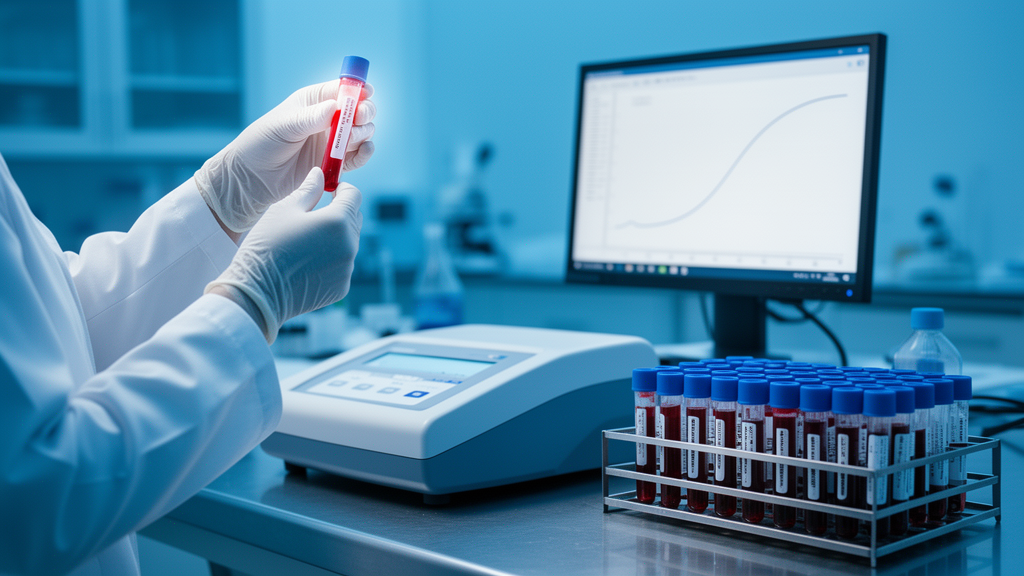
Adults hospitalised with COVID-19 who carried high levels of the inflammatory signalling molecule interleukin-6 together with a high proportion of neutrophils in their blood faced a dramatically elevated risk of death, according to an exploratory analysis of data from a phase 3 randomised controlled trial. Researchers combined these two baseline measurements into a single composite score and found that patients scoring at or below 72.1 on the 100-point scale had an estimated hazard ratio for mortality of 14.3, with a 95% confidence interval of 4.1 to 49.3 and a P value below 0.0001. In practical terms, patients in this high-risk group showed roughly fourteen times greater mortality risk than those with higher scores, and the composite measure discriminated between high- and low-risk patients more strongly than two established clinical assessment tools.
The analysis, published in the journal Advances in Therapy, drew on the COMMUNITY trial, a global, multicentre, adaptive-platform study designed at the height of the pandemic to rapidly test candidate treatments for hospitalised COVID-19 patients. Between November 24, 2020 and June 4, 2021, the trial enrolled 515 adults, of whom 384 were assigned to the apremilast sub-protocol. The biomarker analysis included 378 of these patients, using baseline samples collected on the first day of hospitalisation before any study treatment was given, together with longitudinal samples from the placebo arm collected at baseline, day 8, and day 29 or at discharge. The investigators deliberately restricted longitudinal analyses to placebo-treated patients to avoid confounding from the investigational drugs, which included zilucoplan, apremilast, and lanadelumab, each with distinct mechanisms of action.
The study population consisted of adults with laboratory-confirmed SARS-CoV-2 infection and clinical severity grades 2 to 5 on an 8-point ordinal scale, where lower numbers indicate worse status. Most patients fell into grade 3, meaning they required non-invasive ventilation or high-flow oxygen, or grade 4, meaning they needed supplemental oxygen. The mean age was 56.3 years, 59.5% were male, and 78.3% were white. As external reference groups for descriptive comparison, the researchers also analysed serum from 20 healthy volunteers and 13 ambulatory patients with COVID-19 obtained from commercial sources, although these samples were not matched to the trial population and were not used to derive or validate the prognostic score.
The team measured fifty biomarkers and immune cell parameters, including ten pro-inflammatory cytokines assessed with a validated Meso Scale Discovery 10-plex panel. After pre-filtering to exclude markers with more than 50% missing values or insufficient variability, 39 biomarkers remained for analysis. Statistical models were applied to each marker with false discovery rate adjustment using the Benjamini–Hochberg approach, and composite score development was restricted to combinations of two baseline biomarkers to reduce the risk of overfitting given the sample size. The resulting score was a continuous variable from 0 to 100, with higher values indicating lower risk, and its performance was evaluated with receiver operating characteristic curves and leave-one-out cross-validation.
The cytokine findings confirmed the hyperinflammatory signature of severe disease. Baseline levels of interleukin-6, interleukin-8, interleukin-10, and tumour necrosis factor alpha were higher in the 378 hospitalised patients than in healthy volunteers, and interleukin-6 and interleukin-10 were also significantly higher than in ambulatory COVID-19 patients. Higher levels of these four cytokines were associated with worse status on the 8-point severity scale, while interferon-gamma showed no clear directional association. Beyond the cytokines, C-reactive protein, ferritin, lactate dehydrogenase, white blood cell count, and neutrophil percentage were positively associated with severity, whereas lymphocyte percentage was negatively associated. At baseline, the serum cytokines showed only weak or no correlation with the clinical laboratory markers, suggesting they captured partly distinct facets of the host response.
Longitudinal analysis of placebo-treated patients revealed how these markers tracked with recovery. Interleukin-6, interleukin-8, interleukin-10, d-dimer, procalcitonin, ferritin, lactate dehydrogenase, neutrophil percentage, and white blood cell count were overall lower in patients discharged by day 29 than in those who were not. Notably, interleukin-10, procalcitonin, ferritin, and lactate dehydrogenase did not differ significantly between the groups at baseline but diverged over time, while the other parameters separated from the outset. Cytokine levels were similar across age groups at all time points, indicating that the observed differences were not driven by patient age. The researchers also examined coagulation-related markers: d-dimer levels were overall lower in patients discharged by day 29, and higher baseline fibrinogen was associated with higher scores on the National Early Warning Score version 2, consistent with the recognised role of thromboinflammation in severe COVID-19.
The NEWS2 analysis linked the inflammatory and haematological markers to a validated clinical deterioration score, which ranges from 0 to 20 based on six physiological parameters, with a threshold of 5 triggering urgent clinical response. Higher baseline levels of interleukin-6 and interleukin-8, along with C-reactive protein, ferritin, lactate dehydrogenase, fibrinogen, white blood cell count, neutrophil percentage, and neutrophil count, were associated with higher NEWS2 scores, while a lower lymphocyte percentage was associated with higher scores. Survival analyses added further context: overall survival probability was significantly reduced in patients aged 60 or older and in those with pre-existing diabetes, cardiovascular disease, or lung disease.
When the researchers tested single markers and all possible two-marker combinations against overall survival, the pairing of baseline interleukin-6 and neutrophil percentage performed best. This composite integrates two complementary biological pathways: cytokine-mediated hyperinflammation and innate immune activation reflected in the myeloid cell compartment. Patients with a composite score at or below 72.1, a tertile cutoff corresponding to higher interleukin-6 and higher neutrophil percentage, had a significantly lower probability of survival than those scoring above the cutoff. The composite outperformed not only its individual components but also the established clinical tools: the NEWS2 score yielded a hazard ratio of 6.2 (95% confidence interval 2.3 to 17.2) and the 8-point ordinal scale a hazard ratio of 7.4 (95% confidence interval 2.7 to 20.7), both statistically significant but weaker than the composite’s 14.3.
The authors emphasise that the composite score is not intended to replace existing risk tools such as NEWS2, the 8-point ordinal scale, or the ISARIC/WHO 4C models, but to complement them by adding biologically informative markers of the host inflammatory response. A practical advantage of the composite approach is that it avoids setting separate cutoffs for each component, reducing complexity at the bedside. The researchers suggest the strategy of combining complementary biomarkers through statistical and machine learning methods could also serve as a pragmatic template for prognostic scoring in future viral outbreaks, and that early monitoring of interleukin-6, interleukin-8, neutrophil and white blood cell counts, ferritin, lactate dehydrogenase, and lymphocyte percentage may help identify hospitalised patients at risk of serious clinical events.
Important limitations temper these findings. The analysis was exploratory and post hoc, the composite score has not been externally validated, and the trial was conducted early in the pandemic, so the observations need validation within the current treatment paradigm, in which dexamethasone with or without remdesivir, and immunomodulators such as baricitinib or tocilizumab for severe cases, are standard. Few patients were intubated at baseline, limiting generalisability to the most severely ill, and some laboratory assessments were missing because of the logistical difficulties of running a trial during the pandemic. The external reference samples from healthy volunteers and ambulatory patients were not matched to the trial population, no formal sample size calculation was performed for those comparisons, and the study did not directly measure endothelial injury or adjudicated thrombotic events, so the coagulation findings should be interpreted as supportive. The authors conclude that independent prospective validation is warranted before any implementation in routine clinical practice.
Subject of Research: Prognostic blood biomarkers for predicting adverse outcomes in adults hospitalised with COVID-19
Article Title: Evaluation of Potential Prognostic Biomarkers for Identifying Adults Hospitalised with COVID-19 at Increased Risk of Adverse Clinical Outcomes
Article References: Hu, X., Setiadi, A. F., Detalle, L., Sexton, D., Finkelman, R. D., Teixeira dos Santos, M. C., Burns, C. E., Notari, K. H., Lalla, M., Yeung, D., & Charuworn, P. (2026). Evaluation of Potential Prognostic Biomarkers for Identifying Adults Hospitalised with COVID-19 at Increased Risk of Adverse Clinical Outcomes. Advances in Therapy. https://doi.org/10.1007/s12325-026-03798-8
Image Credits: AI Generated
DOI: 10.1007/s12325-026-03798-8
Keywords: COVID-19, biomarkers, interleukin-6, neutrophils, prognosis, COMMUNITY trial, hyperinflammation, NEWS2, hospitalised patients, mortality risk, composite score, SARS-CoV-2
News Source: Ophelia Keating. (October 25, 2026). Blood Test Combining IL-6 and Neutrophil Levels Predicts COVID-19 Death Risk in Hospitalised Adults. Scienmag.