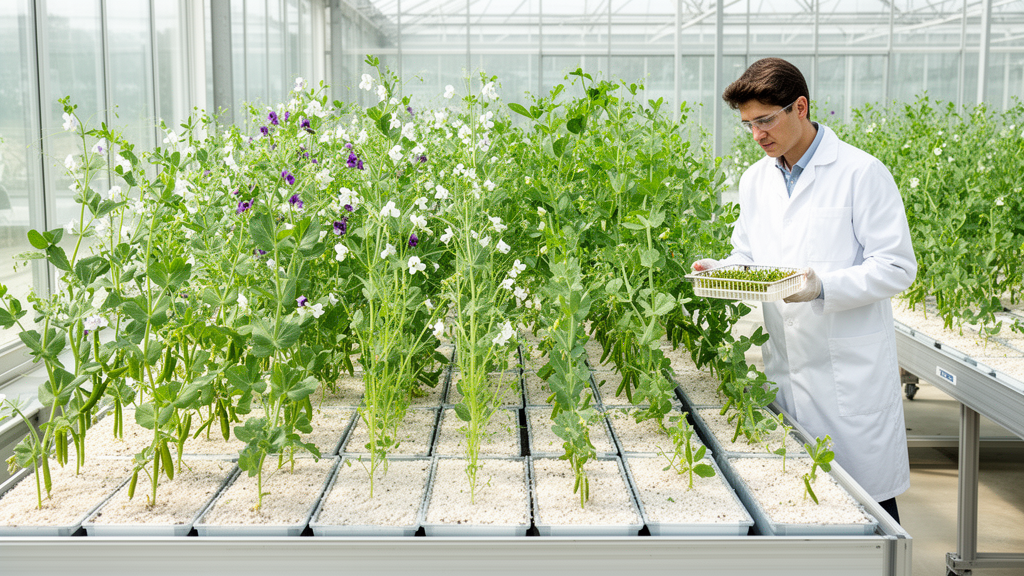
A fuzzy multi-trait evaluation of 150 pea genotypes identified nine candidates with the strongest measured salinity tolerance at the seedling stage. The study classified the nine as salt tolerant, 73 as moderately sensitive and 68 as sensitive. Researchers combined eight seedling traits with correlation analysis, principal component analysis and fuzzy comprehensive evaluation to distinguish the responses of the tested collection. Vigour index-I and seedling length showed the strongest associations with the mean fuzzy membership value, making them the leading indicators identified for early screening.
The researchers first screened 33 pea genotypes in vitro at six sodium chloride concentrations ranging from 50 to 300 mM. During this calibration, they assessed eight seedling traits and calculated a salt injury index. An average index value of 0.5 across the traits identified 100 mM NaCl as the optimal concentration for differentiating genotype tolerance at this screening stage. The studied parameters showed an average reduction of 57.8% at that concentration, after which the researchers screened 150 pea genotypes using the same eight seedling traits.
The multi-trait analysis found coordinated relationships among the measured seedling characteristics. Principal component analysis also indicated that salinity response was expressed through multiple interacting traits rather than a single isolated measurement. The researchers then used fuzzy comprehensive evaluation to determine a membership function value for every genotype based on its combined trait data. The nine salt-tolerant candidates were VRPL-15, with a membership value of 0.93; VRPE-27 and VRPE-60, both at 0.85; VRPM-107, VRPE-36 and VRPM-2214, each at 0.80; VRPL-18, at 0.79; and VRPE-19 and VRPM-2440, each at 0.78. These values were the highest in the screened set.
Vigour index-I and seedling length had the strongest relationships with mean membership function value. Their coefficients of determination were R² = 0.789 and 0.696, respectively, while their corresponding beta coefficients were β = 0.139 and β = 0.298. The researchers therefore identified these two traits as reliable indicators for early-stage screening. The tolerant group included two field pea types, VRPL-15 and VRPL-18, and seven vegetable pea advanced lines. The study presents the nine genotypes as promising material for further validation and potential use as donor candidates in pea breeding programmes, but the reported evidence concerns the relative salinity responses of the tested genotypes at the seedling stage rather than field yield or broader agricultural performance.
Subject of Research: Early-stage screening of pea genotypes for salinity tolerance using seedling traits and fuzzy multi-trait evaluation.
Article Title: Identification of salinity-tolerant pea (Pisum sativum L.) genotypes through morphophysiological traits and fuzzy-based multi-trait evaluation for future breeding towards climate resilience
Article References: Singh, P. M., Devi, J., Maurya, B. K., & Kumar, R. (2026). Identification of salinity-tolerant pea (Pisum sativum L.) genotypes through morphophysiological traits and fuzzy-based multi-trait evaluation for future breeding towards climate resilience. BMC Plant Biology. https://doi.org/10.1186/s12870-026-09895-8
Image Credits: AI Generated
DOI: 10.1186/s12870-026-09895-8
Keywords: pea, salinity tolerance, seedling screening, sodium chloride, fuzzy evaluation, morphophysiological traits, crop breeding, field pea, vegetable pea, Identification, salinity-tolerant, Pisum
News Source: Alan Morgan. (October 25, 2026). Fuzzy multi-trait screening identifies nine salt-tolerant pea genotypes. Scienmag.