In a retrospective cohort study of adults receiving antiretroviral therapy at two hospitals in southern Ethiopia, 69.2% of participants with a documented HIV viral load of at least 1,000 copies/mL subsequently achieved viral suppression. The study included 344 adults treated at Bule Hora and Dilla Teaching Hospitals from January 2018 through December 2024. Investigators recorded 238 cases of viral suppression during 1,823 person-months of follow-up, corresponding to an incidence rate of 13.1 cases per 100 person-months. The median time to suppression was seven months, with an interquartile range of five to 12 months. These findings describe subsequent outcomes in the enrolled population; they do not establish that the same rates would occur in other settings or that any characteristic assessed caused the observed differences.
Participants entered the cohort at their first documented viral load of at least 1,000 copies/mL after receiving antiretroviral therapy for at least six months. Viral suppression was defined as a subsequent viral load below 1,000 copies/mL. The investigators estimated the incidence rate and time to suppression using survival analysis and assessed factors associated with suppression through Cox proportional hazards regression. The retrospective design limits the analysis to associations observed among the participants, rather than causal effects established through randomized assignment or experimental follow-up. The supplied study abstract does not describe the reference categories for all adjusted comparisons, so the results for each factor should be interpreted specifically in relation to the categories used in the analysis.
Several clinical and behavioral characteristics were associated with a higher rate of subsequent viral suppression in the multivariable analysis. Adults without an opportunistic infection had a higher hazard of suppression than those with one, with an adjusted hazard ratio of 1.44 and a 95% confidence interval of 1.06 to 1.96. Participants with CD4 counts of 200–350 cells/mm³ had an adjusted hazard ratio of 1.75, with a 95% confidence interval of 1.24 to 2.45, while those with CD4 counts above 350 cells/mm³ had an adjusted hazard ratio of 1.53, with a 95% confidence interval of 1.02 to 2.28. Non-substance use was also associated with a higher rate of suppression, with an adjusted hazard ratio of 1.54 and a 95% confidence interval of 1.19 to 1.99. These estimates represent adjusted observational associations, not evidence that changing a CD4 count, infection status or substance-use pattern would directly produce the same change in viral suppression.
Antiretroviral regimen was also associated with suppression rates. Compared with TDF+3TC+DTG, the regimens TDF+3TC+NVP and AZT+3TC+EFV were associated with lower rates of viral suppression. The supplied abstract does not provide numerical adjusted hazard ratios or confidence intervals for those two regimens, so their magnitude cannot be quantified from the available evidence. Treatment duration showed a progressive association: compared with antiretroviral therapy lasting less than 12 months, longer treatment durations were associated with lower rates of suppression. The abstract likewise does not report category-specific estimates for that comparison. Taken together, the results identify associations between viral suppression and CD4 count, opportunistic infection, regimen, treatment duration and substance use in adults who had received antiretroviral therapy for at least six months before entering the cohort. The investigators concluded that strengthening clinical monitoring, optimizing antiretroviral therapy and addressing clinical and behavioral barriers may improve suppression in this population. That conclusion identifies possible areas for further intervention, but the study did not experimentally test the effects of those measures.
Subject of Research: Incidence and associated factors of viral suppression among adults with high HIV viral loads receiving antiretroviral therapy in southern Ethiopia
Article Title: Incidence and factors associated with viral suppression among adults with HIV and viral load ≥1,000 copies/mL receiving antiretroviral therapy in Southern Ethiopia: a retrospective cohort study
Article References: Hasen, A., Taffese, F., Belayneh, M., Solomon, T., & Yoseph, A. (2026). Incidence and factors associated with viral suppression among adults with HIV and viral load ≥1,000 copies/mL receiving antiretroviral therapy in Southern Ethiopia: a retrospective cohort study. BMC Infectious Diseases. https://doi.org/10.1186/s12879-026-14400-5
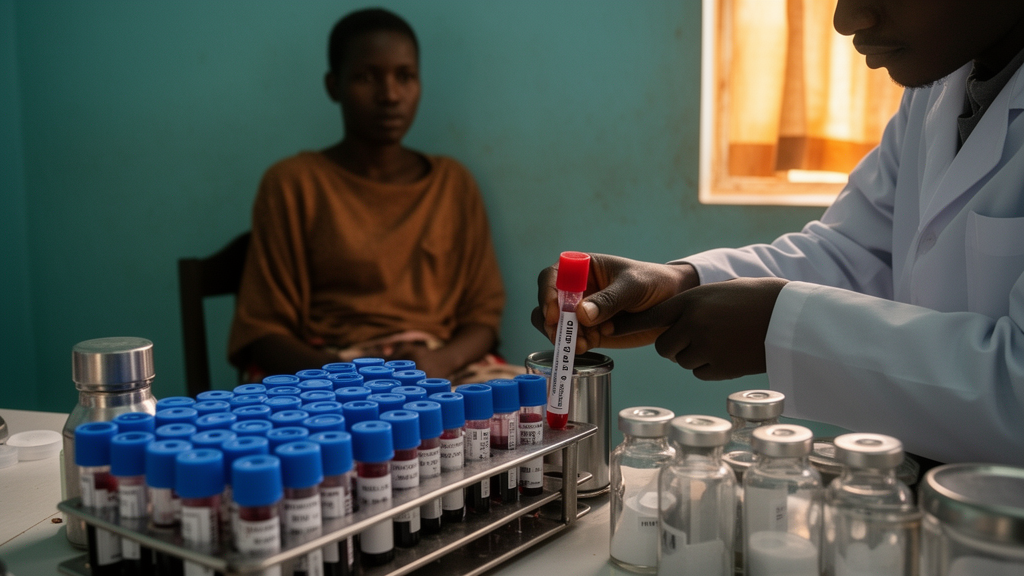
Image Credits: AI Generated
DOI: 10.1186/s12879-026-14400-5
Keywords: HIV, viral suppression, antiretroviral therapy, viral load, CD4 count, opportunistic infection, antiretroviral regimens, substance use, southern Ethiopia, retrospective cohort, Incidence, factors
News Source: Kristina Jarvis. (October 25, 2026). Retrospective cohort links high viral load to later suppression in southern Ethiopia. Scienmag.