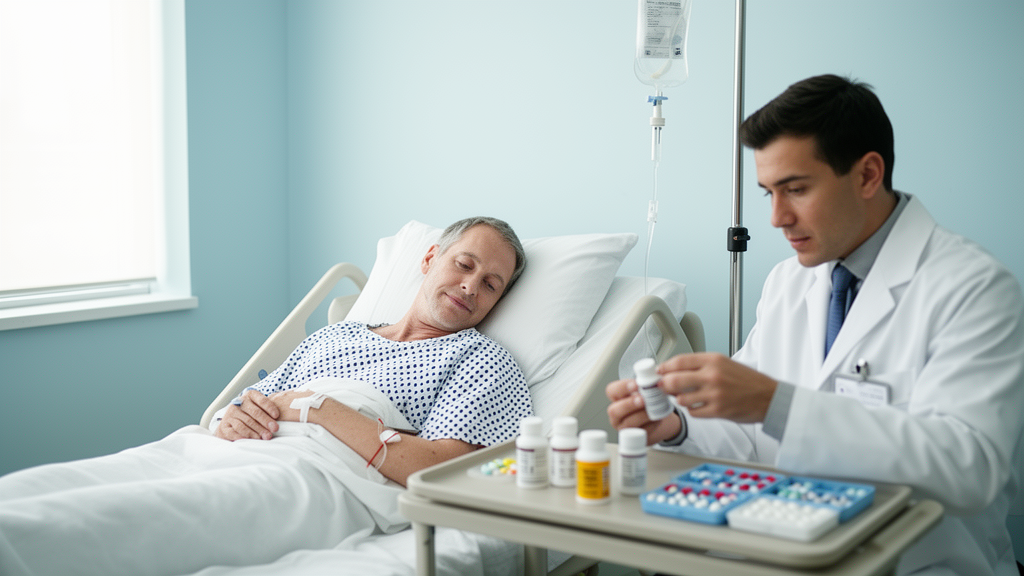
Brain-dead organ donors who received a targeted antibiotic regimen to reduce potentially harmful microorganisms in the digestive tract left their simultaneous pancreas-kidney transplant recipients with significantly fewer postoperative infections, according to a retrospective cohort study published in BMC Infectious Diseases. The regimen, known as selective digestive decontamination, or SDD, aims to eradicate pathogenic microorganisms from the gastrointestinal tract. Because brain death is known to disrupt the gut barrier, promote bacterial translocation, and trigger systemic inflammation in donors, researchers examined whether decontaminating the donor gut before organ procurement might lower the infection risk carried over to recipients.
The single-center study included 276 consecutive recipients of simultaneous pancreas-kidney transplants whose organs came from brain-dead donors between January 2016 and June 30, 2025. Donors were divided into two groups: 118 received the complete SDD protocol, consisting of an oropharyngeal paste and an enteral suspension of polymyxin E, tobramycin, and amphotericin B, combined with four days of intravenous cefotaxime. The remaining 158 donors received standard care without SDD.
To reduce the influence of differences between the donor and recipient groups, the researchers used propensity score matching at a one-to-one ratio, which yielded 106 matched pairs for analysis. The primary endpoint was a 90-day composite of four major postoperative infection types: surgical site infection, bacteremia, intra-abdominal infection, and pneumonia. In the matched analysis, 27 patients in the SDD group, or 25.5 percent, experienced the composite endpoint, compared with 43 patients, or 40.6 percent, in the non-SDD group.
After statistical adjustment, this corresponded to an adjusted hazard ratio of 0.57 with a 95 percent confidence interval of 0.35 to 0.93 and a P value of 0.024, indicating a statistically significant reduction in overall infection risk associated with donor SDD. The benefit was most pronounced for two specific infection categories. Gram-negative bacteremia occurred at a substantially lower rate in recipients of organs from SDD donors, with an adjusted hazard ratio of 0.39 and a 95 percent confidence interval of 0.16 to 0.92.
Intra-abdominal infections were likewise reduced, with an adjusted hazard ratio of 0.44 and a confidence interval of 0.21 to 0.93. Surgical site infections were also less frequent in the SDD group, but the difference did not reach statistical significance in the matched analysis, with an adjusted hazard ratio of 0.65, a 95 percent confidence interval of 0.38 to 1.11, and a P value of 0.117. Pneumonia rates, one of the four components of the composite endpoint, were not highlighted as showing a significant difference in the reported results.
Importantly, the apparent infection benefit did not come with a measurable increase in antimicrobial resistance in this cohort. Rates of isolation of multidrug-resistant organisms did not differ between the SDD and non-SDD groups, an observation that speaks to one of the most common concerns about decontamination strategies, namely that selective antibiotic pressure could promote the emergence and spread of resistant bacteria. Graft outcomes were similar between the groups.
One-year pancreas graft survival was 94.3 percent among recipients whose donors received SDD, compared with 91.5 percent in the non-SDD group, a difference that was not statistically significant with a P value of 0.428. Length of hospital stay was included among the secondary endpoints, though the reported results emphasize the infection and survival measures as the principal findings. The study's design imposes important limitations.
As a retrospective, single-center cohort study, it relied on propensity score matching rather than randomization, so unmeasured differences in donor management, donor characteristics, or perioperative care could still have influenced the outcomes. The findings represent associations observed at one institution over roughly nine and a half years and cannot by themselves establish causation. The authors note that their results provide a strong rationale for prospective trials to properly assess both the efficacy and the safety of administering SDD to brain-dead donors.
Subject of Research: The effect of selective digestive decontamination in brain-dead donors on postoperative infections in simultaneous pancreas-kidney transplant recipients
Article Title: Impact of selective digestive decontamination in brain-dead donors on postoperative infections in simultaneous pancreas-kidney transplant recipients: a retrospective cohort study
Article References: Chen, R., Yin, W., Wu, J., Li, G., Fang, J., Guo, Y., Liu, L., & Chen, Z. (2026). Impact of selective digestive decontamination in brain-dead donors on postoperative infections in simultaneous pancreas-kidney transplant recipients: a retrospective cohort study. BMC Infectious Diseases. https://doi.org/10.1186/s12879-026-14712-6
Image Credits: AI Generated
DOI: 10.1186/s12879-026-14712-6
Keywords: selective digestive decontamination, brain-dead donors, simultaneous pancreas-kidney transplantation, postoperative infections, gram-negative bacteremia, intra-abdominal infection, propensity score matching, retrospective cohort study, multidrug-resistant organisms, graft survival, Impact, selective
News Source: Ophelia Keating. (October 25, 2026). Donor Gut Antibiotic Regimen Tied to Fewer Infections After Pancreas-Kidney Transplants. Scienmag.