• HOME
  • NEWS
  • EXPLORE
    • CAREER
      • Companies
      • Jobs
    • EVENTS
    • iGEM
      • News
      • Team
    • PHOTOS
    • VIDEO
    • WIKI
  • BLOG
  • COMMUNITY
    • FACEBOOK
    • INSTAGRAM
    • TWITTER
Sunday, August 30, 2026
BIOENGINEER.ORG
No Result
View All Result
  • Login
  • HOME
  • NEWS
  • EXPLORE
    • CAREER
      • Companies
      • Jobs
        • Lecturer
        • PhD Studentship
        • Postdoc
        • Research Assistant
    • EVENTS
    • iGEM
      • News
      • Team
    • PHOTOS
    • VIDEO
    • WIKI
  • BLOG
  • COMMUNITY
    • FACEBOOK
    • INSTAGRAM
    • TWITTER
  • HOME
  • NEWS
  • EXPLORE
    • CAREER
      • Companies
      • Jobs
        • Lecturer
        • PhD Studentship
        • Postdoc
        • Research Assistant
    • EVENTS
    • iGEM
      • News
      • Team
    • PHOTOS
    • VIDEO
    • WIKI
  • BLOG
  • COMMUNITY
    • FACEBOOK
    • INSTAGRAM
    • TWITTER
No Result
View All Result
Bioengineer.org
No Result
View All Result
Home NEWS Science News

Cholesterol-like molecules switch off the engine in cancer-targeting Natural Killer cells

Bioengineer by Bioengineer
September 18, 2017
in Science News
Reading Time: 2 mins read
0
Share on FacebookShare on TwitterShare on LinkedinShare on RedditShare on Telegram
IMAGE

Credit: Dr. David Finlay, Trinity College Dublin.

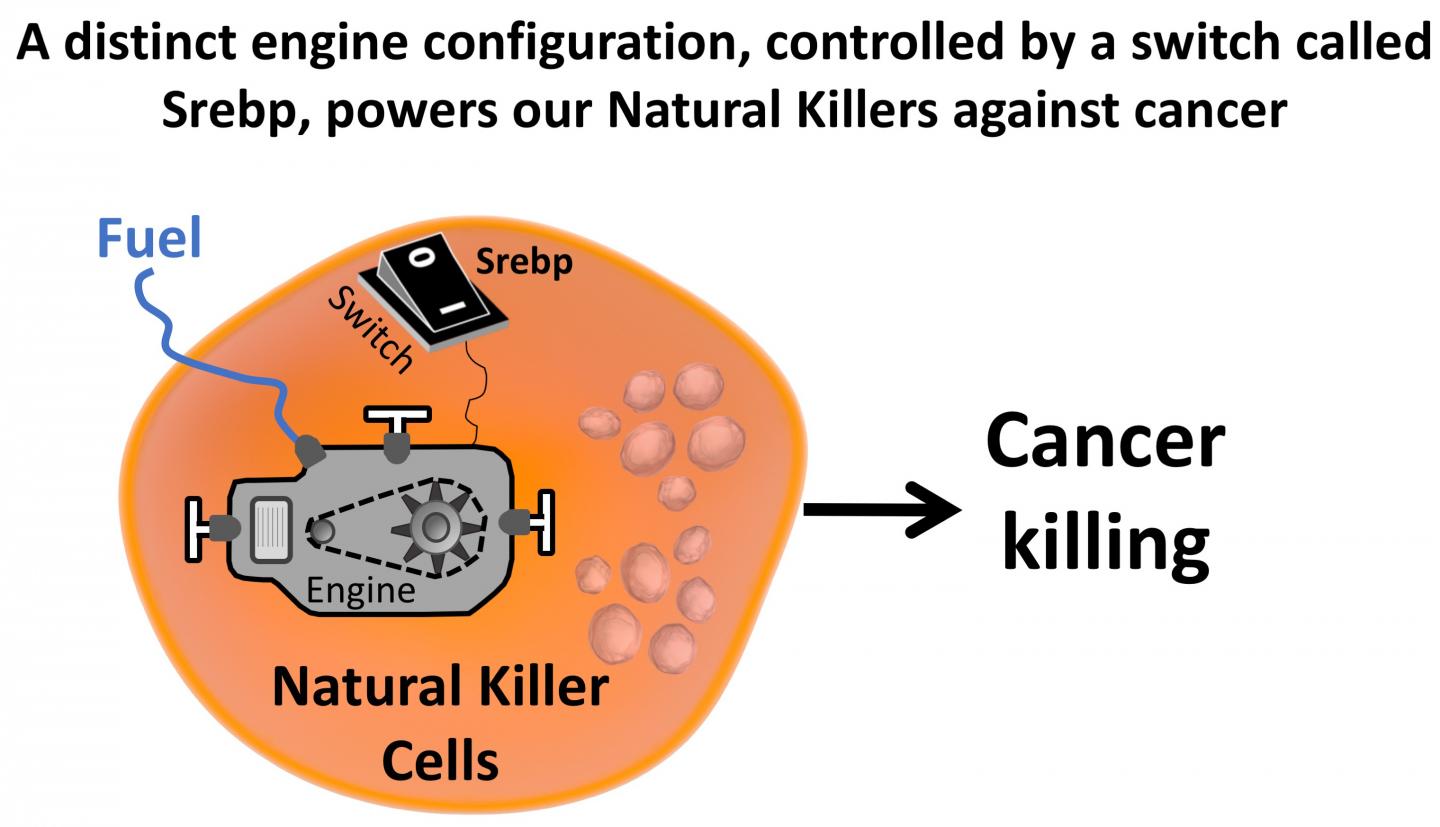
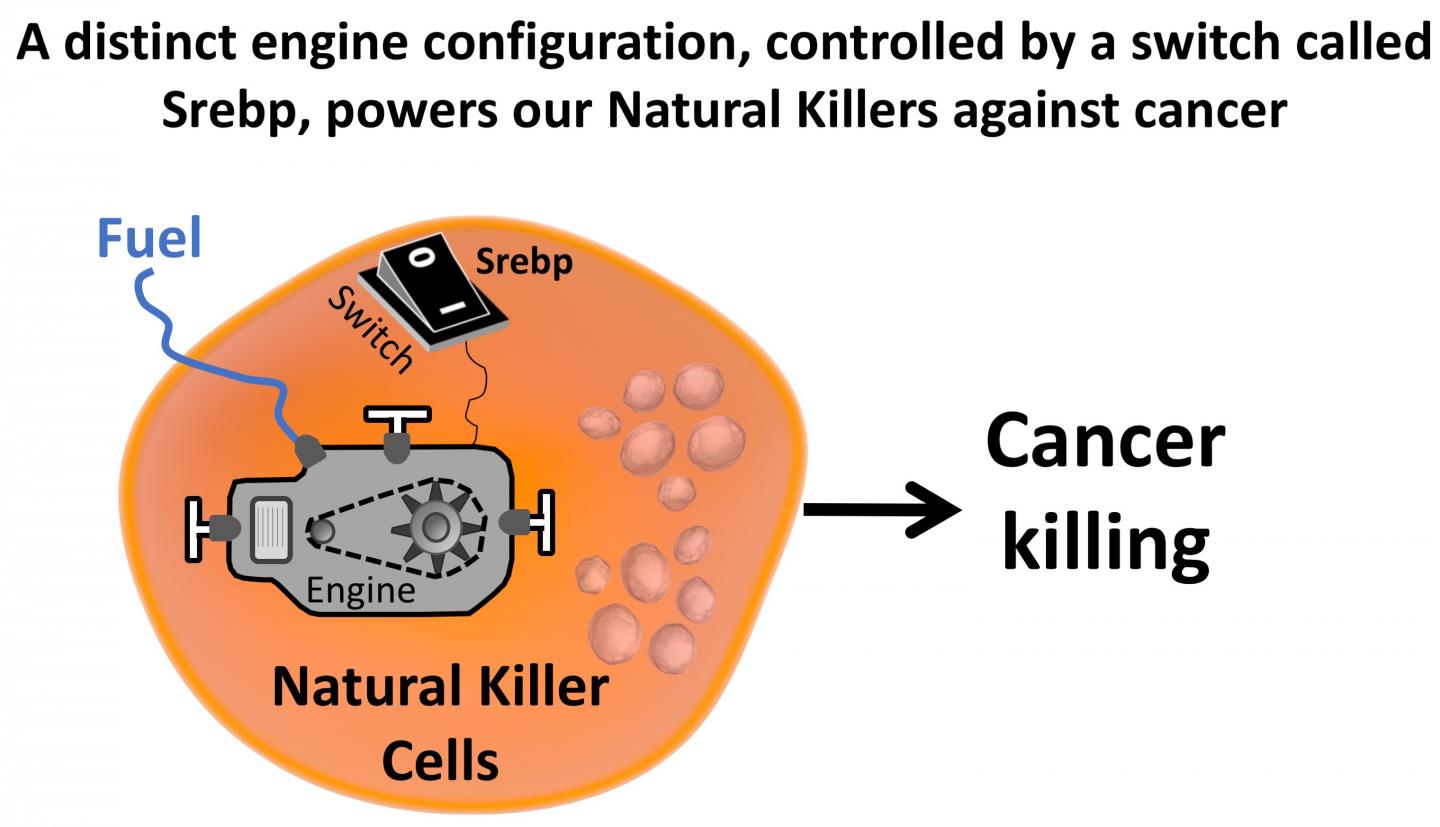
Scientists have just discovered how the engine that powers cancer-killing cells functions. Crucially, their research also highlights how that engine is fuelled and that cholesterol-like molecules, called oxysterols, act as a "cut-off" switch making it hard for our 'Natural Killer' cells to win the war against cancer.

The scientists, led by Ussher Assistant Professor in Immunometabolism at Trinity College Dublin, Dr David Finlay, have just published their findings in leading journal Nature Immunology. They report a previously unknown metabolic switch, which is essential for initiating the anti-tumour actions of Natural Killer cells.

Natural Killer (NK) cells are immune cells that play an important role in our defence against cancer, as they can directly kill tumour cells. Once activated, NK cells increase their uptake of cellular fuel, which is converted into energy by a biochemical engine. These engines and their fuel thus power the all-important tumour-killing machinery of the NK cells.

The new research shows that activated NK cells use a very different engine configuration to that observed in other immune cells and that the key factor that switches NK cells to this engine configuration is a protein called 'Srebp.' When the scientists used oxysterols to prevent this switch from occurring, the NK cells failed to kill tumour cells.

Dr David Finlay said: "The function of Srebp — the key factor that controls the energy production in Natural Killer cells and thus fuels their activity — is known to be blocked by cholesterol and cholesterol-like molecules, called oxysterols. Therefore, our findings reveal a previously unknown way by which the cancer-killing functions of Natural Killer cells can be disrupted."

As tumour cells can produce oxysterols and cholesterol levels tend to be higher in people with obesity, the scientists believe they may now have part of the explanation for why NK cells typically perform poorly in patients living with cancer and obesity.

"The next step is to investigate whether the functions of Natural Killer cells are indeed impaired in individuals with high cholesterol level, and whether cholesterol lowering interventions can restore NK cell function in these individuals," added Dr Finlay.

###

Media Contact

Thomas Deane
[email protected]
353-189-64685
@tcddublin

http://www.tcd.ie/

Related Journal Article

http://dx.doi.org/10.1038/ni.3838

Share12Tweet8Share2ShareShareShare2

Related Posts

75 Asparagus chloroplast genomes reveal conserved architecture and nuclear phylogenetic conflict

75 Asparagus chloroplast genomes reveal conserved architecture and nuclear phylogenetic conflict

August 30, 2026

Students Evaluate Virtual Reality Animation for Teaching Drug Absorption in Pharmacology

August 30, 2026

Telomere shortening links dioxin-like PCB exposure to children’s cognitive decline

August 30, 2026

Case Report Details Encephalitis Confined to the Cerebral Cortex

August 30, 2026
Please login to join discussion

POPULAR NEWS

  • 75 Asparagus chloroplast genomes reveal conserved architecture and nuclear phylogenetic conflict

    29 shares
    Share 12 Tweet 7
  • Students Evaluate Virtual Reality Animation for Teaching Drug Absorption in Pharmacology

    29 shares
    Share 12 Tweet 7
  • Telomere shortening links dioxin-like PCB exposure to children’s cognitive decline

    29 shares
    Share 12 Tweet 7
  • Case Report Details Encephalitis Confined to the Cerebral Cortex

    29 shares
    Share 12 Tweet 7

About

We bring you the latest biotechnology news from best research centers and universities around the world. Check our website.

Follow us

Recent News

75 Asparagus chloroplast genomes reveal conserved architecture and nuclear phylogenetic conflict

Students Evaluate Virtual Reality Animation for Teaching Drug Absorption in Pharmacology

Telomere shortening links dioxin-like PCB exposure to children’s cognitive decline

Subscribe to Blog via Email

Enter your email address to subscribe to this blog and receive notifications of new posts by email.

Join 85 other subscribers
  • Contact Us

Bioengineer.org © Copyright 2023 All Rights Reserved.

Welcome Back!

Login to your account below

Forgotten Password?

Retrieve your password

Please enter your username or email address to reset your password.

Log In
No Result
View All Result
  • Homepages
    • Home Page 1
    • Home Page 2
  • News
  • National
  • Business
  • Health
  • Lifestyle
  • Science

Bioengineer.org © Copyright 2023 All Rights Reserved.