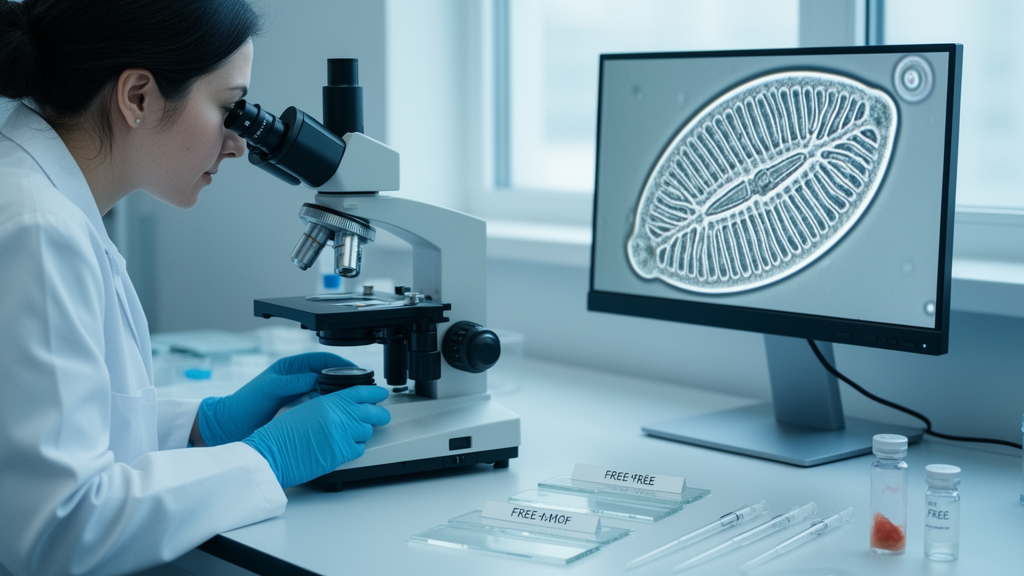
A quantitative approach to diatom analysis can match lung tissue from confirmed drowning cases to the correct body of water with up to 95 per cent accuracy when the true site is among the candidates, according to a study published in the International Journal of Legal Medicine. The new study tested how accurately lung samples can be matched to candidate water bodies using statistical methods rather than qualitative comparison alone. The researchers analysed thirty-two aquatic–lung pairs from confirmed drowning cases, extracting diatoms with a lossless nitric acid and phase-contrast filtration method.
Permutational analysis of variance showed that each aquatic–lung pair shared a highly significant, pair-specific diatom signal, with the pairing factor explaining 86 per cent of the variation in the data (R2 = 0.86, p = 0.001). Differences between the water samples and the corresponding lung samples were statistically insignificant, indicating that lung diatom assemblages reflected the communities present at the drowning site. This established lung samples as highly representative of the site-specific aquatic community in the analysed cases.
The strength of the matching depended on geography. Beta regression analysis identified the spatial tightness of the sampling locations as the sole significant factor affecting pairing accuracy, with a pseudo-R2 of 0.50. The authors describe this as confirming the strong site-specific character of the aquatic–lung pairs.
To simulate real casework, in which one lung sample may be compared against several possible water bodies, the team applied a mutual nearest neighbour criterion. When one lung sample was compared to two candidate aquatic samples, the correct site was identified in 95 per cent of cases. Accuracy declined as the candidate pool grew, but even with eleven competing water bodies the method still reached the correct match in 79 per cent of cases.
To control false positives, the researchers introduced the nearest neighbour distance ratio as a decision parameter and calibrated empirical thresholds at the 95 per cent level, limiting the false-positive rate to 5 per cent within the resampling framework. Corresponding true-positive sensitivity was reported for the three best-performing quantitative distance metrics: Bray–Curtis dissimilarity, quantitative Jaccard distance and Hellinger distance. From these results the authors built a practical decision guide for selecting the most probable drowning site and assessing how distinctive the match is relative to the candidate pool.
The authors are explicit about the method's boundary. The framework performs well when the true drowning site is present among the candidates, but the analysis cannot confirm that the actual site was sampled at all. If the genuine water body is missing from the pool, a false candidate may still emerge as the nearest neighbour, and the current criteria cannot reliably flag such a case.
The study's results indicate that quantitative analysis based on sample distance metrics provides a statistically quantifiable framework for drowning-site determination in cases where the true site is included in the candidate pool, while rejecting false pairings when the true site is absent remains beyond the sensitivity of the method.
Subject of Research: Quantitative diatom analysis for determining the site of drowning in forensic medicine
Article Title: Quantitative diatom analysis for drowning-site determination: Evaluation of accuracy and a practical decision guide
Article References: Bešta, T., Dohnalová, P., Zubíčková, K., Tomášek, P., Markvartová, J., Tomášková, E., Hauer, T., Zagatová, I., Lefnar, R., Hamrová, H., & Kaštovský, J. (2026). Quantitative diatom analysis for drowning-site determination: Evaluation of accuracy and a practical decision guide. International Journal of Legal Medicine. https://doi.org/10.1007/s00414-026-04047-x
Image Credits: AI Generated
DOI: 10.1007/s00414-026-04047-x
Keywords: diatoms, drowning, forensic science, legal medicine, lung tissue, PERMANOVA, Bray-Curtis, site determination, microalgae, quantitative analysis, decision threshold, aquatic ecology
News Source: Ophelia Keating. (October 24, 2026). Diatom Test Matches Lung Tissue to Drowning Site with 95 Percent Accuracy. Scienmag.