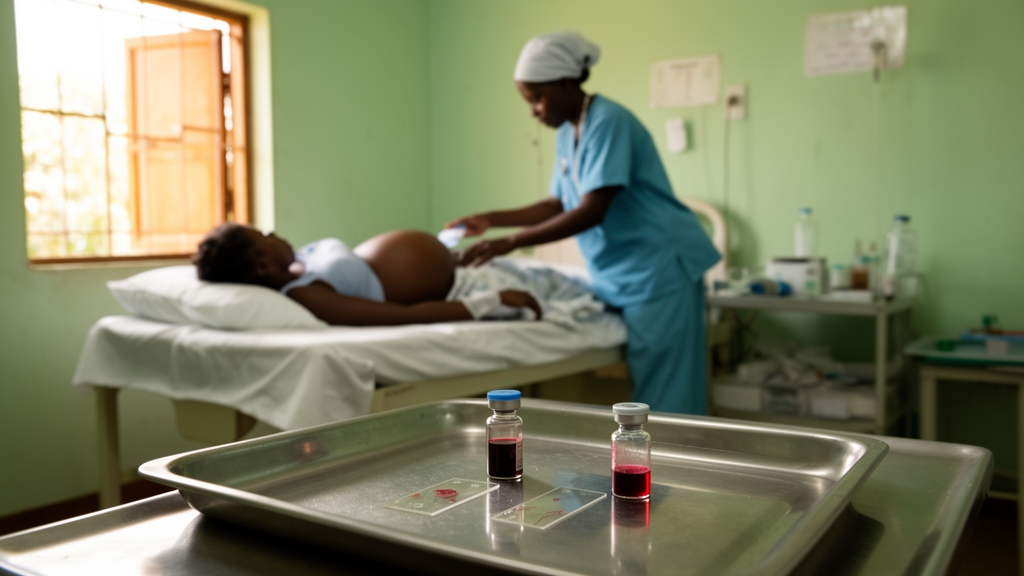
Researchers screening women giving birth at Jinja Regional Referral Hospital in eastern Uganda found microscopically detectable schistosomiasis in 44 of 392 participants, a prevalence of 11.2 percent (95% CI: 8.5–14.8). Among the microscopy-positive women, S. haematobium predominated, accounting for 63.6 percent of infections (95% CI: 48.2–76.7), while S. mansoni accounted for 29.5 percent (95% CI: 17.7–45.0) and mixed infections for 6.8 percent (95% CI: 2.1–19.6). Household water, sanitation and hygiene characteristics were strongly linked to infection.
After multivariable logistic regression adjustment, women whose main water source was unimproved had roughly three times the adjusted odds of microscopy-detected infection compared with other participants (aOR = 3.11; 95% CI: 1.46–6.64; p = 0.003). An unimproved main toilet facility showed the largest association (aOR = 4.40; 95% CI: 2.01–9.67; p < 0.001), and the absence of a handwashing facility roughly doubled the adjusted odds (aOR = 2.12; 95% CI: 1.02–4.41; p = 0.043). These principal WASH associations remained consistent in sensitivity analyses that used parsimonious conventional and Firth penalized models.
Antenatal care also featured in the analysis. Women reporting fewer than four antenatal care contacts had higher adjusted odds of infection than those reporting four to seven contacts (aOR = 8.43; 95% CI: 3.21–22.18; p < 0.001). The authors, however, caution that this antenatal care association requires cautious interpretation, and that the cross-sectional design cannot establish whether fewer care contacts contributed to infection or reflects other underlying differences between participants.
The study team emphasizes that these cross-sectional findings do not establish causality. Because exposure and infection were measured at the same time, the WASH characteristics identified are associated factors rather than proven causes of infection. Even so, the consistency of the WASH associations across sensitivity analyses strengthens the case that household water and sanitation conditions track closely with microscopy-detected schistosomiasis among delivering women in this setting.
The authors conclude that the results support further evaluation of context-appropriate schistosomiasis risk assessment within maternal health services, alongside coordinated WASH and schistosomiasis-control strategies in endemic settings. With more than one in ten delivering women at the hospital carrying microscopically detectable infections, and S. haematobium responsible for the majority of microscopy-classified cases, the findings point to delivery-based screening and household sanitation improvements as complementary targets for maternal health planning in eastern Uganda.
Subject of Research: Prevalence, microscopy-based species distribution and associated household WASH characteristics of maternal schistosomiasis at delivery in eastern Uganda
Article Title: Microscopically detectable maternal schistosomiasis at delivery in Eastern Uganda: Prevalence, microscopy-based species distribution and associated household WASH characteristics in a hospital-based cross-sectional study
Article References: Sande, G. B., Kasujja, M., Okurut, E., Okello, M., Ishimwe, M. P. S., Nteziyaremye, T., Yaweh, J., Mugabi, D., Liban, S., Okot, G., Neel, G. R., Sunday, B. Y., Igwe, M. C., Muhumuza, A., & Hakizimana, T. (2026). Microscopically detectable maternal schistosomiasis at delivery in Eastern Uganda: Prevalence, microscopy-based species distribution and associated household WASH characteristics in a hospital-based cross-sectional study. PLOS Global Public Health, 6(10), e0006297. https://doi.org/10.1371/journal.pgph.0006297
Image Credits: AI Generated
DOI: 10.1371/journal.pgph.0006297
Keywords: schistosomiasis, Schistosoma haematobium, Schistosoma mansoni, Uganda, maternal health, WASH, cross-sectional study, parasitology, antenatal care, Jinja Regional Referral Hospital, Microscopically, detectable
News Source: Harold Sullivan. (October 24, 2026). Schistosomiasis detected in one in nine women delivering at Ugandan hospital. Scienmag.