• HOME
  • NEWS
  • EXPLORE
    • CAREER
      • Companies
      • Jobs
    • EVENTS
    • iGEM
      • News
      • Team
    • PHOTOS
    • VIDEO
    • WIKI
  • BLOG
  • COMMUNITY
    • FACEBOOK
    • INSTAGRAM
    • TWITTER
Saturday, October 24, 2026
BIOENGINEER.ORG
No Result
View All Result
  • Login
  • HOME
  • NEWS
  • EXPLORE
    • CAREER
      • Companies
      • Jobs
        • Lecturer
        • PhD Studentship
        • Postdoc
        • Research Assistant
    • EVENTS
    • iGEM
      • News
      • Team
    • PHOTOS
    • VIDEO
    • WIKI
  • BLOG
  • COMMUNITY
    • FACEBOOK
    • INSTAGRAM
    • TWITTER
No Result
View All Result
Bioengineer.org
No Result
View All Result
Home NEWS Science News Health

Mental health research in Mozambique’s 18 million young people remains scarce, review finds

by
October 24, 2026
in Health
Reading Time: 2 mins read
0
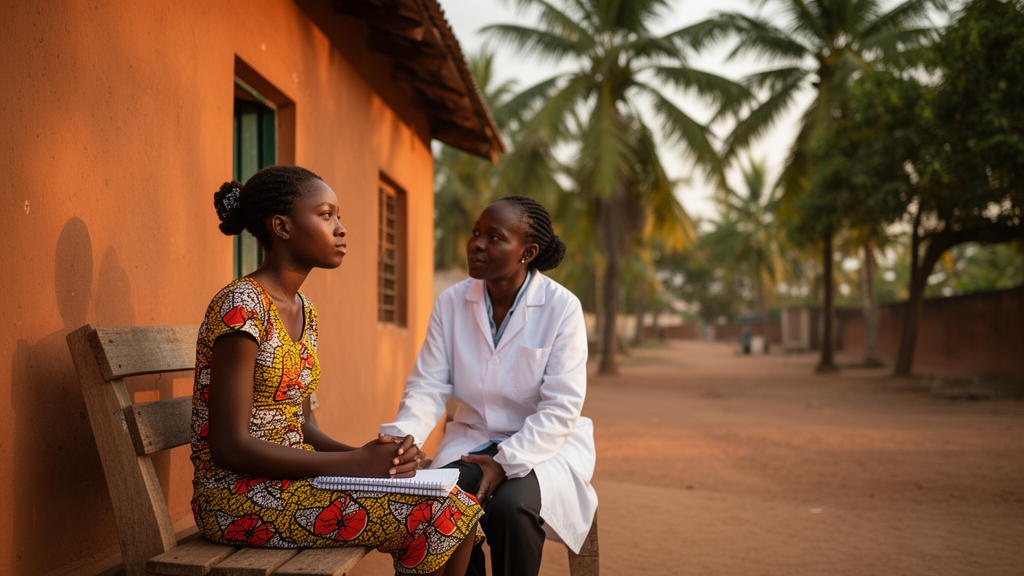
Mental health research in Mozambique's 18 million young people remains scarce, review finds

Mental health research in Mozambique's 18 million young people remains scarce, review finds

Share on FacebookShare on TwitterShare on LinkedinShare on RedditShare on Telegram

Mozambique’s 18 million children and adolescents are largely underrepresented in mental health research, and a new systematic review has now mapped just how thin the evidence base is. The review, registered with PROSPERO (CRD420251016208), searched PubMed, Web of Science, PsycINFO, CINAHL, Google Scholar, the African Index Medicus and local catalogues for studies covering people aged 0 to 19 years, following COSMIN and Cochrane extraction manuals. It identified 81 unique publications: 61 reports presenting prevalence estimates drawn from 25 studies, 29 reports covering 42 assessment instruments, and 9 reports describing 8 intervention trials.

Clinical prevalence of mental disorders was estimated in only two surveys. In Nampula, a survey of 748 children aged 6 to 18 years found an ADHD prevalence of 13.4 percent. In Maputo, among 486 adolescents aged 12 to 19 years, 23 percent received any mental diagnosis, with anxiety disorders at 17.5 percent, major depressive episodes at 8.5 percent, disruptive behaviour disorders at 6.6 percent, substance use disorders at 4.5 percent, ADHD at 3.3 percent and PTSD at 1.2 percent. The authors caution that these figures come from limited clinical data rather than a comprehensive national picture.

Most of the available research focused instead on psychosocial adversities. Nationally representative adolescent surveys reported substantial exposure to violence: 24.86 percent of adolescents experienced physical or emotional violence annually, 21.11 percent of girls suffered intimate partner violence, and 16.55 percent reported lifetime sexual abuse. National suicide rates were highest among 15 to 19-year-olds, at 1.53 per 100,000.

Measurement posed another problem. Of the 42 assessment instruments identified, only four had been cross-culturally adapted and showed reliable psychometric properties: the MINI-KID, GAD-7, PHQ-A and SDQ. Tools that had not been adapted to the local context performed poorly, and the review’s authors conclude that culturally sensitive approaches are warranted to strengthen local research capacity.

On interventions, the evidence was thinner still. Only one randomized clinical trial appeared in the literature, reporting a cost-effective intervention for neurodevelopment among preschoolers living in high-poverty settings. The review’s overall conclusion is that children and adolescents in Mozambique face significant psychosocial adversity, that available evidence suggests a substantial burden of mental disorders according to limited clinical data, and that both validated instruments and intervention research remain scarce.

Subject of Research: Prevalence estimates, assessment instruments and interventions for child and adolescent mental health in Mozambique

Article Title: The science of child and adolescent mental health in Mozambique: A systematic review of prevalence estimates, measurement tools, and interventions

Article References: Daniel, H. M. C., Marchionatti, L. E., Veronesi, J. A., Campello, A. C., Rohde, L. A., Casella, C. B., Raucci, P., Fumo, A. M. T., Mari, J., Salum, G. A., Gouveia, L., & Mneimneh, Z. (2026). The science of child and adolescent mental health in Mozambique: A systematic review of prevalence estimates, measurement tools, and interventions. PLOS Global Public Health, 6(10), e0007513. https://doi.org/10.1371/journal.pgph.0007513

Image Credits: AI Generated

DOI: 10.1371/journal.pgph.0007513

Keywords: Mozambique, child and adolescent mental health, systematic review, prevalence estimates, assessment instruments, psychosocial adversity, ADHD, anxiety disorders, cross-cultural validation, randomized controlled trial, suicide rates, global mental health

News Source: Glenn Wilkins. (October 24, 2026). Mental health research in Mozambique’s 18 million young people remains scarce, review finds. Scienmag.

Tags: ADHDAnxiety disordersassessment instrumentschild and adolescent mental healthcross-cultural validationglobal mental healthMozambiqueprevalence estimatespsychosocial adversityrandomized controlled trialsuicide ratessystematic review
Share12Tweet7Share2ShareShareShare1

Related Posts

Digital heart failure symptom intervention judged feasible in MOST preparation phase

Digital heart failure symptom intervention judged feasible in MOST preparation phase

October 24, 2026
Hyoid bone CT analysis estimates sex with 93.8 percent accuracy in forensic study

Hyoid bone CT analysis estimates sex with 93.8 percent accuracy in forensic study

October 24, 2026

Potassium channel gene KCNJ11 predicts glioma survival and chemotherapy response

October 24, 2026

Nutritional status outperforms platelet markers in predicting prolonged dengue hospitalization in children

October 24, 2026

POPULAR NEWS

  • New Auditing Framework Exposes Reliability Gaps in AI-Powered First-Aid Search Results

    New Auditing Framework Exposes Reliability Gaps in AI-Powered First-Aid Search Results

    29 shares
    Share 12 Tweet 7
  • Mental health research in Mozambique’s 18 million young people remains scarce, review finds

    29 shares
    Share 12 Tweet 7
  • Digital heart failure symptom intervention judged feasible in MOST preparation phase

    29 shares
    Share 12 Tweet 7
  • Hyoid bone CT analysis estimates sex with 93.8 percent accuracy in forensic study

    29 shares
    Share 12 Tweet 7

About

We bring you the latest biotechnology news from best research centers and universities around the world. Check our website.

Follow us

Recent News

New Auditing Framework Exposes Reliability Gaps in AI-Powered First-Aid Search Results

Mental health research in Mozambique’s 18 million young people remains scarce, review finds

Digital heart failure symptom intervention judged feasible in MOST preparation phase

Subscribe to Blog via Email

Enter your email address to subscribe to this blog and receive notifications of new posts by email.

Join 85 other subscribers
  • Contact Us

Bioengineer.org © Copyright 2023 All Rights Reserved.

Welcome Back!

Login to your account below

Forgotten Password?

Retrieve your password

Please enter your username or email address to reset your password.

Log In
No Result
View All Result
  • Homepages
    • Home Page 1
    • Home Page 2
  • News
  • National
  • Business
  • Health
  • Lifestyle
  • Science

Bioengineer.org © Copyright 2023 All Rights Reserved.