Credit: David Kust/Entomological Society of America
Annapolis, MD; September 11, 2017–A much greater number of monarch butterflies perished in a snowstorm in March 2016 in Mexico than previously estimated, according to new research. Analysis of damage from the storm–and the ensuing salvage logging–sheds further light on the precarious state of the famed butterflies' overwintering colonies.
Approximately 30-38 percent of the monarch butterflies (Danaus plexippus) in the Sierra Chincua and Cerro Pelón overwintering colonies died in the storm, says a team led by Lincoln Brower, Ph.D., research professor of biology at Sweet Briar College, far more than the estimated 7 percent mortality rate cited in initial media reports after the storm that struck between March 7 and March 11, 2016. The researchers' findings are reported in the latest issue of the Entomological Society of America's American Entomologist.
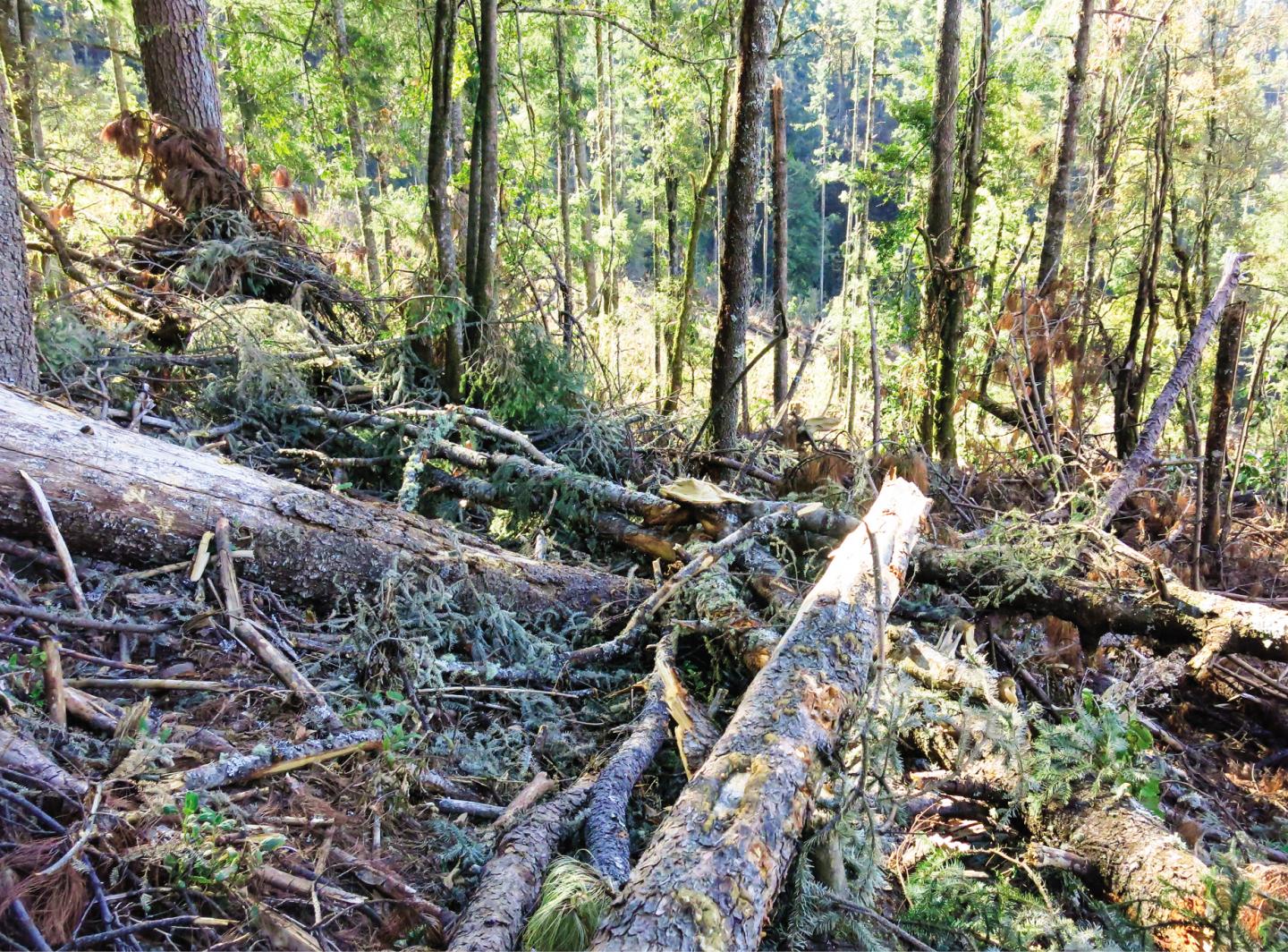
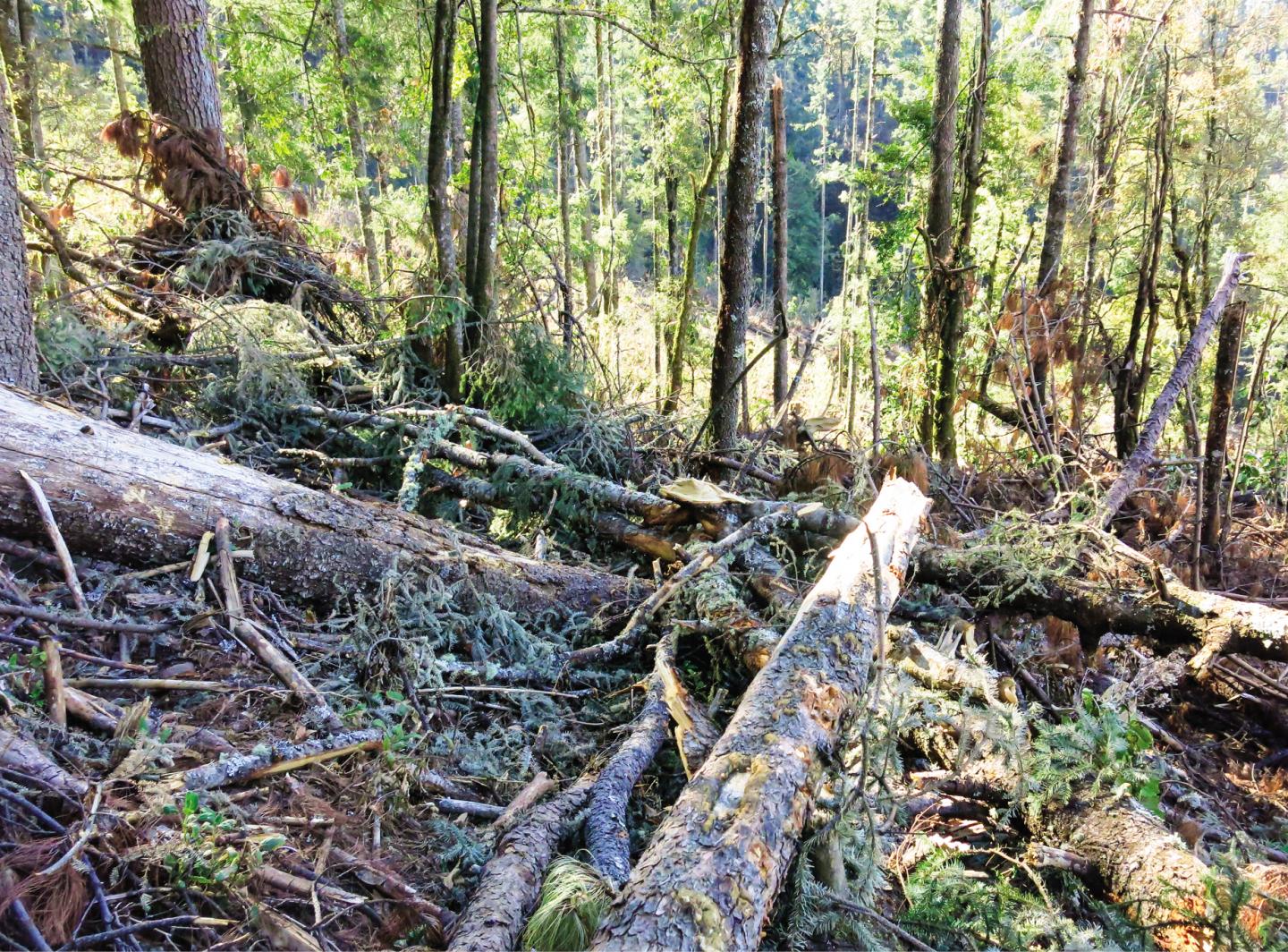
The storm was a severe combination of rain, snow, sleet, and hail along with strong winds and sub-freezing temperatures that downed several thousand Oyamel firs within the forests of the Monarch Butterfly Biosphere Reserve, declared a World Heritage Site by the United Nations in 2008. Typically, the dense forest creates a favorable "microclimate" for the monarchs, protecting them from exposure to intense winds, rain, and cold temperatures.
"The prolonged severe storm destroyed the normal microclimatic protection provided by the intact Oyamel forest and led to freezing in all the colonies," Brower says. "This awakened us to the realization that the forest surrounding the butterfly colonies also needs to be protected, as a generalized wind buffer."
Brower and colleagues counted dead butterflies in random plots within the colonies to estimate the total mortality rate from the storm: 31 percent in the Sierra Chincua colony and 38 percent in the Cerro Pelón colony. The true impact may still have been greater, however, as the researchers' analysis of weather data from stations within and surrounding the Monarch Butterfly Biosphere Reserve, measured against existing research on monarch butterfly mortality in freezing temperatures, "support the conclusion that the March 2016 storm mortality … was substantially greater than 40 percent," the researchers report.
Following the storm, the Mexican government permitted salvage logging to remove downed trees, due to concerns over potential fire or insect damage. Brower and colleagues argue, however, that the logging process was "profoundly disturbing and detrimental to the environment," decreasing the forest's ability to return to maturity and provide safe haven for the butterflies. A volume of 60,000 cubic meters of timber was approved for removal–equivalent to several thousand trees–which follows an incident of illegal logging occurring in the monarch reserve in 2015, reported in American Entomologist last year.
Brower was recently named a Fellow of the Entomological Society of America, in recognition of his career devoted to studying and raising awareness of the monarch butterfly and its overwintering colonies. Since the 1996-1997 overwintering season, the monarchs' colonies have declined in size by 90 percent. After more than 60 years, Brower's work carries on, he says. "We hope to carry out a drone study, photographing the colonies from a standard height above the butterflies and then using photometric analysis to estimate changing colony densities," he says. "We are concerned that the current methodology of reporting only total colony areas is underestimating the decline of monarchs overwintering in Mexico."
###
"Butterfly Mortality and Salvage Logging from the March 2016 Storm in the Monarch Butterfly Biosphere Reserve in Mexico" will be published online on September 15 in American Entomologist. Journalists may request advance copies of the article via the contact below.
CONTACT: Joe Rominiecki, [email protected], 301-731-4535 x3009
ABOUT: ESA is the largest organization in the world serving the professional and scientific needs of entomologists and people in related disciplines. Founded in 1889, ESA today has over 6,000 members affiliated with educational institutions, health agencies, private industry, and government. Headquartered in Annapolis, Maryland, the Society stands ready as a non-partisan scientific and educational resource for all insect-related topics. For more information, visit http://www.entsoc.org.
American Entomologist is the quarterly magazine for members of the Entomological Society of America. The magazine publishes articles and information of general entomological interest and includes columns, features, research, book reviews, letters to the editor, and obituaries. For more information, visit https://academic.oup.com/ae, or visit https://academic.oup.com/insect-science to view the full portfolio of ESA journals and publications.
Media Contact
Joe Rominiecki
[email protected]
301-731-4535 x3009
@EntsocAmerica
http://www.entsoc.org
Related Journal Article
http://dx.doi.org/10.1093/ae/tmx052