Children with end-stage renal disease who depend on hemodialysis are losing muscle mass at rates that standard growth charts fail to capture, according to a new cross-sectional study from Menoufia University Hospitals in Egypt. The research, published in Pediatric Research, combined quadriceps muscle ultrasonography with a bedside screening questionnaire called the subjective global nutritional assessment, or SGNA, and found that the two approaches agree well with each other while traditional anthropometric measurements often miss the damage. In a group of 68 children on hemodialysis, the SGNA flagged 85.3 percent as malnourished, ultrasound identified low muscle mass in 73.6 percent, and formal criteria for protein-energy wasting were met by 70.6 percent of the group.
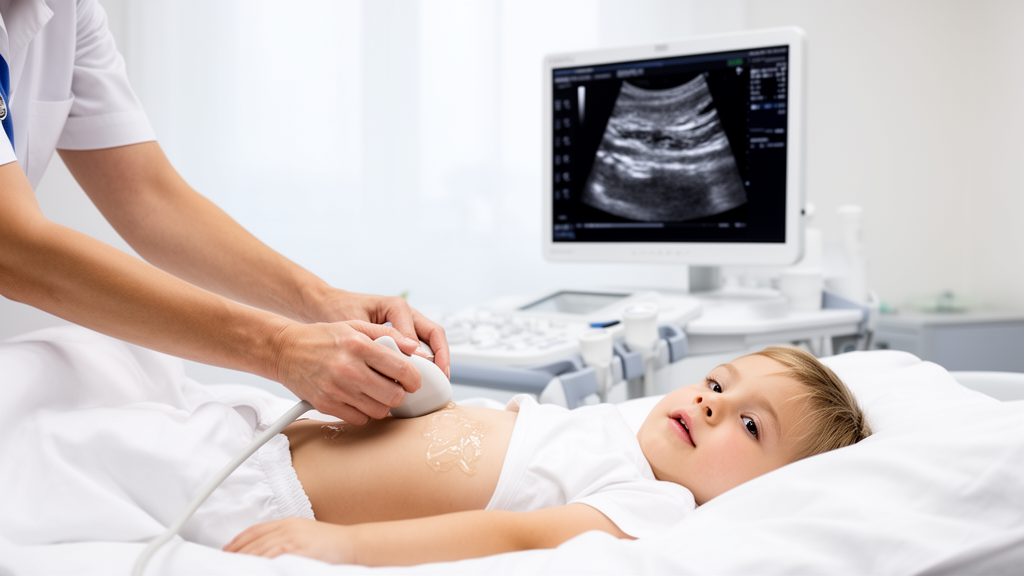
The study enrolled children and adolescents aged 4 to 17 years who had been diagnosed with end-stage renal disease and were undergoing maintenance hemodialysis, alongside 68 age- and sex-matched healthy controls. Children with systemic disease, endocrine disorders, inborn errors of metabolism, or any skeletal or muscular condition that could confound the results were excluded. Each participant underwent a complete history, anthropometric measurements, a three-day 24-hour dietary recall, biochemical testing, SGNA screening, and high-resolution ultrasound of the quadriceps muscles performed by an experienced radiologist using standardized scanning procedures. Measurements of the rectus femoris, vastus intermedius, and biceps femoris muscles were taken bilaterally immediately before and within 15 minutes after a dialysis session, with the average of the two used in the analyses.
The anthropometric findings painted a sobering picture. Median weight-for-age, height-for-age, and BMI-for-age z scores were all significantly lower in the children with kidney disease than in their healthy peers, and stunting, defined as height-for-age below minus two standard deviations, affected 70.6 percent of the dialysis group. Wasting, by contrast, was documented in only 8.8 percent, a striking mismatch that illustrates why body mass indices alone can mislead clinicians in this population. Mid upper arm circumference, triceps skinfold thickness, and quadriceps circumference were all significantly reduced compared with controls, yet the study found no significant change when current measurements were compared retrospectively with the children’s own values from the previous six months, suggesting the deficits are chronic rather than acutely progressive.
Dietary recall analysis revealed the likely driver. Children on hemodialysis consumed roughly 46 percent of the total calories, 51 percent of the fat, and 57 percent of the protein that matched healthy children took in each day, with median intakes of 618 kilocalories, 28.7 grams of fat, and 31 grams of protein daily against 1,346.5 kilocalories, 56.25 grams, and 54.55 grams in controls. Carbohydrate intake, notably, did not differ significantly between the groups. Because protein-energy wasting in kidney disease reflects a whole-body energy imbalance driven by inflammation, hormonal abnormalities, increased energy expenditure, and dialysis-related nutrient losses, this caloric shortfall carries consequences well beyond simple hunger.
The ultrasound results quantified what the scales could not. Median rectus femoris thickness in the dialysis group was 8.20 millimeters versus 15.70 millimeters in controls, while mean vastus intermedius and biceps femoris thicknesses were 5.73 and 6.09 millimeters against 14.27 and 11.31 millimeters respectively, all differences statistically significant. Using pediatric age-specific cutoff values from normative studies, low muscle mass was present in 73.6 percent of the children with kidney disease. Quadriceps imaging has gained attention because the quadriceps femoris is the body’s largest skeletal muscle group, its thickness correlates well with fat-free mass measured by dual-energy X-ray absorptiometry, and it appears roughly as accurate as computed tomography or magnetic resonance imaging for estimating muscle mass, without radiation, cost, or the fluid-status bias that plagues weight-based measures in dialysis patients.
The relationship between diet and muscle was the study’s most actionable finding. Children with low muscle mass consumed significantly fewer total calories, carbohydrates, and fat per day than those with normal muscle thickness, and although their protein intake was also lower, that difference did not reach statistical significance. Receiver operating characteristic analysis identified a total caloric intake cutoff of 34.022 kilocalories per kilogram per day as the strongest discriminator of low muscle mass, achieving 93.75 percent sensitivity and 85.0 percent specificity. Carbohydrate intake at 3.474 grams per kilogram per day and fat intake at 1.469 grams per kilogram per day showed moderate discriminatory performance, while protein intake performed no better than chance. In multivariate logistic regression adjusted for age, sex, and macronutrient intake, total caloric intake was a significant predictor of both protein-energy wasting and low muscle mass, whereas BMI-for-age z score was associated with protein-energy wasting but not with muscle mass.
Agreement analysis strengthened the case for pairing the two assessment tools. The SGNA, which combines a nutrition-focused medical history covering growth, intake, gastrointestinal symptoms, and functional capacity with a physical examination of muscle wasting, subcutaneous fat loss, and edema, showed good agreement with muscle ultrasound. Both the SGNA and ultrasound showed moderate agreement with the diagnosis of protein-energy wasting and with height-for-age z score, fair agreement with serum albumin below 3.2 grams per deciliter, and poor agreement with triceps skinfold thickness and mid upper arm circumference. Every child meeting PEW criteria was rated moderately or severely malnourished by SGNA, and low muscle mass was present in 100 percent of children with protein-energy wasting versus 10 percent of those without it.
These results carry several caveats that the authors themselves emphasize. The cross-sectional design cannot establish causation, the single-center sample limits generalizability to the broader pediatric kidney disease population, and the 24-hour dietary recall, though widely validated, remains subjective and vulnerable to recall bias. Ultrasonography is operator-dependent and requires dedicated training to avoid diagnostic error. The study also did not measure muscle strength, residual urine output, or micronutrient intake, all of which would round out the picture of nutritional health, and the authors call for large multicenter studies across all stages of chronic kidney disease to incorporate these elements. Serum albumin’s weak performance as a marker is consistent with prior evidence that it is confounded by the inflammatory state typical of dialysis patients and that the adult-derived 3.8 grams per deciliter cutoff may be inappropriate for children.
What emerges is a practical, layered strategy for a population in which no single measure tells the whole story. The SGNA is simple, inexpensive, and requires no laboratory tests, making it suitable for early screening; children flagged as malnourished can then receive detailed dietary assessment and correction of deficits, while quadriceps ultrasound can identify those whose body composition has already deteriorated in ways that weight and BMI cannot reveal. The authors note that dietary management for children on hemodialysis should attend to total caloric, carbohydrate, and fat intakes, not only protein, if growth and body composition are to be genuinely supported. For a condition in which malnutrition drives stunting, cardiovascular risk, hospitalization, and impaired quality of life, a screening tool and an ultrasound probe may together offer an early warning system that growth charts alone have never provided.
Subject of Research: Muscle ultrasonography and subjective global nutritional assessment for evaluating nutritional status in children with end-stage renal disease on hemodialysis
Article Title: Collaborative role of muscle ultrasonography and subjective global-nutritional assessment in pediatric end-stage renal disease
Article References: El Zefzaf, H. M. S., El Mashad, G. M., Mousa, W. A., Dwedar, A. E., & Mohamed, S. M. (2026). Collaborative role of muscle ultrasonography and subjective global-nutritional assessment in pediatric end-stage renal disease. Pediatric Research. https://doi.org/10.1038/s41390-026-05525-z
Image Credits: AI Generated
DOI: 10.1038/s41390-026-05525-z
Keywords: pediatric nephrology, end-stage renal disease, hemodialysis, malnutrition, protein-energy wasting, muscle ultrasound, quadriceps thickness, SGNA, nutritional assessment, dietary intake, body composition, chronic kidney disease
News Source: Jerry Hayes. (October 23, 2026). Ultrasound and bedside screening tool reveal hidden malnutrition in children on dialysis. Scienmag.