
• HOME
  • NEWS
  • EXPLORE
    • CAREER
      • Companies
      • Jobs
    • EVENTS
    • iGEM
      • News
      • Team
    • PHOTOS
    • VIDEO
    • WIKI
  • BLOG
  • COMMUNITY
    • FACEBOOK
    • INSTAGRAM
    • TWITTER
Thursday, October 22, 2026
BIOENGINEER.ORG
No Result
View All Result
  • Login
  • HOME
  • NEWS
  • EXPLORE
    • CAREER
      • Companies
      • Jobs
        • Lecturer
        • PhD Studentship
        • Postdoc
        • Research Assistant
    • EVENTS
    • iGEM
      • News
      • Team
    • PHOTOS
    • VIDEO
    • WIKI
  • BLOG
  • COMMUNITY
    • FACEBOOK
    • INSTAGRAM
    • TWITTER
No Result
View All Result
Bioengineer.org
No Result
View All Result
Home NEWS Science News Technology

Eight-Second Spray Pyrolysis Condition Improves NCM811 Cathode Performance in Laboratory Study

by
October 22, 2026
in Technology
Reading Time: 2 mins read
0
Eight-Second Spray Pyrolysis Condition Improves NCM811 Cathode Performance in Laboratory Study

Eight-Second Spray Pyrolysis Condition Improves NCM811 Cathode Performance in Laboratory Study

Share on FacebookShare on TwitterShare on LinkedinShare on RedditShare on Telegram

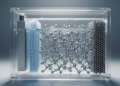
An eight-second residence time during spray pyrolysis produced the best-tested nickel-rich cathode material in laboratory experiments, according to a study of LiNi0.8Co0.1Mn0.1O2, or NCM811. At this condition, droplets completed evaporation and pyrolysis and formed precursor particles with uniform composition, well-defined spherical morphology, and an average size of 2 μm. After annealing, the particles retained favorable structural features, including a well-ordered layered structure and minimal Li+/Ni2+ disorder.

Electrochemical testing found that the eight-second sample delivered a discharge capacity of 203 mAh/g at 0.1 C, along with excellent cycling stability and superior rate capability. The researchers examined spray pyrolysis as a scalable, one-step method for continuously synthesizing cathode materials and focused on the conversion of droplets into solid particles. That conversion can affect the properties of the finished material and its electrochemical performance, but the detailed influence of residence time had been insufficiently characterized.

To investigate this relationship, the team developed a method for calculating residence time based on force analysis of the droplets. The approach was used to study how droplet motion, evaporation, and decomposition differed under four residence-time conditions and how those differences influenced the resulting NCM811 particles. The study compared residence times of 2.5, 6, 8, and 15 seconds.

As residence time increased, droplets moved more slowly along the reactor path, while evaporation and pyrolysis became more extensive. These changes were associated with smaller precursor particles. The eight-second material also produced the strongest overall electrochemical results among the tested samples.

The summary does not provide the detailed cycling duration, capacity-retention percentage, or numerical rate-performance values needed to compare every condition more fully. The experimental evidence therefore links the residence-time-controlled formation of small, compositionally uniform, spherical particles with improved structural order and electrochemical behavior. The findings show that residence time was an effective experimental variable for regulating particle formation in this material system, without requiring a change to the stated NCM811 composition.

However, the results are limited to laboratory synthesis and electrochemical evaluation of one nickel-rich cathode composition; the supplied study summary does not establish that the same optimum applies to other cathode chemistries or industrial reactor configurations. Data are described as available from the authors upon request.

Subject of Research: Residence-time control of particle formation and electrochemical performance in spray-pyrolysis synthesis of NCM811 cathodes

Article Title: Residence time regulation in spray pyrolysis synthesis on particle and electrochemical properties of nickel-rich cathode materials

Article References: Xu, Y., Du, W., Li, S., & Wang, K. (2026). Residence time regulation in spray pyrolysis synthesis on particle and electrochemical properties of nickel-rich cathode materials. Journal of Materials Science, 61(40), 31056-31076. https://doi.org/10.1007/s10853-026-13628-5

Image Credits: AI Generated

DOI: 10.1007/s10853-026-13628-5

Keywords: spray pyrolysis, NCM811, nickel-rich cathodes, residence time, particle morphology, electrochemical performance, crystal structure, lithium-ion batteries, Residence, time, regulation, spray

News Source: Denise Maddox. (October 22, 2026). Eight-Second Spray Pyrolysis Condition Improves NCM811 Cathode Performance in Laboratory Study. Scienmag.

Tags: crystal structureelectrochemical performancelithium-ion batteriesNCM811nickel-rich cathodesParticle morphologyregulationResidenceresidence timesprayspray pyrolysistime
Share12Tweet7Share2ShareShareShare1

Related Posts

Coal power expansion linked to sharply higher urban air-pollution deaths in India

Coal power expansion linked to sharply higher urban air-pollution deaths in India

October 22, 2026
TAC-linked multimetal MOF enables 13-day cycling in rechargeable zinc–air battery

TAC-linked multimetal MOF enables 13-day cycling in rechargeable zinc–air battery

October 22, 2026

Julia package speeds systemic-risk calculations by up to 300-fold

October 22, 2026

mkcheck2 cuts build dependency verification overhead in 300-project evaluation

October 22, 2026

POPULAR NEWS

  • Eight-Second Spray Pyrolysis Condition Improves NCM811 Cathode Performance in Laboratory Study

    Eight-Second Spray Pyrolysis Condition Improves NCM811 Cathode Performance in Laboratory Study

    29 shares
    Share 12 Tweet 7
  • Deep Learning Breast DWI Preferred in Retrospective Imaging Study

    29 shares
    Share 12 Tweet 7
  • SOS-independent prophage induction may spread resistance genes beyond DNA damage

    29 shares
    Share 12 Tweet 7
  • Concept analysis defines serious games for youth health education

    29 shares
    Share 12 Tweet 7

About

We bring you the latest biotechnology news from best research centers and universities around the world. Check our website.

Follow us

Recent News

Eight-Second Spray Pyrolysis Condition Improves NCM811 Cathode Performance in Laboratory Study

Deep Learning Breast DWI Preferred in Retrospective Imaging Study

SOS-independent prophage induction may spread resistance genes beyond DNA damage

Subscribe to Blog via Email

Enter your email address to subscribe to this blog and receive notifications of new posts by email.

Join 85 other subscribers
  • Contact Us

Bioengineer.org © Copyright 2023 All Rights Reserved.

Welcome Back!

Login to your account below

Forgotten Password?

Retrieve your password

Please enter your username or email address to reset your password.

Log In
No Result
View All Result
  • Homepages
    • Home Page 1
    • Home Page 2
  • News
  • National
  • Business
  • Health
  • Lifestyle
  • Science

Bioengineer.org © Copyright 2023 All Rights Reserved.