A stretchable urinary catheter that combines low-voltage electrical stimulation with sustained silver release reduced bacteria by 93% and lessened bladder inflammation in a seven-day rabbit model of catheter-associated urinary tract infection. The device, called SUCES, also shifted cultured macrophages toward an M1-associated marker profile without compromising uroepithelial-cell viability. The findings suggest that a catheter can actively influence the microbial and immune environment at its surface, although the experiments did not test the device in people and the researchers identified long-term implantation and prolonged biofilm control as priorities for future work.
Urinary catheters are indispensable in many clinical settings, but their continuous presence creates an interface where microorganisms can adhere, multiply and form protective biofilms. Those communities can resist antibiotics and immune clearance, helping infections recur or persist. Silver-coated and antibiotic-eluting catheters offer passive antimicrobial protection, yet their activity can weaken as active agents are depleted, and most such strategies do not directly regulate the local tissue response. SUCES was designed to address both constraints by making a flexible bioelectric interface that can withstand the stretching and bending associated with the urethra and bladder.
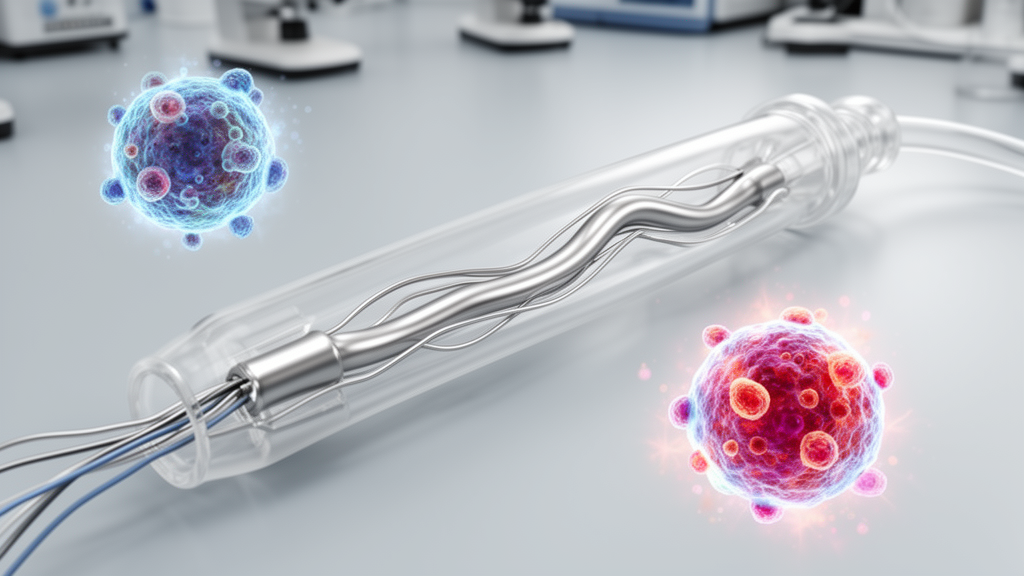
The system is a multilayer module attached to a commercial 9-Fr silicone urinary catheter. Its stretchable conductor consists of liquid gallium containing 10% silver by volume, covered by a polydimethylsiloxane, or PDMS, encapsulation layer loaded with 5% silver microparticles. Eight tissue-facing electrode contacts made from platinum powder blended with PDMS deliver the electrical stimulus. The complete module is about 4 cm long and approximately 350 micrometres thick, allowing it to wrap closely around the catheter while preserving the softness needed for an indwelling device.
Adding silver particles to liquid gallium changes its mechanical behaviour without making the conductor rigid. Scanning electron microscopy and elemental mapping showed that the composite remained compositionally uniform, while X-ray diffraction identified solid Ag3Ga intermetallic domains within a continuous gallium phase. The two phases may serve complementary purposes during deformation: the intermetallic domains can restrain bulk fluid movement, and the liquid phase can maintain conductive pathways. Among formulations containing 5%, 10%, 15% or 20% silver, the 10% composite produced the smallest relative resistance change under tensile strain. Lower silver loading appeared insufficient to reinforce the conductor, whereas excessive loading reduced its liquid fraction and promoted aggregation of rigid domains.
Mechanical and electrochemical tests showed that the resulting device could tolerate the demands of catheter use. Its conductors retained repeatable resistance responses through 10,000 stretching cycles at 50% strain and 10,000 bending cycles at 60 degrees. Platinum-PDMS electrodes maintained consistent cyclic-voltammetry profiles and low electrochemical impedance after seven days in phosphate-buffered saline. The silver-containing encapsulation released silver gradually over 30 days, while daily electrical stimulation did not significantly alter that release profile. These tests establish device-level durability under experimental conditions rather than proof of long-term safety in human use.
Researchers selected a stimulation condition of 1.5 volts for five minutes by testing human uroepithelial cells and murine macrophages. At this setting, cell viability measured by the CCK-8 assay was approximately 97% for SV-HUC uroepithelial cells and 95% for RAW264.7 macrophages. Viability declined with longer exposure, reaching about 90% and 88%, respectively, after eight minutes. Extracts from SUCES also left the cells predominantly viable, indicating that the material itself did not produce a substantial extract-mediated toxicity signal in these assays.
Against Escherichia coli and Staphylococcus aureus, electrical stimulation alone produced killing efficiencies of 38% and 40%, respectively, while silver release alone reached 67% and 71%. Combining the two treatments raised bacterial killing to 95% for E. coli and 94% for S. aureus. Fluorescence imaging showed the smallest live-bacterial population and greatest membrane-compromised fraction after combined treatment. Electron microscopy provided a possible mechanism: untreated E. coli retained smooth envelopes, silver release caused localized wrinkling, and combined electrical and silver exposure produced envelope collapse and fragmentation. SUCES also showed antibacterial activity against Enterococcus faecalis and Klebsiella pneumoniae, and experiments with E. coli indicated inhibition of biofilm formation and reductions in both the biomass and viable burden of pre-established biofilms.
The same five-minute electrical treatment altered the behaviour of cultured RAW264.7 macrophages. RT-qPCR showed increased expression of the M1-associated genes Nos2, Tnf, Il1b, Il6 and Cd86, together with reduced expression of the M2-associated marker Arg1. Immunofluorescence and flow cytometry supported this shift: the proportion of CD86-positive macrophages rose from 13.2% to 42.3%, and the iNOS-positive fraction increased from 22.1% to 90.3%. The stimulated cells also secreted more TNF-alpha and IL-6. Increased Camk2a, Nfkb1 and Rela expression suggested that the calcium/calmodulin-dependent protein kinase and NF-kappaB pathway may have contributed, but the measured markers alone do not define a complete macrophage state or prove a particular mechanism.
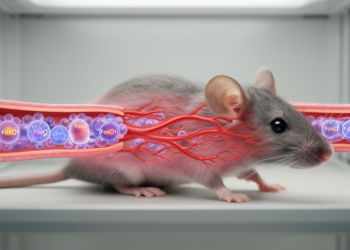
In the rabbit experiment, animals were assigned to a normal group, an untreated catheter-associated infection group and a SUCES group, with five animals per group. Infection was induced by catheter indwelling without bacterial inoculation, closely reflecting the foreign-body conditions that make urinary catheters susceptible to colonization. The active module was positioned across the lower bladder cavity and proximal urethra, and stimulation was delivered for five minutes once daily for seven days. Untreated infected rabbits had urine bacterial counts above 10^7 CFU per millilitre. SUCES lowered the viable urinary burden by approximately 93%, equivalent to more than a one-log reduction, while gross examination showed less bladder hyperaemia and oedema than in untreated animals.
Treatment was also associated with less tissue injury and better preservation of the urothelial barrier. Histological sections from untreated infected rabbits showed mucosal disruption, oedema and dense inflammatory infiltration, whereas SUCES-treated bladders retained more of their architecture and had lower inflammation scores; similar histological improvement appeared in urethral tissue. ZO-1 immunofluorescence, used here as a marker of tight-junction organisation, was weak and discontinuous in untreated infected tissue but more continuous after treatment. Treated bladder tissue retained visible iNOS staining while showing reduced CD206, and staining for the inflammatory cytokines TNF-alpha and IL-1 beta was weaker than in untreated infection. These tissue markers are compatible with changing local immune status as infection resolves, but they cannot establish the underlying cellular mechanism.
A separate 14-day study assessed safety in rabbits and found no treatment-related histopathological abnormalities in the heart, liver, spleen, lungs or kidneys. Serum ALT, AST, blood urea nitrogen and creatinine remained comparable with normal values, while silver in the examined tissues was below the detection limit of the analytical method. Urethral architecture and ZO-1 staining were preserved after prolonged catheterization, and the electrodes showed no substantial deterioration in electrochemical performance. These are encouraging preclinical observations, though the short duration, small animal groups and absence of a clinical comparison limit their reach. The rabbit results show that SUCES can reduce bacterial burden and infection-associated tissue injury over seven days, while the 14-day assessment found no evident systemic toxicity; longer implantation studies, optimized stimulation and silver-release parameters, clinically relevant large-animal testing and human safety evaluation are still needed before the approach could be considered for patient care.
Subject of Research: Preclinical development of a stretchable bioelectric urinary catheter for bacterial control and immune modulation in catheter-associated urinary tract infection.
Article Title: A stretchable liquid-metal bioelectric catheter for active management of catheter-associated urinary tract infections
Article References: Zhao, J., Zhang, J., Zhang, L., Wang, X., Sun, Y., Guo, D., Li, J., Chu, Z., Li, Y., Li, G., & Shi, B. (2026). A stretchable liquid-metal bioelectric catheter for active management of catheter-associated urinary tract infections. Materials Today Bio, 41, Article 103764. https://doi.org/10.1016/j.mtbio.2026.103764
Image Credits: AI Generated
DOI: 10.1016/j.mtbio.2026.103764
Keywords: catheter-associated urinary tract infection, liquid-metal catheter, electrical stimulation, silver ion release, antibacterial biofilms, macrophage activation, urothelial barrier, rabbit infection model, bioelectric devices, stretchable, liquid-metal, bioelectric
News Source: Kristina Jarvis. (October 22, 2026). Liquid-metal catheter combines electricity, silver and immune activation. Scienmag.