Credit: ECDC
According to test results from the annual European Gonococcal Antimicrobial Surveillance Programme (Euro-GASP), resistance levels to the main antimicrobials used for treatment of gonorrhoea infection have seen an encouraging decrease since 2010. However, resistance to one antibiotic agent which is part of the suggested dual therapy of gonorrhoea remains high and threatens the effectiveness of this regimen.
Every year, countries of the European Union and European Economic Area (EU/EEA) participate in Euro-GASP to test susceptibility of Neisseria gonorrhoeae to the antibiotics commonly used for gonorrhoea treatment. In 2015, 24 EU/EEA countries collected and tested more than 2 000 gonococcal isolates that showed stable proportions of resistance against the antimicrobials cefixime, ciprofloxacin and azithromycin compared to 2014 and only one isolate resistant to ceftriaxone.
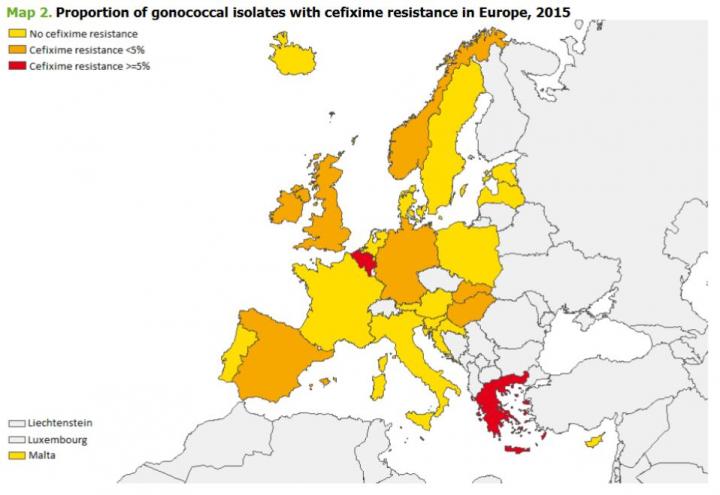
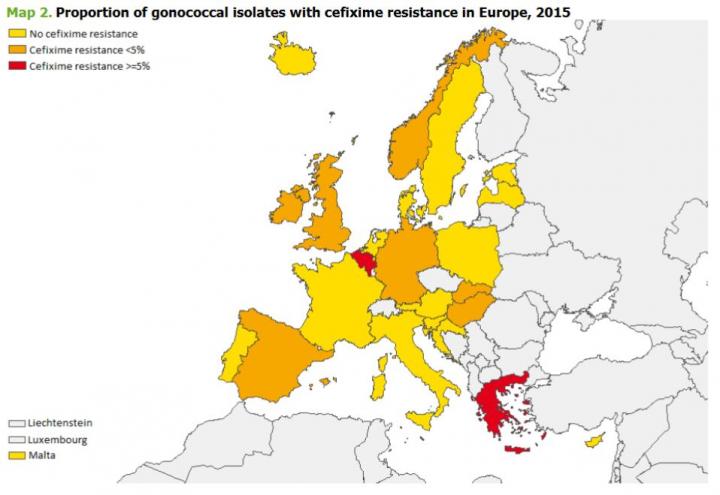
Cefixime resistance decreased slightly to 1.7% in 2015 in comparison to the year before (2%). Ciprofloxacin resistance, although still very high, has decreased from 53% in 2013 to 49% in 2015 and the level of azithromycin resistance went down from 8% in 2014 (169 out of 2 147 isolates) to 7% in 2015. However, five isolates displayed high-level resistance to azithromycin, compared with only one in 2014. Only one isolate displayed resistance to ceftriaxone in 2015, compared to five in 2014 and seven in 2013.
The continuing increase in cephalosporin susceptibility is good news considering that these are among the last remaining options for treatment of gonorrhea infection. Despite this, the level of azithromycin resistance and the rise in the number of isolates with high-level resistance to azithromycin are of major concern and threaten the effectiveness of the dual antimicrobial treatment regimen.
The ECDC report Gonococcal antimicrobial susceptibility surveillance in Europe 2015 shows that information about which antimicrobials were used to treat gonorrhoea infection were available for 36.5% of patients (779 of 2134 isolates). 58% of these received the recommended treatment of ceftriaxone and azithromycin, although the dosages were not available. Overall, 87% were administered ceftriaxone with or without azithromycin, so the use of the recommended and more appropriate ceftriaxone may have contributed to this increase in cephalosporin susceptibility. More heterosexual males received the recommended treatment (67%) than females (57%) and men who have sex with men (52%).
Euro-GASP monitors emerging resistance trends
A
s the control of gonorrhoea depends on effective antimicrobial treatment, even a small increase in drug resistance has a relevant impact due to the risk of treatment failure.
Since the European treatment guidelines for gonorrhoea recommend use of two antimicrobials (ceftriaxone or cefixime in combination with azithromycin), the surveillance of antimicrobial susceptibility of these agents – which is currently undertaken by ECDC's Euro-GASP – is vital to guide clinical services to ensure that patients are successfully treated and the risk of complications are avoided.
With more than 66 000 reported cases in 2014, and many more infections occurring but not reported, gonorrhoea is the second most frequently recorded sexually transmitted infection in Europe after chlamydia.
ECDC launched a regional response plan to control multidrug-resistant gonorrhoea to minimise the threat of drug-resistant gonorrhoea in Europe. This plan argues that countries need to ensure they have the minimum capacity for culture and susceptibility testing. They must also have strategies for rapid identification and reporting of failures to treatment with currently recommended antimicrobials.
At the same time, antimicrobial resistance surveillance and awareness of this problem should be stepped up so that measures can be taken to ensure that options for successful treatment of gonorrhoea remain available in the EU.
###
Media Contact
ECDC Press Office
[email protected]
46-858-601-678
@ECDC_EU
http://ecdc.europa.eu
Original Source
http://bit.ly/EuroGASP17