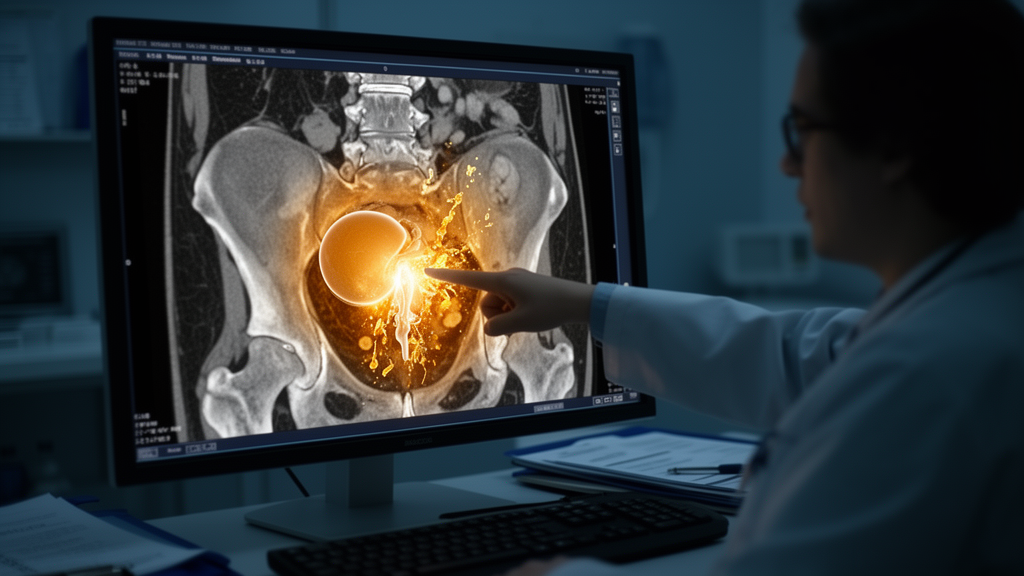
A 19-year-old woman with OHVIRA syndrome experienced a spontaneous urinary bladder rupture, according to a case report in Reproductive Sciences. Her acute abdominal presentation occurred alongside longstanding, progressive dysmenorrhea and recent dysuria. Imaging confirmed the reproductive tract anomaly, but the bladder rupture was discovered only during surgery, shortly before a planned vaginoscopic septal resection. Emergency laparoscopic repair was then performed for an intraperitoneal rupture.
OHVIRA syndrome is a rare Müllerian anomaly associated with a mesonephric duct abnormality. Its defining triad consists of a divided uterus, known as uterus didelphys; an obstructed hemivagina; and an ipsilateral renal abnormality. The case is notable because the patient had both this congenital reproductive tract condition and spontaneous bladder rupture, a combination the authors describe as unprecedented. The report concerns one patient and therefore cannot establish the frequency of the association or the comparative effectiveness of any treatment.
The rupture was not identified on the initial imaging, which instead confirmed OHVIRA syndrome. It was found during a cystoscopy undertaken before the planned vaginoscopic procedure to resect the obstructing septum. The patient presented with an acute abdomen, while her longer-term history included dysmenorrhea that had progressively worsened since menarche and more recent difficulty urinating. According to the authors, spontaneous bladder rupture is uncommon but can constitute a life-threatening surgical emergency, making the delayed intraoperative discovery clinically consequential.
Treatment centered on emergency laparoscopic repair of the intraperitoneal bladder rupture. The authors recommend considering combined vaginoscopic septoplasty and laparoscopic bladder repair as a minimally invasive approach for patients in whom both conditions are present, describing it as potentially less traumatic and more effective. That proposal is supported by the experience of a single case rather than comparative trials. The report also emphasizes the importance of investigating progressive dysmenorrhea since menarche for unilateral obstructive Müllerian anomalies, including OHVIRA syndrome. In addition, new urinary symptoms accompanied by acute abdominal pain suggestive of peritonitis should prompt consideration of spontaneous bladder rupture, because both OHVIRA syndrome and bladder rupture may be missed or substantially delayed in diagnosis.
Subject of Research: A case report of spontaneous urinary bladder rupture associated with OHVIRA syndrome in a 19-year-old patient.
Article Title: Spontaneous Urinary Bladder Rupture Secondary to OHVIRA Syndrome
Article References: Abdelhalim, D. (2026). Spontaneous Urinary Bladder Rupture Secondary to OHVIRA Syndrome. Reproductive Sciences. https://doi.org/10.1007/s43032-026-02247-9
Image Credits: AI Generated
DOI: 10.1007/s43032-026-02247-9
Keywords: OHVIRA syndrome, bladder rupture, Müllerian anomaly, adolescent health, dysmenorrhea, acute abdomen, laparoscopic surgery, case report, Spontaneous, Urinary, Bladder, Rupture
News Source: Ophelia Keating. (October 22, 2026). Case Report Documents Bladder Rupture With OHVIRA Syndrome. Scienmag.