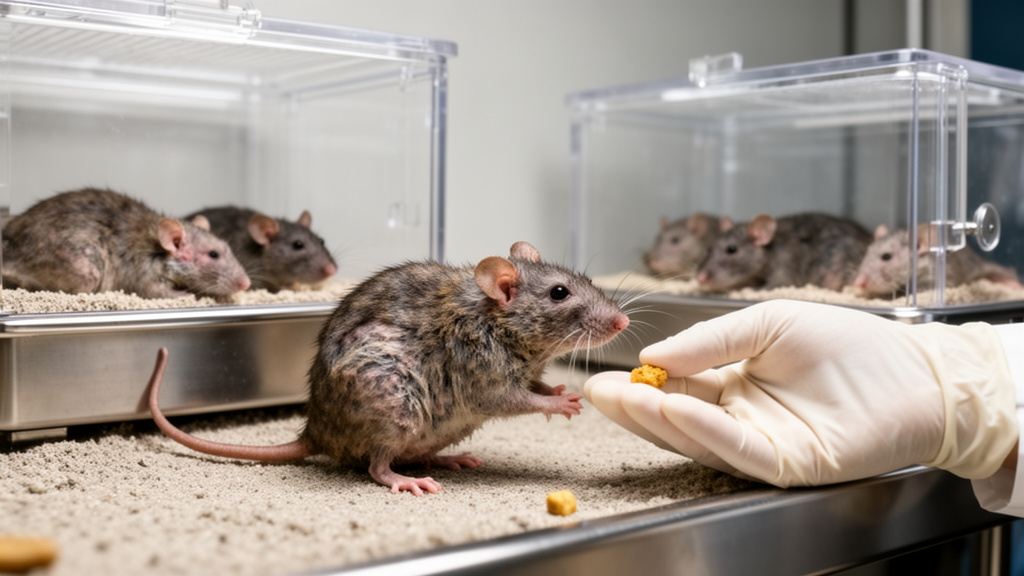
In an animal study, prolame produced an antidepressant-like effect in middle-aged female Wistar rats three weeks after ovariectomy, regardless of whether the animals had never reproduced or had raised multiple litters. Estradiol, an estrogen used in conventional hormone replacement therapy, did not produce the same behavioral effect in either reproductive-history group. The researchers interpreted the results as suggesting that reproductive experience may confer stress resilience, while showing that prior reproduction was not required for prolame’s observed effect.
The researchers designed the experiment to determine whether reproductive experience influenced the antidepressant-like effects of estradiol and prolame. Ovariectomized young adult rats are commonly used to model menopause, and earlier work in that model found that prolame could produce estrogenic and antidepressant-like effects. A previous study had also indicated that aging could cancel estradiol’s antidepressant-like effect and shorten the window during which prolame retained that action. Because the middle-aged females in that earlier study included retired breeders, the authors questioned whether their reproductive histories might have influenced the results. The new experiment therefore compared middle-aged nulliparous rats, which had never reproduced, with multiparous rats that had reproductive experience.
Three weeks after ovariectomy, the researchers evaluated the two compounds at specific doses: estradiol at 30 μg/kg and prolame at 60 μg/kg. They assessed antidepressant-like behavior using the forced swim test and separately examined uterine weight as a measure of estrogenic effects. Prolame showed an antidepressant-like effect at the tested dose and interval in both nulliparous and multiparous animals. Estradiol did not show that effect in either group. These observations indicate that reproductive history alone did not determine whether prolame affected behavior under the study’s conditions, although the authors proposed that previous reproductive experience may have contributed to resilience against stress.
Uterine measurements revealed that both estradiol and prolame increased uterine weight to a similar extent, supporting measurable estrogenic effects for each compound. Nulliparous rats showed greater uterine sensitivity to the estrogens than multiparous rats, introducing a reproductive-history-dependent difference in that physiological response. The behavioral and uterine findings therefore did not move in parallel: both compounds affected uterine weight, but only prolame produced the reported antidepressant-like effect. The authors proposed that prolame could merit further investigation as a candidate for estrogen replacement therapy intended to alleviate depressive symptoms during perimenopause or postmenopause. That possibility remains preliminary. The study involved middle-aged ovariectomized rats, one dose and one post-surgery interval for each compound, and a behavioral assay; it did not establish clinical efficacy, safety, dosing or clinical benefit in women.
Subject of Research: Effects of reproductive experience on prolame and estradiol responses in ovariectomized middle-aged rats
Article Title: Influence of reproductive experience on the antidepressant-like effect of estradiol and prolame in middle-aged rats
Article References: Hernández-Hernández, O. T., Herrera-Pérez, J. J., González-Longoria, S. M., & Martínez-Mota, L. (2026). Influence of reproductive experience on the antidepressant-like effect of estradiol and prolame in middle-aged rats. Frontiers in Behavioral Neuroscience, 20, 1937892. https://doi.org/10.3389/fnbeh.2026.1937892
Image Credits: AI Generated
DOI: 10.3389/fnbeh.2026.1937892
Keywords: prolame, estradiol, antidepressant-like effects, middle-aged rats, reproductive experience, ovariectomy, forced swim test, estrogen replacement therapy, uterine weight, stress resilience, Influence, reproductive
News Source: Glenn Wilkins. (October 22, 2026). Prolame shows antidepressant-like effects in middle-aged rats regardless of reproduction history. Scienmag.