• HOME
  • NEWS
  • EXPLORE
    • CAREER
      • Companies
      • Jobs
    • EVENTS
    • iGEM
      • News
      • Team
    • PHOTOS
    • VIDEO
    • WIKI
  • BLOG
  • COMMUNITY
    • FACEBOOK
    • INSTAGRAM
    • TWITTER
Wednesday, April 1, 2026
BIOENGINEER.ORG
No Result
View All Result
  • Login
  • HOME
  • NEWS
  • EXPLORE
    • CAREER
      • Companies
      • Jobs
        • Lecturer
        • PhD Studentship
        • Postdoc
        • Research Assistant
    • EVENTS
    • iGEM
      • News
      • Team
    • PHOTOS
    • VIDEO
    • WIKI
  • BLOG
  • COMMUNITY
    • FACEBOOK
    • INSTAGRAM
    • TWITTER
  • HOME
  • NEWS
  • EXPLORE
    • CAREER
      • Companies
      • Jobs
        • Lecturer
        • PhD Studentship
        • Postdoc
        • Research Assistant
    • EVENTS
    • iGEM
      • News
      • Team
    • PHOTOS
    • VIDEO
    • WIKI
  • BLOG
  • COMMUNITY
    • FACEBOOK
    • INSTAGRAM
    • TWITTER
No Result
View All Result
Bioengineer.org
No Result
View All Result
Home NEWS Science News Biology

Magnetic cellular ‘Legos’ for the regenerative medicine of the future

Bioengineer by Bioengineer
September 12, 2017
in Biology
Reading Time: 2 mins read
0
Share on FacebookShare on TwitterShare on LinkedinShare on RedditShare on Telegram

By incorporating magnetic nanoparticles in cells and developing a system using miniaturized magnets, researchers at the Laboratoire Matière et Systèmes Complexes (CNRS/Université Paris Diderot), in collaboration with the Laboratoire Adaptation Biologique et Vieillissement (CNRS/UPMC) and the Centre de Recherche Cardiovasculaire de Paris (Inserm/Université Paris Descartes), have succeeded in creating cellular magnetic "Legos." They were able to aggregate cells using only magnets and without an external supporting matrix, with the cells then forming a tissue that can be deformed at will. This approach, which is detailed in Nature Communications on September 12, 2017, could prove to be a powerful tool for biophysical studies, as well as the regenerative medicine of tomorrow.

Nanotechnology has quickly swept across the medical field by proposing sometimes unprecedented solutions at the furthest limits of current treatments, thereby becoming central to diagnosis and therapy, notably for the regeneration of tissue. A current challenge for regenerative medicine is to create a cohesive and organized cellular assembly without using an external supporting matrix. This is a particularly substantial challenge when it involves synthesizing thick and/or large-sized tissue, or when these tissues must be stimulated like their in vivo counterparts (such as cardiac tissue or cartilage) in order to improve their functionality.

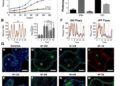
The researchers met this challenge by using magnetism to act on the cells at a distance, in order to assemble, organize, and stimulate them. Cells, which are the building blocks of tissue, are thus magnetized in advance through the incorporation of magnetic nanoparticles, thus becoming true cellular magnetic "Legos" that can be moved and stacked using external magnets. In this new system acting as a magnetic tissue stretcher, the magnetized cells are trapped on a first micromagnet, before a second, mobile magnet traps the aggregate formed by the cells. The movement of the two magnets can stretch or compress the resulting tissue at will.

Researchers first used embryonic stem cells to test their system. They began by showing that the incorporation of nanoparticles had no impact on either the functioning of the stem cell or its capacity for differentiation. These functional magnetic stem cells were then tested in the stretcher, in which they remarkably differentiated toward cardiac cell precursors when stimulation imposed "magnetic beating" imitating the contraction of the heart. These results demonstrate the role that purely mechanical factors can play in cell differentiation.

This "all-in-one" approach, which makes it possible to build and manipulate tissue within the same system, could thus prove to be a powerful tool both for biophysical studies and tissue engineering.

###

Media Contact

Alexiane Agullo
[email protected]
33-144-964-390

http://www.cnrs.fr

http://dx.doi.org/10.1038/s41467-017-00543-2
Share12Tweet7Share2ShareShareShare1

Related Posts

UBC Okanagan Study Reveals How Trees Visually Signal Their Spring Rehydration

UBC Okanagan Study Reveals How Trees Visually Signal Their Spring Rehydration

April 1, 2026
Rising Temperatures from Climate Change Associated with Reduced Newborn Size

Rising Temperatures from Climate Change Associated with Reduced Newborn Size

April 1, 2026

New Study Reveals Respiratory Evolution as Key Driver of Body Size Variation in Early Terrestrial Vertebrates

April 1, 2026

Survey Reveals Many Dog Owners Overlook Subtle Pain Signs Like Nighttime Restlessness and Clinginess

April 1, 2026
Please login to join discussion

POPULAR NEWS

  • blank

    Revolutionary AI Model Enhances Precision in Detecting Food Contamination

    96 shares
    Share 38 Tweet 24
  • Imagine a Social Media Feed That Challenges Your Views Instead of Reinforcing Them

    1006 shares
    Share 398 Tweet 249
  • Promising Outcomes from First Clinical Trials of Gene Regulation in Epilepsy

    51 shares
    Share 20 Tweet 13
  • Popular Anti-Aging Compound Linked to Damage in Corpus Callosum, Study Finds

    44 shares
    Share 18 Tweet 11

About

We bring you the latest biotechnology news from best research centers and universities around the world. Check our website.

Follow us

Recent News

Lack of Access to Dental Care Linked to Increased Risk of Cardiovascular Disease and Dementia

Digital Twin Hearts Achieve Perfect Success in Arrhythmia Trial

UBC Okanagan Study Reveals How Trees Visually Signal Their Spring Rehydration

Subscribe to Blog via Email

Enter your email address to subscribe to this blog and receive notifications of new posts by email.

Join 78 other subscribers
  • Contact Us

Bioengineer.org © Copyright 2023 All Rights Reserved.

Welcome Back!

Login to your account below

Forgotten Password?

Retrieve your password

Please enter your username or email address to reset your password.

Log In
No Result
View All Result
  • Homepages
    • Home Page 1
    • Home Page 2
  • News
  • National
  • Business
  • Health
  • Lifestyle
  • Science

Bioengineer.org © Copyright 2023 All Rights Reserved.