• HOME
  • NEWS
  • EXPLORE
    • CAREER
      • Companies
      • Jobs
    • EVENTS
    • iGEM
      • News
      • Team
    • PHOTOS
    • VIDEO
    • WIKI
  • BLOG
  • COMMUNITY
    • FACEBOOK
    • INSTAGRAM
    • TWITTER
Friday, August 28, 2026
BIOENGINEER.ORG
No Result
View All Result
  • Login
  • HOME
  • NEWS
  • EXPLORE
    • CAREER
      • Companies
      • Jobs
        • Lecturer
        • PhD Studentship
        • Postdoc
        • Research Assistant
    • EVENTS
    • iGEM
      • News
      • Team
    • PHOTOS
    • VIDEO
    • WIKI
  • BLOG
  • COMMUNITY
    • FACEBOOK
    • INSTAGRAM
    • TWITTER
  • HOME
  • NEWS
  • EXPLORE
    • CAREER
      • Companies
      • Jobs
        • Lecturer
        • PhD Studentship
        • Postdoc
        • Research Assistant
    • EVENTS
    • iGEM
      • News
      • Team
    • PHOTOS
    • VIDEO
    • WIKI
  • BLOG
  • COMMUNITY
    • FACEBOOK
    • INSTAGRAM
    • TWITTER
No Result
View All Result
Bioengineer.org
No Result
View All Result
Home NEWS Science News Biology

New book on Prion Biology from Cold Spring Harbor Laboratory Press

Bioengineer by Bioengineer
September 11, 2017
in Biology
Reading Time: 2 mins read
0
Share on FacebookShare on TwitterShare on LinkedinShare on RedditShare on Telegram
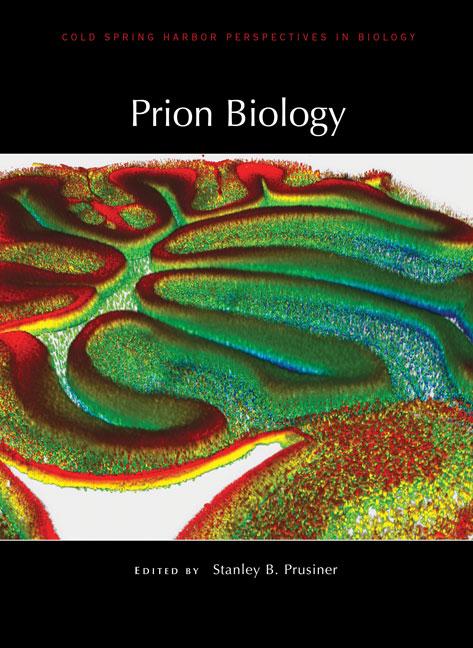
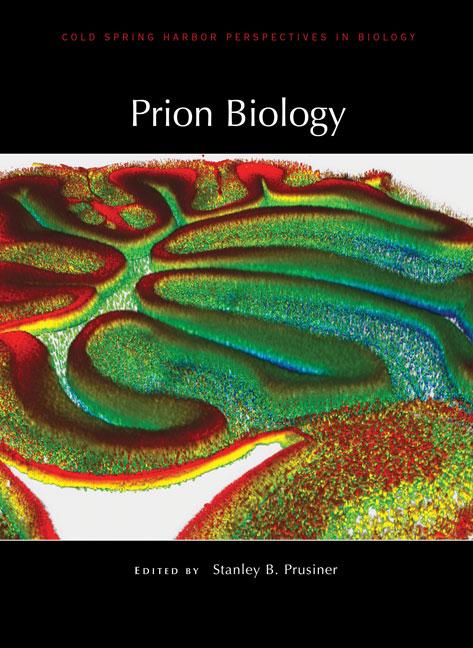
IMAGE

Credit: Carlo Condello, University of California, San Francisco

Cold Spring Harbor, N.Y. — Cold Spring Harbor Laboratory Press (CSHLP) announced the release of Prion Biology, available on its website in hardcover, paperback, and ebook formats.

Prions are best known as the infectious proteins causing mad cow and related diseases, and a growing number of proteins with similar properties are implicated in disorders such as Alzheimer's and Parkinson's. But some recently discovered prion proteins do not seem to induce pathological changes and, in fact, may function in basic biological processes such as transcription, immune regulation, and memory formation.

Written and edited by experts in the field, Prion Biology, from Cold Spring Harbor Perspectives in Biology, examines the expanding roles of prions in health and disease. The contributors review the structures of prion proteins and how they adopt alternative structures and aggregate into amyloid fibrils and other insoluble complexes. The alternatively folded prion forms display unique biological properties. Although some prion proteins feature in cellular dysfunction, others have normal physiological roles (e.g., CPEB in the brain and MAVS in the immune response). This volume is an essential reference for biochemists, cell and molecular biologists, and all who wish to understand how prions are formed from alternatively folded, self-propagating proteins.

###

To access free sample material from Prion Biology, or for more information on this title, please visit our website at http://www.cshlpress.org.

Media Contact

Robert Redmond
[email protected]
516-422-4101

Cold Spring Harbor Laboratory – Advancing the frontiers of biology through education and research

Original Source

http://cshlpress.com/default.tpl?action=full&src=pdf&–eqskudatarq=1098

Share13Tweet8Share2ShareShareShare2

Related Posts

Study Explores Visual Category Learning in Zebrafish and Xenotoca Fish

Study Explores Visual Category Learning in Zebrafish and Xenotoca Fish

August 28, 2026
Multiancestry Alzheimer’s risk score links cognitive decline and neuropathology across populations

Multiancestry Alzheimer’s risk score links cognitive decline and neuropathology across populations

August 28, 2026

EZH2–SREBP2 Pathway Drives Cholesterol Production, Revealing a Noncanonical Cancer Vulnerability

August 28, 2026

Temperature shapes how birds respond to changing forest cover

August 28, 2026
Please login to join discussion

POPULAR NEWS

  • Study Explores Visual Category Learning in Zebrafish and Xenotoca Fish

    29 shares
    Share 12 Tweet 7
  • New Artery-on-a-Chip Technologies Advance Construction Strategies and Disease Modeling

    29 shares
    Share 12 Tweet 7
  • Refining Prognosis During Treatment for Molecularly Defined Lower-Risk Myelofibrosis

    29 shares
    Share 12 Tweet 7
  • Functional genomics maps broad, convergent asciminib resistance mechanisms in BCR::ABL1

    29 shares
    Share 12 Tweet 7

About

We bring you the latest biotechnology news from best research centers and universities around the world. Check our website.

Follow us

Recent News

Study Explores Visual Category Learning in Zebrafish and Xenotoca Fish

New Artery-on-a-Chip Technologies Advance Construction Strategies and Disease Modeling

Refining Prognosis During Treatment for Molecularly Defined Lower-Risk Myelofibrosis

Subscribe to Blog via Email

Enter your email address to subscribe to this blog and receive notifications of new posts by email.

Join 85 other subscribers
  • Contact Us

Bioengineer.org © Copyright 2023 All Rights Reserved.

Welcome Back!

Login to your account below

Forgotten Password?

Retrieve your password

Please enter your username or email address to reset your password.

Log In
No Result
View All Result
  • Homepages
    • Home Page 1
    • Home Page 2
  • News
  • National
  • Business
  • Health
  • Lifestyle
  • Science

Bioengineer.org © Copyright 2023 All Rights Reserved.