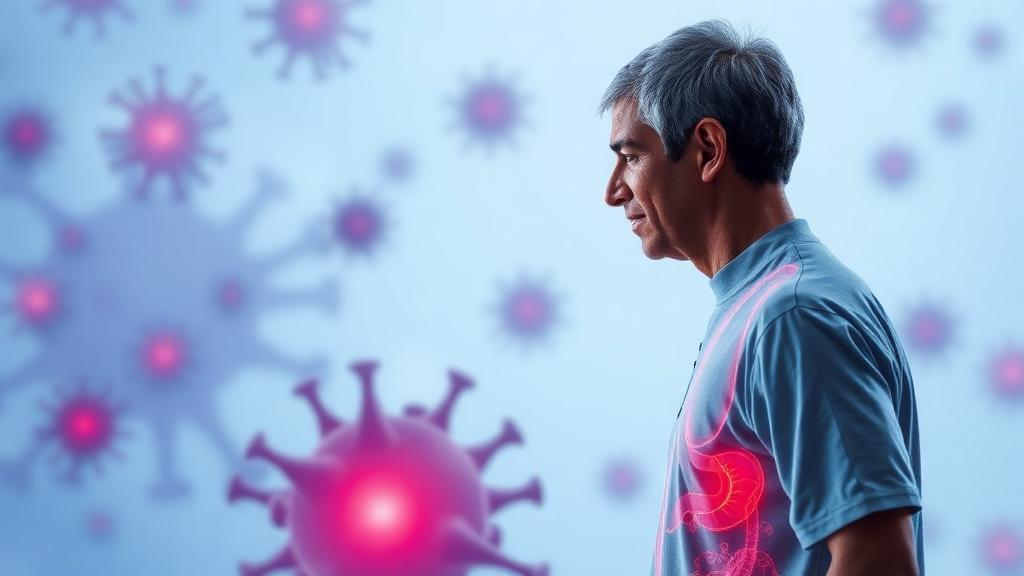
A study of people with Parkinson’s disease in Kerala, India, has identified gut microbiome patterns associated with the disorder, including increased abundance of several microbial groups linked by the researchers to inflammation and reduced abundance of groups associated with anti-inflammatory activity. The findings, based on 16S rRNA gene amplicon sequencing, provide a population-specific snapshot of the gut microbiome in South Indian patients and highlight candidate microbial signatures that may help guide broader multi-omics investigations into Parkinson’s disease.
Parkinson’s disease is a progressive neurodegenerative disorder characterized by aggregation of alpha-synuclein in dopaminergic neurons. The new study examined the gut microbiomes of people with Parkinson’s disease and healthy controls from Kerala, a region where the microbial composition of the population may differ from that studied in other parts of the world. Researchers said the design was motivated in part by geographic variation in gut microbial communities, which makes local evidence important when evaluating proposed links among microbiota, inflammation and neurodegeneration.
The investigators found significant differences in both microbial diversity and taxonomic composition between the Parkinson’s disease and control groups. The microbial community in the Parkinson’s group contained higher relative abundances of Akkermansia, Bifidobacterium, Escherichia-Shigella, Collinsella, an unclassified Eggerthellaceae genus, an unclassified Enterobacterales group and Intestinimonas. At the same time, Bacteroides, Lachnospira, Agathobacter, Prevotella and Erysipelotrichaceae UCG-003 were reduced. These are comparative observations from this cohort; they do not establish that any particular organism causes Parkinson’s disease or that changing the microbiome would alter clinical outcomes.
The team then used predictive functional profiling to estimate which metabolic capabilities might be associated with the observed microbial communities. The analysis pointed to differences in pathways involved in neurotransmitter-related processes, including dopaminergic, glutamatergic and GABAergic metabolism. Predicted shifts also extended to amino acid, polyamine, nucleotide and energy metabolism. An integrative network analysis connected Parkinson’s-enriched taxa with dysregulated metabolic pathways, suggesting that taxonomic changes and predicted functional potential may form coordinated biological patterns rather than isolated microbial differences.
Because the work was based on amplicon sequencing and computational functional prediction, it cannot directly measure microbial metabolites, inflammatory molecules or the brain. The study therefore identifies associations and testable candidates rather than demonstrating a gut-microbiome mechanism for Parkinson’s disease. Larger studies incorporating metabolomics, metagenomics, host inflammatory measurements and longitudinal clinical data will be needed to determine whether the reported signatures are reproducible, causally relevant or capable of distinguishing Parkinson’s disease in other populations. Within those limits, the research offers an exploratory regional baseline and a framework for future multi-omics studies of inflammation-related microbiome patterns in Parkinson’s disease.
Subject of Research: Gut microbiome composition and predicted metabolic functions in South Indian patients with Parkinson’s disease
Article Title: Integrative microbiome and functional profiling decodes pro-inflammatory gut microbiome signatures in South Indian patients with Parkinson’s disease
Article References: Painadath Alikunju, A., Jose, D., Venkatachalam, S., Tajudeen, J., Azhchath Vasu, D., K K, D., Raman, G., L, G. T., Thomas, F., K P, D., Manoj, N., Krishnan, S., & P S, B. C. (2026). Integrative microbiome and functional profiling decodes pro-inflammatory gut microbiome signatures in South Indian patients with Parkinson’s disease. npj Parkinson's Disease. https://doi.org/10.1038/s41531-026-01547-w
Image Credits: AI Generated
DOI: 10.1038/s41531-026-01547-w
Keywords: Parkinson’s disease, gut microbiome, microbiome dysbiosis, inflammation, 16S rRNA sequencing, metabolic pathways, South India, Kerala, multi-omics, Integrative, microbiome, functional
News Source: Cassandra Pierce. (October 21, 2026). South Indian Parkinson’s study links gut microbes to inflammation. Scienmag.