• HOME
  • NEWS
  • EXPLORE
    • CAREER
      • Companies
      • Jobs
    • EVENTS
    • iGEM
      • News
      • Team
    • PHOTOS
    • VIDEO
    • WIKI
  • BLOG
  • COMMUNITY
    • FACEBOOK
    • INSTAGRAM
    • TWITTER
Wednesday, October 21, 2026
BIOENGINEER.ORG
No Result
View All Result
  • Login
  • HOME
  • NEWS
  • EXPLORE
    • CAREER
      • Companies
      • Jobs
        • Lecturer
        • PhD Studentship
        • Postdoc
        • Research Assistant
    • EVENTS
    • iGEM
      • News
      • Team
    • PHOTOS
    • VIDEO
    • WIKI
  • BLOG
  • COMMUNITY
    • FACEBOOK
    • INSTAGRAM
    • TWITTER
No Result
View All Result
Bioengineer.org
No Result
View All Result
Home NEWS Science News Biology

NIK kinases link phytocytokine perception to early plant immune phosphorylation

by
October 21, 2026
in Biology
Reading Time: 2 mins read
0
NIK kinases link phytocytokine perception to early plant immune phosphorylation

NIK kinases link phytocytokine perception to early plant immune phosphorylation

Share on FacebookShare on TwitterShare on LinkedinShare on RedditShare on Telegram

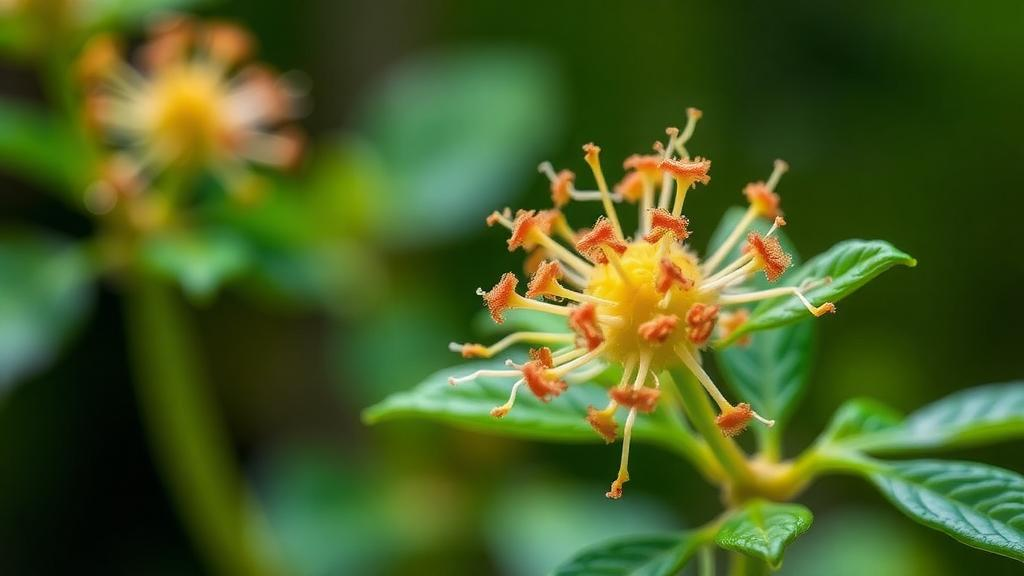
Plant danger signals known as phytocytokines can activate immune responses, but the molecular events that propagate these signals through cell-surface receptor complexes have remained incompletely understood. A study in Arabidopsis identifies all six members of the nuclear-shuttle-protein-interacting kinase (NIK) family as non-canonical, signal-propagating components of phytocytokine receptor complexes. Reported in Nature Plants , the research shows that NIK kinases contribute redundantly but distinctively to immune responses triggered by Pep and SCOOP12, with their activity linked to early phosphorylation events and downstream signalling proteins.

The investigators examined how NIK proteins relate to the phytocytokine receptors PEPR1 and MIK2 and the co-receptor BAK1. NIKs associated with these proteins, and ligand perception transiently enhanced the interactions. These results place the kinases within multiple phytocytokine receptor complexes in which they appear to relay signals rather than act simply as structural components.

The experimental system was the model plant Arabidopsis , and the findings concern plant immune signalling at the molecular level rather than effects in crops, animals or human disease. Phosphorylation experiments provided further evidence that NIKs operate in the pathway downstream of receptor perception. NIK1, NIK3 and NIK6 underwent robust, ligand-dependent phosphorylation that required PEPR signalling.

Both PEPR1 and BAK1 could phosphorylate NIK proteins, indicating that the kinases receive phosphorylation inputs from two components of the receptor system. NIKs were dispensable for the Pep2-induced association between PEPR1 and SERK, showing that they are not required for that initial receptor pairing. They were, however, required for the receptor complex to produce its full phosphorylation output, for efficient recruitment of BIK1 and PBL1, and for activation of BIK1.

The results therefore distinguish two stages of signalling: NIKs were unnecessary for the measured PEPR–SERK association but important for the phosphorylation capacity and downstream protein activation that followed. Genetic complementation refined the mechanism by identifying two phosphorylation sites in NIK1, Ser615 and Tyr618, as essential for NIK1-mediated immune signalling. Restoring function at the relevant sites demonstrated that both residues are required, while Tyr618 preferentially controlled the recruitment and phosphorylation of BIK1.

Taken together, the experiments support a model in which phytocytokine perception is propagated through NIK-associated phosphorylation events, extending immune signalling beyond the initial PEPR1–BAK1 and PEPR1–SERK receptor interactions. The work identifies NIKs as contributors to full phosphorylation output and efficient downstream activation in the tested Arabidopsis pathways, rather than demonstrating that they are required for every aspect of the plant immune response.

Subject of Research: Molecular regulation of phytocytokine-triggered plant immunity in Arabidopsis

Article Title: NIK receptor kinases propagate phytocytokine-triggered immunity by driving early phosphorylation events

Article References: Zhu, W., Huang, M., Li, X., Lin, Y., Xie, J., Cheng, J., Fu, Y., Jiang, D., Tsuda, K., Yu, X., & Li, B. (2026). NIK receptor kinases propagate phytocytokine-triggered immunity by driving early phosphorylation events. Nature Plants. https://doi.org/10.1038/s41477-026-02439-w

Image Credits: AI Generated

DOI: 10.1038/s41477-026-02439-w

Keywords: Arabidopsis, plant immunity, NIK kinases, phytocytokines, PEPR1, BAK1, protein phosphorylation, receptor complexes, danger signals, SCOOP12, receptor, kinases

News Source: Drew Townsend. (October 21, 2026). NIK kinases link phytocytokine perception to early plant immune phosphorylation. Scienmag.


Tags: ArabidopsisBAK1danger signalskinasesNIK kinasesPEPR1phytocytokinesPlant immunityprotein phosphorylationreceptorreceptor complexesSCOOP12
Share12Tweet7Share2ShareShareShare1

Related Posts

Research report: Comparing teacher-made and AI-assisted teaching videos for thyroid eye disease: an exploratory study

Research report: Comparing teacher-made and AI-assisted teaching videos for thyroid eye disease: an exploratory study

October 21, 2026
Review frames microbiome–mitochondria crosstalk in glioblastoma research

Review frames microbiome–mitochondria crosstalk in glioblastoma research

October 21, 2026

Prostate cancer stem-cell targeting reviewed for therapy resistance

October 21, 2026

Chilli extract shows preclinical activity against lung adenocarcinoma in rats

October 21, 2026

POPULAR NEWS

  • Benchmark study finds 98.9% accuracy for concurrency-aware SDN intrusion detection

    Benchmark study finds 98.9% accuracy for concurrency-aware SDN intrusion detection

    29 shares
    Share 12 Tweet 7
  • NIK kinases link phytocytokine perception to early plant immune phosphorylation

    29 shares
    Share 12 Tweet 7
  • Mouse and human beige adipocytes use futile sodium-potassium cycling for energy expenditure

    29 shares
    Share 12 Tweet 7
  • Retrospective older-adult study links red cell size variation-to-albumin ratio to frailty

    29 shares
    Share 12 Tweet 7

About

We bring you the latest biotechnology news from best research centers and universities around the world. Check our website.

Follow us

Recent News

Benchmark study finds 98.9% accuracy for concurrency-aware SDN intrusion detection

NIK kinases link phytocytokine perception to early plant immune phosphorylation

Mouse and human beige adipocytes use futile sodium-potassium cycling for energy expenditure

Subscribe to Blog via Email

Enter your email address to subscribe to this blog and receive notifications of new posts by email.

Join 85 other subscribers
  • Contact Us

Bioengineer.org © Copyright 2023 All Rights Reserved.

Welcome Back!

Login to your account below

Forgotten Password?

Retrieve your password

Please enter your username or email address to reset your password.

Log In
No Result
View All Result
  • Homepages
    • Home Page 1
    • Home Page 2
  • News
  • National
  • Business
  • Health
  • Lifestyle
  • Science

Bioengineer.org © Copyright 2023 All Rights Reserved.