• HOME
  • NEWS
  • EXPLORE
    • CAREER
      • Companies
      • Jobs
    • EVENTS
    • iGEM
      • News
      • Team
    • PHOTOS
    • VIDEO
    • WIKI
  • BLOG
  • COMMUNITY
    • FACEBOOK
    • INSTAGRAM
    • TWITTER
Friday, January 9, 2026
BIOENGINEER.ORG
No Result
View All Result
  • Login
  • HOME
  • NEWS
  • EXPLORE
    • CAREER
      • Companies
      • Jobs
        • Lecturer
        • PhD Studentship
        • Postdoc
        • Research Assistant
    • EVENTS
    • iGEM
      • News
      • Team
    • PHOTOS
    • VIDEO
    • WIKI
  • BLOG
  • COMMUNITY
    • FACEBOOK
    • INSTAGRAM
    • TWITTER
  • HOME
  • NEWS
  • EXPLORE
    • CAREER
      • Companies
      • Jobs
        • Lecturer
        • PhD Studentship
        • Postdoc
        • Research Assistant
    • EVENTS
    • iGEM
      • News
      • Team
    • PHOTOS
    • VIDEO
    • WIKI
  • BLOG
  • COMMUNITY
    • FACEBOOK
    • INSTAGRAM
    • TWITTER
No Result
View All Result
Bioengineer.org
No Result
View All Result
Home NEWS Science News Biology

Mixing and matching yeast DNA

Bioengineer by Bioengineer
September 11, 2017
in Biology
Reading Time: 2 mins read
0
Share on FacebookShare on TwitterShare on LinkedinShare on RedditShare on Telegram
IMAGE

Credit: Osaka University

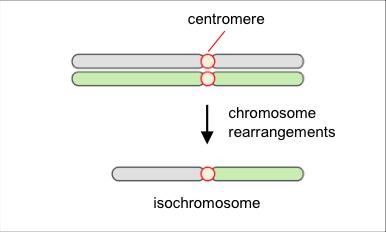
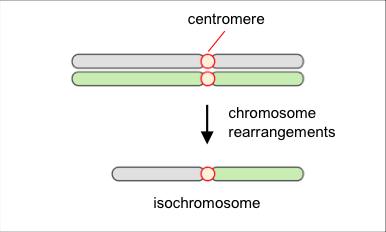
(Osaka, Japan) The billions of cells in your body can be traced to a single cell. That single cell will replicate and divide into two new cells that will replicate and divide on and on until the whole body is formed. For each division, the cell will replicate its chromosomes, which are then divided equally between the two new cells. The centromere is the structure that assures equal division of the chromosomes. A new study by Osaka University researchers shows in yeast that different proteins regulate the distinctive behavior of the centromere from non-centromere regions in the chromosomes.

"In meiosis, the non-centromere undergoes lots of crossover-type recombination but the centromere does not. We do not know how these regions behave during mitosis," explains Associate Professor Takuro Nakagawa, who compared the two types of cell replication that happen in the body.

To compare the two regions in mitosis, Nakagawa had two of his doctoral students, Faria Zafar and Akiko Okita, examine the molecular machinery that controls the recombination in yeast. Like humans, yeast are eukaryotes, but their simpler centromere structure makes them ideal for these experiments.

Zafar and Okita found distinct factors that regulated crossover-type recombination at the centromere and non-centromere regions.

"Crossover-type of recombination was underrepresented at the centromere as compared to the non-centromere region" said Zafar.

"Rad51-dependent homologous recombination was prevalent at the centromere, while both Rad51-dependent and Rad51-independent homologous recombination were observed at the non-centromere region," she said.

These differences could explain why centromeres are not a location for chromosomal rearrangements in mitosis.

Okita explained that the absence of crossovers was due to proteins specific to the centromere.

"Mhf1/CENP-S, Mhf2/CENP-X, and Fml1/FANCM were necessary for the suppression of crossing over," she said.

The centromere has machinery that reduces the amount of recombination typical in the non-centromere region suggests the importance of its DNA fidelity and the evolution of this structure.

"It is interesting to see how cells have evolved. The cell has designed specific apparatus to protect certain structures from change," said Nakagawa.

###

Media Contact

Saori Obayashi
[email protected]
81-661-055-886
@osaka_univ_e

http://www.osaka-u.ac.jp/en

Original Source

http://resou.osaka-u.ac.jp/en/research/2017/20170830_2 http://dx.doi.org/10.1093/nar/gkx763
Share13Tweet8Share2ShareShareShare2

Related Posts

Mapping Eucalyptus Genes for Phosphate Transport Efficiency

Mapping Eucalyptus Genes for Phosphate Transport Efficiency

January 9, 2026
WRKY Gene Family’s Role in Cucurbita Moschata Resistance

WRKY Gene Family’s Role in Cucurbita Moschata Resistance

January 8, 2026

Freshwater Snail Adapts to Threat from Big-Headed Turtle

January 8, 2026

Discovering Hypertension Genes in Dong Ethnic Community

January 8, 2026
Please login to join discussion

POPULAR NEWS

  • Enhancing Spiritual Care Education in Nursing Programs

    154 shares
    Share 62 Tweet 39
  • PTSD, Depression, Anxiety in Childhood Cancer Survivors, Parents

    144 shares
    Share 58 Tweet 36
  • Impact of Vegan Diet and Resistance Exercise on Muscle Volume

    46 shares
    Share 18 Tweet 12
  • SARS-CoV-2 Subvariants Affect Outcomes in Elderly Hip Fractures

    45 shares
    Share 18 Tweet 11

About

We bring you the latest biotechnology news from best research centers and universities around the world. Check our website.

Follow us

Recent News

Mapping Eucalyptus Genes for Phosphate Transport Efficiency

Chlorella Nanogels Suppress Lung Injury Inflammation

Albendazole’s Impact on Helminths in Yunnan Kids

Subscribe to Blog via Email

Enter your email address to subscribe to this blog and receive notifications of new posts by email.

Join 71 other subscribers
  • Contact Us

Bioengineer.org © Copyright 2023 All Rights Reserved.

Welcome Back!

Login to your account below

Forgotten Password?

Retrieve your password

Please enter your username or email address to reset your password.

Log In
No Result
View All Result
  • Homepages
    • Home Page 1
    • Home Page 2
  • News
  • National
  • Business
  • Health
  • Lifestyle
  • Science

Bioengineer.org © Copyright 2023 All Rights Reserved.