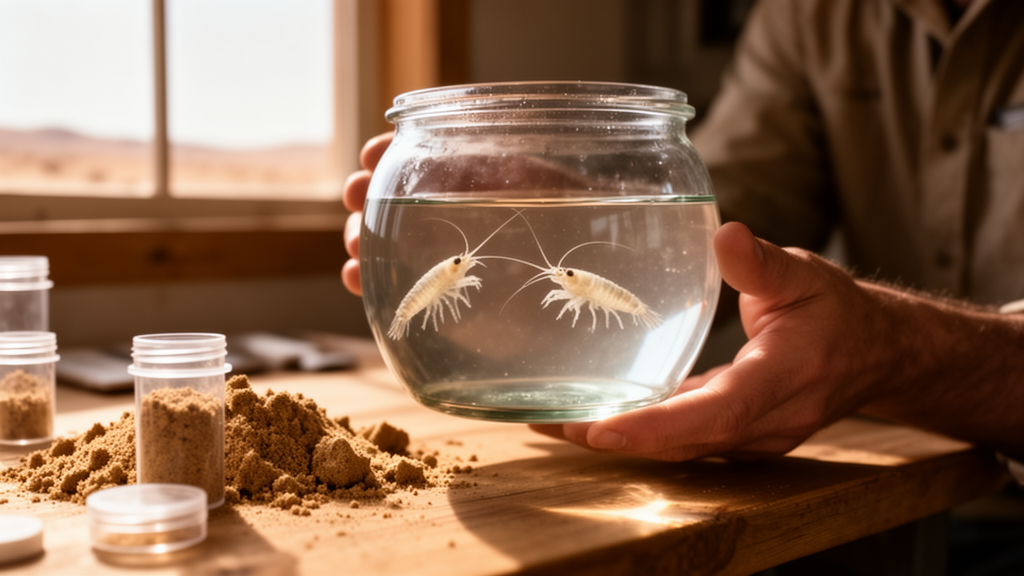
A morphological and molecular study identified two new species of the groundwater amphipod genus Hyalella from Nye County, Nevada: Hyalella plutonia, from an unnamed spring near Beatty, and Hyalella keepuikantun, from Devils Hole II. Both species are small, lack eyes and integumentary pigment, and are currently known only from their type localities.
The investigators collected live specimens with hand nets or small strainers from the unnamed spring about 0.7 km north of the Highway 95 and Oleo Road intersection and from Devils Hole II. The animals were preserved in 95% ethanol and stored at −20 °C. Four specimens from each population were cleared and stained for dissection and examination with stereomicroscopes and a compound microscope, while genomic DNA was extracted from the digested material for genetic analysis.
The molecular analysis targeted three loci commonly used in amphipod phylogenetics: approximately 1,000 base pairs of nuclear 18S ribosomal DNA, a 730-base-pair segment of nuclear 28S ribosomal DNA and approximately 350 base pairs of mitochondrial 16S rDNA. Mitochondrial cytochrome c oxidase subunit I was excluded because of pseudogene issues. Alignments were prepared in MAFFT, checked by eye and concatenated, and maximum-likelihood phylogenies were reconstructed in IQTREE. Statistical support was evaluated with 1,000 ultrafast bootstrap replicates and the Shimodaira-Hasegawa approximate likelihood ratio test.
The resulting trees placed the two new populations in a well-supported clade that also contained Hyalella cretae. The new populations differed from H. cretae at levels comparable to differences among other amphipod taxa: about 98–99% similarity in the nuclear genes and approximately 90% in mitochondrial 16S rDNA. Within the clade, H. plutonia was recovered as sister to a clade containing H. keepuikantun and H. cretae. The authors interpreted the broader phylogenetic pattern as consistent with at least two separate colonizations of Nearctic groundwater by Hyalella lineages.
Morphological analysis supported the molecular distinction between the new species and the previously described stygomorphic H. cretae and H. muerta. Diagnostic traits included the shape of the male second gnathopod’s palmar margin, the proportions and setation of the seventh pereopod’s basis, and the setation of the third uropod and telson. H. plutonia has two apical robust setae on the maxilliped inner plate, a distinct anterior notch on the male second gnathopod and a seventh-pereopod basis projecting more than 1.5 times the length of the ischium. H. keepuikantun has four apical robust setae on the maxilliped inner plate, a weak anterior notch and a seventh-pereopod basis projecting less than 1.2 times the ischium length.
The species name plutonia refers to Pluto, the god of the Underworld, and also plays on Beatty’s nickname, “Gateway to Death Valley.” The name keepuikantun means “blind” in Timbisha Shoshone and refers to the species’ lack of eyes and its location in the Timbisha Shoshone homeland. The name was selected in consultation with the Timbisha Shoshone Tribal Historic Preservation Office. These names describe the species’ features and geographic context; the study did not directly test their function as evolutionary adaptations.
H. plutonia is known only from a shallow, silty rheocrene spring that emerges about 45 m west of Highway 95, near Fremont cottonwood and amid broad-leaved cattail and yerba mansa. It co-occurs with the endemic Oasis Valley springsnail and the Amargosa toad. Surveys of more than 20 other springs in Oasis Valley found numerous epigean hyalellid amphipods but no additional stygobitic populations. The type locality lies on land managed by the Nevada Department of Transportation, beside a highway planned for expansion and redesignation as Interstate 11. The authors state that groundwater withdrawal for Beatty and existing or proposed gold and lithium mines pose a substantial risk to the spring and the species.
H. keepuikantun is known only from Devils Hole II, also called Devils Hole Cave, a separate cave system about 200 m north of Devils Hole in Death Valley National Park. Its small opening leads to a nearly vertical pit approximately 40 m deep before reaching the water table. The amphipod has been collected only near the water’s surface, close to bat guano and floating calcite rafts. Surveys have noted water at least 21 m deep, although the total depth is likely greater, and the cave’s connections to Devils Hole and the wider basin remain unknown. The species shares the site with an unidentified ostracod, while no other known aquatic invertebrate species were reported there.
The study’s conclusions are bounded by the restricted sampling and the very small known ranges of both species. No evidence showed that either occurs beyond its type locality, and one author’s survey of additional springs did not include private property adjacent to the Beatty site. The descriptions increase the number of described Nearctic Hyalella species to 23, five of which are endemic to the northern Mojave Desert. The authors note that many Hyalella occupy small ranges in imperiled groundwater-fed ecosystems, making the conservation implications of documenting additional diversity potentially considerable.
Subject of Research: Taxonomic and phylogenetic identification of two new groundwater Hyalella species in the northern Mojave Desert
Article Title: Gateways to the underworld: molecular phylogenetic analyses identify patterns of groundwater fauna and two new species of hypogean Hyalella Smith, 1874 ( Amphipoda , Hyalellidae ) from the northern Mojave Desert
Article References: Cannizzaro, A. G., Lange, C. J., & Berg, D. J. (2025). Gateways to the underworld: molecular phylogenetic analyses identify patterns of groundwater fauna and two new species of hypogean Hyalella Smith, 1874 (Amphipoda, Hyalellidae) from the northern Mojave Desert. Subterranean Biology, 54, 35-68. https://doi.org/10.3897/subtbiol.54.168846
Image Credits: AI Generated
DOI: 10.3897/subtbiol.54.168846
Keywords: Hyalella, groundwater amphipods, Amphipoda, Hyalellidae, Mojave Desert, Nevada, molecular phylogenetics, taxonomy, spring habitats, Devils Hole II, Gateways, underworld
News Source: Drew Townsend. (October 20, 2026). Morphological and molecular analysis identifies two new eyeless Hyalella species from northern Mojave Desert groundwater. Scienmag.