A laboratory study in the filamentous fungus Aspergillus nidulans identified three conserved arginine residues in the DNA-binding region of the velvet protein VelB as essential for normal spore viability, sexual development and secondary metabolism. The results, based on targeted mutagenesis and functional comparison with wild-type, deletion and complemented strains, point to a conserved arginine cluster that helps establish the positive electrostatic surface used in DNA recognition.
Velvet proteins are conserved transcriptional and epigenetic regulators involved in fungal development, secondary metabolism, stress responses and pathogenicity. In A. nidulans, the core family includes VeA, VelB, VelC and VosA. The trimeric VelB–VeA–LaeA complex is particularly important: in darkness, nuclear VeA links VelB with the methyltransferase LaeA, coordinating sexual development and secondary-metabolite production, whereas reduced nuclear localization of VeA under light is associated with altered complex assembly and a shift toward asexual development.
Velvet proteins contain a conserved velvet domain of approximately 200 amino acids that resembles the Rel homology domain of mammalian NF-κB transcription factors. A recent architectural model divides this domain into an approximately 30-amino-acid N-terminal DNA-binding region and an approximately 100-amino-acid C-terminal dimerization region. Although the dimerization region had been characterized in earlier work, the sequence and functional requirements of the DNA-binding region were largely unresolved. The study used VelB as a model because it has the shortest sequence and high cross-species conservation among the four A. nidulans velvet homologs, and because loss of VelB produces distinct developmental phenotypes.
Researchers aligned 4,999 putative fungal velvet domains and then individually replaced 15 conserved VelB DNA-binding-region residues with alanine. Comparison of the resulting colonies with wild-type, velB-deletion and velB-complemented controls identified three substitutions with the strongest phenotypic effects: R71A, R80A and R81A. Under light, wild-type and complemented strains produced green conidia, while all three arginine mutants produced gray-green conidia. Under sealed dark conditions, the R80A and R81A mutants failed to form cleistothecia, the sexual fruiting bodies, whereas the R71A mutant produced only 13.3% of the wild-type cleistothecial yield.
The mutants also showed a marked loss of long-term conidial viability. In assays performed on solid minimal medium, conidia from wild-type and complemented strains retained approximately 50% viability after 14 days, compared with roughly 15% for the three point mutants, a statistically significant reduction. Unlike the velB deletion strain, which completely lost conidial viability after 14 days, the point mutants retained partial viability. Liquid chromatography–mass spectrometry further showed disrupted secondary-metabolite profiles that partly overlapped with those of the deletion strain. Emericellin, epishamixanthone, F9775A/B and shamixanthone were attenuated or absent, whereas asperthecin, emericellamide C, emericellamide E and terrequinone A were significantly increased; austinoneol A remained stable across the tested strains.
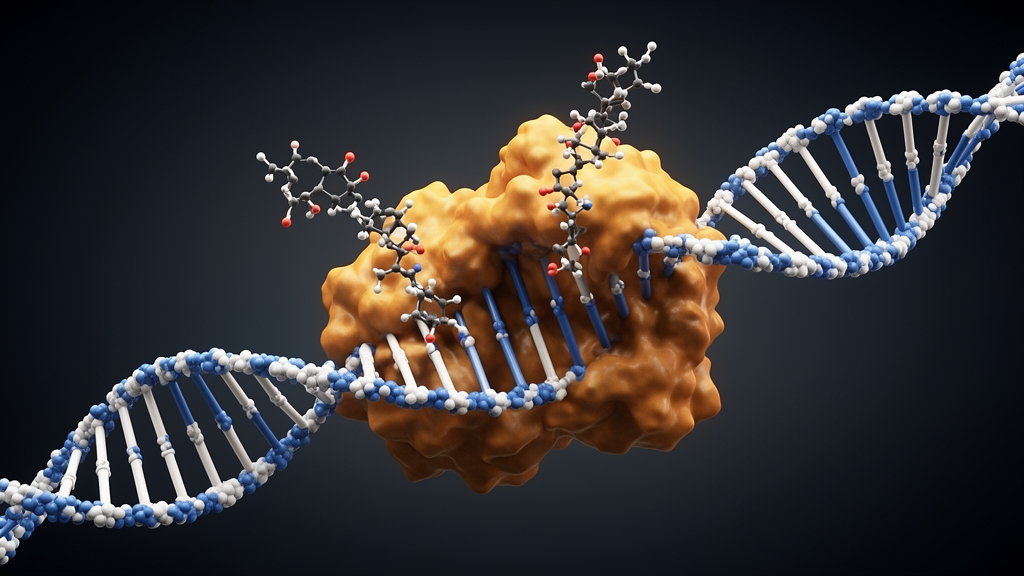
Structural modeling provided a possible mechanistic explanation for the observed defects. Using AlphaFold 3 and the crystal structure of the A. nidulans VosA–VelB heterodimer as a reference, the researchers modeled wild-type VelB and the R71A, R80A and R81A variants and calculated per-residue electrostatic potentials. R71 occupied the strongest electropositive region, with a potential of +2.391 kcal/(mol·e), and its alanine substitution produced the largest absolute decrease, 1.229 kcal/(mol·e). All three mutations lowered the protein’s mean, minimum and maximum calculated Coulomb potential and altered the electrostatic profile at nearly every modeled residue. These are model-based calculations, rather than direct measurements of DNA binding.
Across the 4,999 velvet-domain sequences, the corresponding positions were highly conserved: arginine occurred at position 71 in 85% of sequences and lysine in 4%; at position 80, the respective frequencies were 91% and 2%; and at position 81, they were 84% and 9%. A domain-swap experiment tested functional compatibility by replacing the native VelB DNA-binding region with the region from the velvet protein of Capsaspora owczarzaki. This chimeric strain only partly rescued the deletion phenotype, with approximately 23% conidial viability and 34% cleistothecial abundance relative to wild type. The Capsaspora region lacked the arginine corresponding to VelB R71.
Adding that arginine to the Capsaspora domain substantially improved the chimeric strain’s measured phenotypes. Fourteen-day conidial viability rose to 91% of the wild-type level and cleistothecial formation to 86%, compared with 23% and 34% for the unmodified chimera. Western blotting showed that the chimeric proteins were expressed at normal levels comparable to the velB cDNA–GFP control, although the experiment did not directly measure DNA occupancy or exclude every possible contribution from expression or localization. The study therefore supports a conserved requirement for R71, R80 and R81 in VelB-mediated regulation, while its conclusions are bounded by the use of one fungal model and computational rather than direct DNA-binding measurements.
Subject of Research: Experimental dissection of conserved arginine residues in the Aspergillus nidulans VelB DNA-binding region
Article Title: Functional dissection of velvet DNA-binding region in Aspergillus nidulans VelB uncovers an essential conserved arginine cluster
Article References: Chen, W., Köhler, A. M., Deng, M., Zhu, H., & Braus, G. H. (2026). Functional dissection of velvet DNA-binding region in Aspergillus nidulans VelB uncovers an essential conserved arginine cluster. IMA Fungus, 17, Article e204179. https://doi.org/10.3897/imafungus.17.204179
Image Credits: AI Generated
DOI: 10.3897/imafungus.17.204179
Keywords: Aspergillus nidulans, VelB, velvet proteins, DNA-binding region, arginine cluster, fungal development, sexual reproduction, spore viability, secondary metabolism, electrostatic potential, Functional, dissection
News Source: Juliet Wilcox. (October 20, 2026). VelB DNA-binding region requires conserved arginine cluster for fungal development. Scienmag.