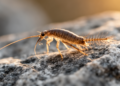
A microsatellite study of 86 unique Yingde’s geckos, Goniurosaurus yingdeensis, from 10 populations found moderate genetic diversity alongside pronounced population differentiation and limited estimated gene flow. The clearest separation occurred between the DR population and the other nine sampled populations.
The critically endangered eyelid gecko is narrowly endemic to fragmented karst habitats within and around Shimentai National Nature Reserve in Guangdong Province, China. Its distribution is discontinuous, and the intervening non-karst matrix restricts movement between habitat patches. The species has poor dispersal ability, while its small and isolated populations are potentially vulnerable to genetic drift. The study assessed whether these landscape conditions are associated with genetic structure across the species’ known range.
Researchers conducted nocturnal visual encounter surveys at 10 sites between June 2020 and July 2021. They found 96 geckos, including 10 individuals previously captured within the same transect. No movement between transects was detected, and the maximum straight-line distance recorded among recaptured animals was less than 100 m. Adjacent transects were separated by at least 100 m of non-karst matrix or geographically discontinuous karst patches. On that basis, each transect was provisionally treated as a geographic population, although the researchers described this classification as a working hypothesis to be evaluated by the genetic data.
Tail tips were collected from the geckos and preserved in 95% ethanol at −40 °C. After the recaptured animals were removed, the final genetic dataset included 86 unique individuals. DNA was extracted from the preserved tissue, and 20 microsatellite, or simple sequence repeat, loci were amplified and genotyped by capillary electrophoresis. The loci had first been screened in one animal from each population, and those showing stable amplification and high polymorphism were retained. The analysis covered genetic-diversity measures, F-statistics, estimated gene flow, principal-coordinate analysis, STRUCTURE assignment and a Mantel test for isolation by distance.
The 20 loci contained 67 alleles in total. Across the populations, the mean number of observed alleles was 3.385, the mean effective allele number was 2.424 and the mean Shannon information index was 0.875. Mean observed heterozygosity was 0.480, compared with mean expected heterozygosity of 0.482. Population-level observed allele numbers ranged from 2.000 to 5.400, while fixation indices ranged from −0.208 to 0.065. The authors characterized the overall diversity as moderate and noted that its mean observed allele number was higher than a previously reported value for G. kuroiwae but lower than one for G. orientalis.
Genetic differentiation was substantial across the sampled populations. The mean FST was 0.357, with locus values ranging from 0.193 to 0.707, while the estimated gene-flow value Nm averaged 0.516 and ranged from 0.104 to 1.043. The authors interpreted this combination as consistent with gene flow being insufficient to counteract genetic drift. DYa and DYb were the most genetically similar populations, with FST of 0.041, a genetic distance of 0.199 and genetic identity of 0.820. DR and PB had the largest genetic distance, 2.806, and the lowest identity, 0.060.
Genetic distance was associated with geographic distance. A Mantel test found a positive relationship between genetic distance and log-transformed geographic distance, with Pearson’s correlation of 0.693 (p < 0.001) and Spearman’s correlation of 0.762 (p = 0.001). Principal-coordinate analysis and STRUCTURE assignment both separated DR from the other nine populations. After DR was excluded, principal-coordinate analysis placed the remaining populations into three groups, while STRUCTURE assigned the 70 remaining individuals to two genetic groups. PB and SQ clustered together, and LT showed genetic contributions from both groups. LT also had greater affinity to the more distant PB and SQ than to the nearby HS and HSb.
The researchers described the Beijiang River as a possible factor contributing to the separation of DR, but noted that this interpretation rested on a single population and was therefore suggestive rather than conclusive. The comparison between these fragmented karst hills and other island systems was likewise interpretive because a direct comparative test was beyond the study’s scope. The genetic results document differentiation and limited connectivity among the sampled populations, but they do not directly demonstrate the precise landscape processes responsible for those patterns.
Given the observed structure, the authors recommended treating different geographic populations as distinct management units for conservation. They called for maintaining the integrity of remaining karst habitats, limiting further fragmentation, and establishing long-term monitoring that combines field surveys, image-based individual identification and molecular data. Such monitoring could track genetic diversity, detect population declines and support future assessments of whether current diversity and population connectivity are sustained under continued anthropogenic pressures and environmental change.
Subject of Research: Genetic diversity and population structure of the critically endangered Yingde’s gecko assessed with SSR markers
Article Title: Genetic diversity and structure analysis of critically endangered Goniurosaurus yingdeensis ( Squamata , Eublepharidae ) based on SSR markers
Article References: Li, Z., Qi, S., Song, H., Wang, H., Zhao, Y., Shi, Y., & Wang, Y. (2026). Genetic diversity and structure analysis of critically endangered Goniurosaurus yingdeensis (Squamata, Eublepharidae) based on SSR markers. Herpetozoa, 39, 39-48. https://doi.org/10.3897/herpetozoa.39.e186041
Image Credits: AI Generated
DOI: 10.3897/herpetozoa.39.e186041
Keywords: Goniurosaurus yingdeensis, Yingde’s gecko, microsatellite markers, genetic diversity, population structure, gene flow, karst habitat, habitat fragmentation, Critically Endangered, conservation genetics, Genetic, diversity
News Source: Juliet Wilcox. (October 20, 2026). Microsatellite study finds genetic differentiation across 10 populations of critically endangered Yingde’s gecko. Scienmag.