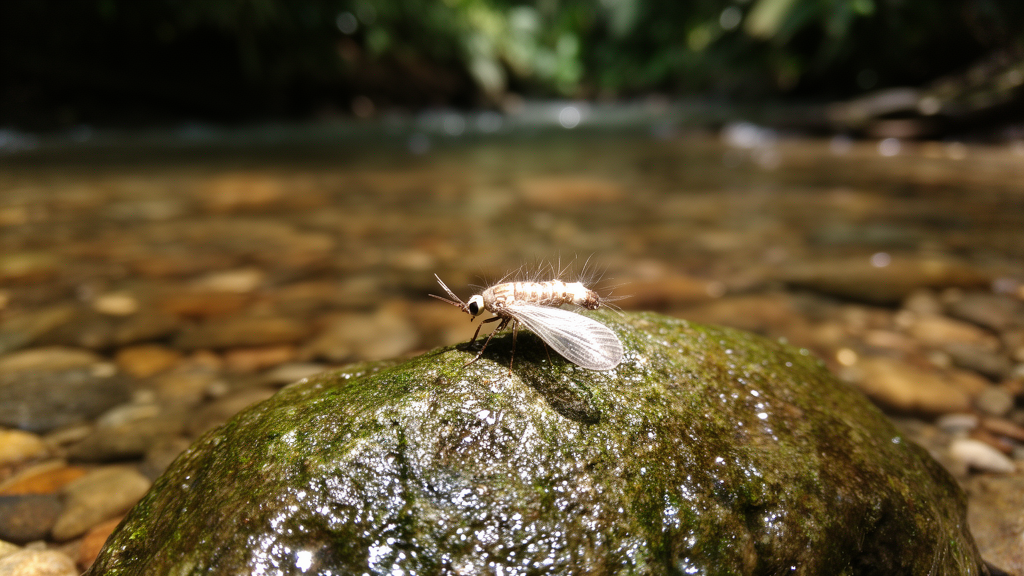
A taxonomic study described nine new species of microcaddisflies in the family Hydroptilidae from Panama, bringing the country’s recorded caddisfly fauna to 544 species across 15 families and 56 genera. The descriptions by the Aquatic Invertebrate Research Group at the Universidad Autónoma de Chiriquí were based on material collected from western and southern Panama between 2017 and 2023.
The research was part of a broader program documenting Trichoptera, or caddisflies, in Panama. According to the authors, the number of species known from the country increased from 257 in 2015 to 535 in 2024, with two additional families and 11 genera recorded during that period. The new paper adds the nine described species to the 2024 total. Collection sites included the Soná Peninsula and Coiba National Park in southern Panama, as well as locations in Chiriquí Province and the Bosque Protector Palo Seco.
The investigators used an integrated sampling scheme that combined ultraviolet light traps with Malaise traps. They generally collected monthly from December through June, extending some deployments over several months. The authors reported that the two trap types together consistently produced the best results in terms of species diversity, while monthly sampling from December through June was equivalent to whole-year sampling. A single collection at a site provided insufficient information about the species assemblage present.
Specimens were prepared and examined using established caddisfly methods. For anatomical examination, male genitalia were soaked overnight in 5% potassium hydroxide, washed in weakly acidified alcohol and observed under a dissecting scope. The species descriptions and diagnoses used published morphological terminology and a recent taxonomic classification, with illustrations showing male genital structures in lateral, dorsal and ventral views. The formal descriptions focused on male anatomy; for example, the account of Oxyethira jaramillo did not report female or immature stages.
The nine species were placed in four genera. One was assigned to Oxyethira, five to Neotrichia, one to Metrichia and two to Ochrotrichia. The Neotrichia descriptions included N. afuera, N. aguirrei, N. betegui, N. rancheria and N. sona, while the remaining taxa were Oxyethira jaramillo, Metrichia riosi, Ochrotrichia mariettae and Ochrotrichia martinez. Their identification was based principally on differences in male genitalia, including the forms and arrangement of appendages, phalluses and associated abdominal structures.
Several names refer to the places where type material was collected or to people associated with the research. Oxyethira jaramillo was named for Quebrada Jaramillo in the western highlands and for the Jaramillo reversal of Earth’s magnetic polarity, which occurred about 900,000 years ago. Metrichia riosi honored Panamanian aquatic biologist Tomás A. Ríos González, while Ochrotrichia mariettae honored Marietta Landis, who permitted access to her private reserve. Ochrotrichia martinez was named for Quebrada Martínez in Bosque Protector Palo Seco and had the broadest documented distribution among the nine species.
The distribution records included the type locality of O. martinez in Bosque Protector Palo Seco and records from Quebrada Jaramillo Abajo, Quebrada Corazones in Coclé Province and sites in Santa Fe National Park. Five species described from the Soná Peninsula and Coiba National Park region had their type material collected on Isla Canales de Afuera, about 6 km from the mainland. Neotrichia rancheria was also found on Isla Rancheria, approximately 16 km from the mainland and close to Coiba Island. N. aguirrei and N. sona were additionally recorded at mainland localities. Based on the available collections, the authors said the observations suggest some speciation in isolation on Isla Canales de Afuera, but they explicitly qualified that interpretation as subject to additional collecting.
The study has bounded geographic and biological limitations. Its distribution data reflect the sampled localities, while the authors noted that most areas of Panama had never been collected for caddisflies. The descriptions are also based primarily on male specimens and detailed male genitalia, leaving aspects of female and immature biology uncharacterized for the newly described taxa. The island-speciation observation is consequently a preliminary interpretation rather than a demonstrated evolutionary history.
All holotypes were deposited in the Museo de Peces de Agua Dulce e Invertebrados at the Universidad Autónoma de Chiriquí. Paratypes and other specimens were deposited in that museum, the University of Minnesota’s Neotropical Insect Collection and the Carnegie Museum of Natural History. The paper also reports the first refereed records of adult caddisfly taxa from Coiba National Park and expands the limited published information from the Soná Peninsula.
Subject of Research: Taxonomic description of nine new Hydroptilidae species from Panama
Article Title: The Trichoptera of Panama XXVIII. Nine new species of microcaddisflies ( Trichoptera , Hydroptilidae )
Article References: Armitage, B. J., Harris, S. C., & Rodriguez, V. (2025). The Trichoptera of Panama XXVIII. Nine new species of microcaddisflies (Trichoptera, Hydroptilidae). Neotropical Biology and Conservation, 20(2), 125-147. https://doi.org/10.3897/neotropical.20.e148738
Image Credits: AI Generated
DOI: 10.3897/neotropical.20.e148738
Keywords: caddisflies, microcaddisflies, Hydroptilidae, Panama, taxonomy, aquatic insects, biodiversity, species description, Coiba National Park, Soná Peninsula, Trichoptera, XXVIII
News Source: Gavin Prescott. (October 20, 2026). Taxonomic study describes nine new Panamanian microcaddisfly species. Scienmag.