An integrated survey and archival inventory of the Galápagos Islands documented 524 Hymenoptera species or morphospecies, placing the order among the archipelago’s most species-rich insect groups. The inventory included 137 named species, one subspecies and 386 morphospecies across 12 superfamilies, 44 families, 82 subfamilies and 222 genera, while showing that much of the recorded diversity remains taxonomically unresolved.
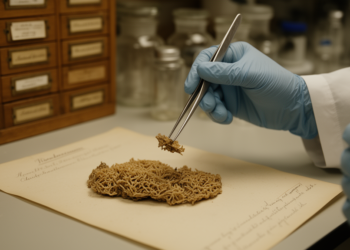
Researchers combined structured field surveys of non-ant Hymenoptera, a long-term ant dataset, museum collections, literature records and online sources. The integrated dataset contained 21,364 records. Its wasp dataset included 2,414 records from structured surveys conducted in 2018, 2019 and 2021, plus 10 opportunistic records from 2025. The ant dataset contained 15,502 records collected with multiple methods across 51 islands, islets and rocks from 2001 to 2012; museum and literature sources contributed 3,305 and 133 records, respectively.
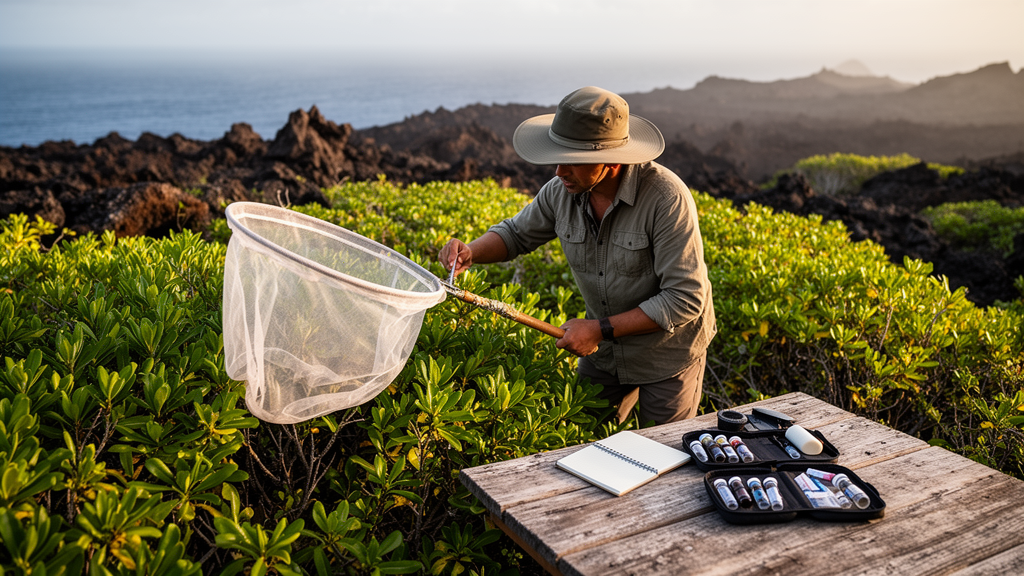
The structured wasp survey covered Santa Cruz, Fernandina, Isabela, San Cristóbal, Floreana, Genovesa, Marchena, Pinta, Santiago and Española, spanning littoral, dry, transition and humid vegetation zones. Sampling effort included 146 Malaise units, 208 yellow traps and 174 net sweeps. The 2025 opportunistic collections were included in the taxonomic inventory but excluded from summaries and comparisons of the structured survey. Records were standardized under the Darwin Core standard, and specimens that could not be identified confidently to species were assigned morphospecies using consistent morphological characters and, where possible, comparison with reference material and consultation with taxonomic specialists.
The inventory added 20 species and 134 genera for the Galápagos, including 11 families not previously recorded there. The families with the greatest observed richness were Encyrtidae, Eulophidae, Formicidae, Scelionidae and Braconidae. Of the 524 species and morphospecies, 452, or 86.3%, belonged to groups with predominantly parasitoid biology; 370 of those 452 were morphospecies. The concentration of unresolved morphospecies in parasitoid groups identifies their species-level identities as a principal taxonomic gap.
Incidence-based richness models estimated more species and morphospecies than the 524 observed. Based on 93 occupied grid cells measuring 0.1° by 0.1°, the Bootstrap estimate was 595.47, the Jackknife 1 estimate was 673.38 and the Chao2 estimate was 658.26. These model estimates suggest that additional sampling and taxonomic work may document further diversity, but they do not identify a specific number of additional parasitoid species. Sampling methods also differed in the taxa they detected: among 394 species or morphospecies with a recorded method, 174 were detected exclusively by one method, including 129 recorded only with Malaise traps.
Observed species and morphospecies richness was associated with island area after accounting for sampling effort. A nonparametric Spearman partial correlation yielded rs = 0.63, p = 0.006 across 18 islands. Higher observed richness occurred on Isabela, Santa Cruz, Floreana, Santiago, San Cristóbal and Fernandina, while Wolf, Darwin, Tortuga and Seymour Norte had lower richness. The analysis identifies an association rather than demonstrating that island area causes the difference, and the authors noted that sampling methods and effort were uneven and some methods were taxonomically biased.
Most taxa were shared among islands and vegetation zones. Seven islands had no unique species or morphospecies, while Santa Cruz, Isabela and Pinta had the largest unique proportions at 18.9%, 16.4% and 11.3%, respectively. The humid zone had the highest proportion of unique taxa at 21%, compared with 15.3% in the dry zone, 9.2% in the transition zone and 8.9% in the littoral zone. A non-metric multidimensional scaling analysis found overlapping compositions, with stress = 0.12. Dry, littoral and transition zones overlapped particularly closely in the ordination, while the humid zone was most dissimilar in the associated cluster analysis.
Among the 137 named species, 61, or 44.5%, were classified as introduced, 30, or 21.9%, were endemic, five were native, two were cryptogenic and 39 had undetermined establishment status. The introduced proportion applies only to named species and may change as morphospecies are identified. The authors also noted that parasitoids can accompany introduced hosts, potentially contributing to records of non-native Hymenoptera.
The study provides an updated baseline for Galápagos Hymenoptera but is not a complete census. Its total exceeds the 486 Coleoptera species previously reported for the islands, although the Hymenoptera figure includes 386 morphospecies and the inventories differ in taxonomic resolution. The authors stated that further sampling and detailed study of parasitoid lineages may add species or morphospecies and improve knowledge of their identities, establishment status and distributions. The inventory also relied primarily on morphological evidence, which the authors said could be strengthened by taxonomic studies combining morphological and molecular approaches.
Subject of Research: Taxonomic inventory and distribution patterns of Hymenoptera in the Galápagos Islands
Article Title: Hymenoptera of Galápagos: diversity and distribution of one of the most species-rich insect orders in the archipelago
Article References: Picón-Rentería, P., Herrera, H. W., Avendaño, J. M., Tocora-Protz, M. C., Sánchez Restrepo, A. F., Fernández, F., Heraty, J. M., Bui, A. Y., Peck, S., & Sarmiento, C. E. (2026). Hymenoptera of Galápagos: diversity and distribution of one of the most species-rich insect orders in the archipelago. ZooKeys, 1294, 229-251. https://doi.org/10.3897/zookeys.1294.200001
Image Credits: AI Generated
DOI: 10.3897/zookeys.1294.200001
Keywords: Galápagos Islands, Hymenoptera, species inventory, parasitoid wasps, insect diversity, taxonomic gaps, morphospecies, island biogeography, vegetation zones, pagos, diversity, distribution
News Source: Margaret Porter. (October 20, 2026). Galápagos inventory documents 524 Hymenoptera species and morphospecies. Scienmag.