The published abstract describes the ERGUER/Aracaju Project, a five-year cluster-randomized clinical trial planned for first-grade students in public schools in Aracaju, Sergipe, Brazil. The protocol sets out to evaluate two classroom-based physical activity strategies—physically active lessons and physically active breaks—and their potential effects on cognitive development, academic performance and selected secondary outcomes. It is a study protocol, so the abstract does not report intervention effects or establish whether either approach improves student outcomes.
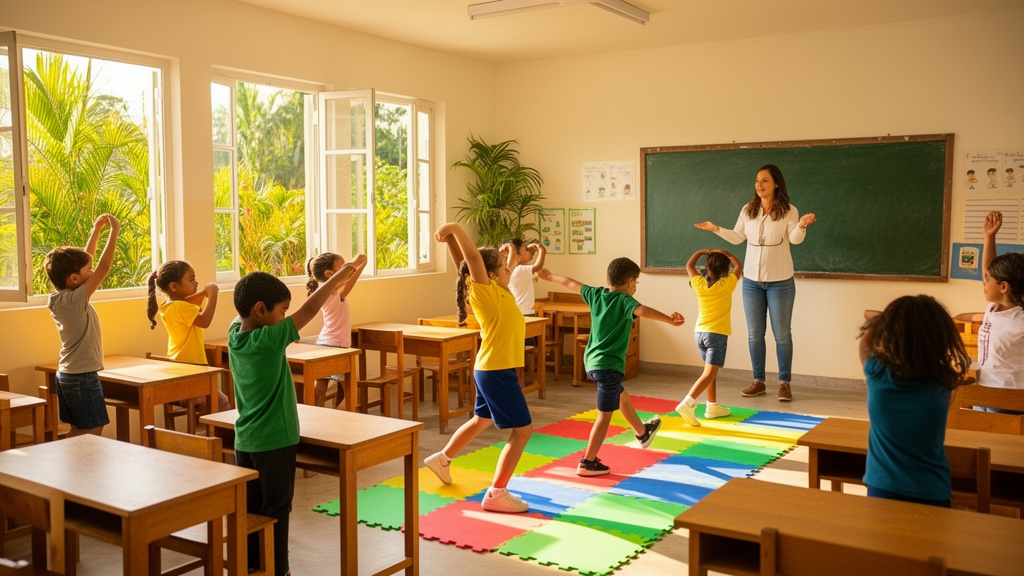
Six public schools are assigned to three conditions: two schools will use physically active lessons, two will use physically active breaks and two will serve as controls. First-grade students will be followed from 2022 through 2026. Classroom teachers will deliver the interventions twice each week. Physically active lessons will incorporate movement into school content through teaching methods that involve movement. Physically active breaks will not be tied to academic content and will consist of exercises averaging five minutes, with the stated aim of interrupting sedentary behavior and promoting moderate-to-vigorous movement.
The primary outcomes are cognitive development, measured through computerized tests assessing executive functions, and academic performance, assessed through teachers’ grades and national and state examinations. Secondary outcomes include anthropometry, physical activity level, sedentary behavior, eating habits, sleepiness, quality of life and students’ perception of school. The cluster-randomized design compares interventions delivered across schools rather than evaluating individual students in isolation. The trial was retrospectively registered in the Brazilian Clinical Trials Registry on January 9, 2025, under identifier RBR-10zxwdrh.
The protocol’s stated aim is to provide information about the potential longer-term effects of classroom physical activity strategies, particularly in a setting outside high-income countries. However, the available abstract presents planned methods and expected information rather than completed efficacy results. It does not provide the number of participating students, numerical estimates of intervention effects, or outcome data for any study group. The evidence therefore supports describing the trial’s population, assignments, interventions, follow-up period and measurement plans, but not claiming cognitive, academic, health or educational benefits from physically active lessons or breaks.
Subject of Research: Protocol for a cluster-randomized trial of classroom physical activity interventions in first-grade students in Aracaju, Brazil
Article Title: Effects of physically active lessons and physically active breaks on cognitive development and academic performance of schoolchildren: protocol for a cluster randomized clinical trial
Article References: Gandarela, L., Melo, J. C. N., Oliveira, D. N., Ywgne, J., Tejada, J., & Silva, D. R. (2026). Effects of physically active lessons and physically active breaks on cognitive development and academic performance of schoolchildren: protocol for a cluster randomized clinical trial. BMC Pediatrics. https://doi.org/10.1186/s12887-026-07638-0
Image Credits: AI Generated
DOI: 10.1186/s12887-026-07638-0
Keywords: cluster-randomized trial, study protocol, schoolchildren, physically active lessons, active breaks, cognitive development, academic performance, Aracaju, Brazil, public schools, Effects, physically
News Source: Ophelia Keating. (October 20, 2026). Protocol for five-year cluster-randomized trial of active lessons and breaks among Aracaju schoolchildren. Scienmag.