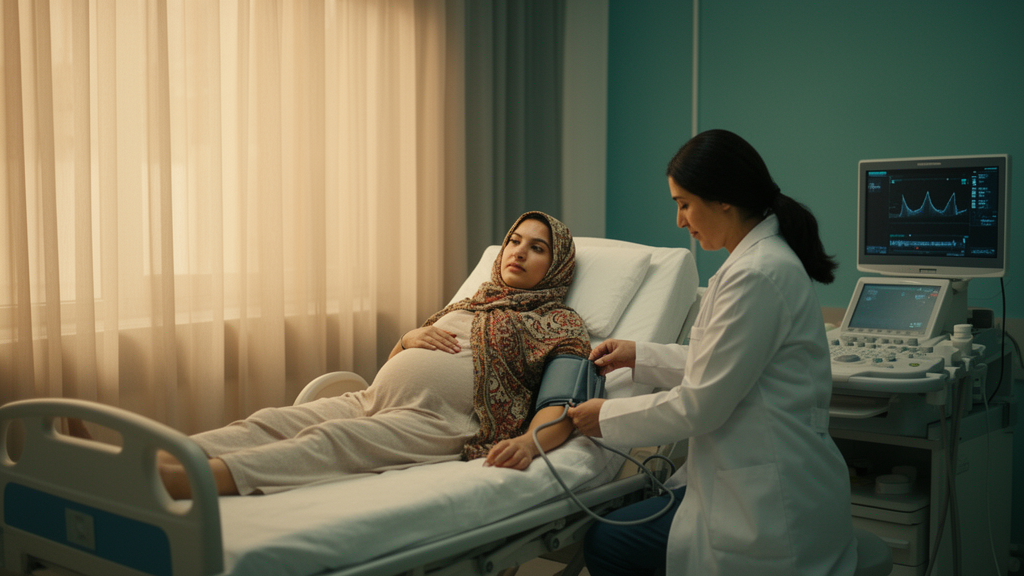
A retrospective, multi-center registry study identified 1,276 maternal near-miss cases among 411,287 live births across the hospital network affiliated with Mashhad University of Medical Sciences in northeastern Iran between 2020 and 2024. The overall maternal near-miss ratio was 3.10 per 1,000 live births, and annual case counts fluctuated rather than rising consistently, reaching their highest reported level in 2024 with 427 cases. Poisson regression estimated a borderline upward trend in the annual ratio, but the estimate was not statistically significant at the conventional 0.05 threshold (incidence rate ratio, 1.20; 95% confidence interval, 0.99–1.45; P = 0.064).
The descriptive-analytical analysis, summarized in the study abstract, drew cases from the network’s maternal morbidity surveillance system. Investigators examined trends in maternal near-miss ratios, primary causes, maternal age and monthly distributions using chi-square tests and Poisson regression. Obstetric hemorrhage was the most frequently recorded cause, accounting for 438 cases, or 34.4% of the total. Hypertensive disorders were responsible for 271 cases (21.3%), while underlying medical diseases accounted for 238 cases (18.7%). The relationship between year and primary cause was statistically significant in the analysis (χ² = 149.47; P < 0.001), although an association with calendar year does not by itself establish why the recorded causes changed.
COVID-19-related maternal near-miss cases peaked at 76 in 2021 and subsequently declined in the registry data. Women aged 19–35 accounted for 63.6% of near-miss events across the five-year period. The abstract also described women aged 36 or older as the fastest-growing subgroup and reported that this group represented 33.9% of cases, though it did not provide the corresponding subgroup-specific trend estimate or uncertainty in the supplied text. Monthly counts were highest in Aban, corresponding to October–November, with 146 cases, and Azar, corresponding to November–December, with 132 cases. The authors cautioned that this descriptive concentration should not be interpreted as proof of a recurring seasonal pattern.
The findings are limited by the retrospective registry design and the concentration of the analysis within one affiliated hospital network. The reported borderline increase in annual ratios fell short of statistical significance, and the monthly pattern was descriptive rather than a formal demonstration of seasonality. The available abstract also does not present information about potential underreporting, changes in case ascertainment, maternal deaths, or the extent to which the findings apply to hospitals outside the network. Accordingly, the study characterizes recorded maternal near-miss patterns from 2020 through 2024 and their associated clinical causes; it does not establish causation or support claims that maternal morbidity increased throughout the entire period.
Subject of Research: Retrospective registry analysis of maternal near-miss trends and causes in northeastern Iran, 2020–2024
Article Title: Five-year trends in maternal near-miss and its causes in Northeastern Iran: a retrospective multi-center registry-based study
Article References: Abdollahpour, S., Khadivzadeh, T., Sahebi, M., & Hassanabad, R. T. (2026). Five-year trends in maternal near-miss and its causes in Northeastern Iran: a retrospective multi-center registry-based study. BMC Public Health. https://doi.org/10.1186/s12889-026-29865-x
Image Credits: AI Generated
DOI: 10.1186/s12889-026-29865-x
Keywords: maternal near-miss, maternal morbidity, obstetric hemorrhage, hypertensive disorders, pregnancy complications, COVID-19, maternal age, Iran, retrospective registry, Poisson regression, Five-year, trends
News Source: Harold Sullivan. (October 20, 2026). Registry study finds fluctuating maternal near-miss cases in northeastern Iran from 2020 to 2024. Scienmag.