• HOME
  • NEWS
  • EXPLORE
    • CAREER
      • Companies
      • Jobs
    • EVENTS
    • iGEM
      • News
      • Team
    • PHOTOS
    • VIDEO
    • WIKI
  • BLOG
  • COMMUNITY
    • FACEBOOK
    • INSTAGRAM
    • TWITTER
Saturday, February 7, 2026
BIOENGINEER.ORG
No Result
View All Result
  • Login
  • HOME
  • NEWS
  • EXPLORE
    • CAREER
      • Companies
      • Jobs
        • Lecturer
        • PhD Studentship
        • Postdoc
        • Research Assistant
    • EVENTS
    • iGEM
      • News
      • Team
    • PHOTOS
    • VIDEO
    • WIKI
  • BLOG
  • COMMUNITY
    • FACEBOOK
    • INSTAGRAM
    • TWITTER
  • HOME
  • NEWS
  • EXPLORE
    • CAREER
      • Companies
      • Jobs
        • Lecturer
        • PhD Studentship
        • Postdoc
        • Research Assistant
    • EVENTS
    • iGEM
      • News
      • Team
    • PHOTOS
    • VIDEO
    • WIKI
  • BLOG
  • COMMUNITY
    • FACEBOOK
    • INSTAGRAM
    • TWITTER
No Result
View All Result
Bioengineer.org
No Result
View All Result
Home NEWS Science News Biology

Study identifies new metabolic target in quest to control immune response

Bioengineer by Bioengineer
September 5, 2017
in Biology
Reading Time: 2 mins read
0
Share on FacebookShare on TwitterShare on LinkedinShare on RedditShare on Telegram
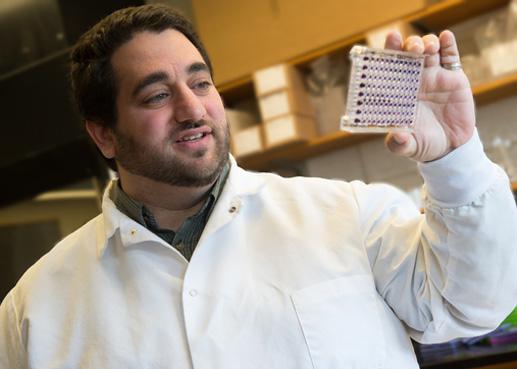
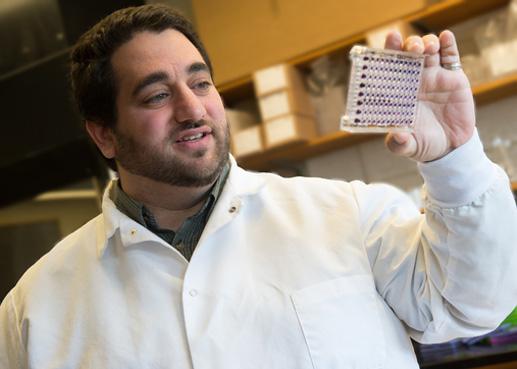
IMAGE

Credit: Sally McCay

A surprising discovery that immune cells possess an internal warehouse of glycogen used to activate immune responses could help to increase immune activity in vaccines or suppress immune reactions in autoimmune disease or hyper-inflammatory conditions.

Results of the new study in the journal Cell Metabolism show that the immune responses of dendritic cells are fueled by an intracellular storage of sugar as opposed to external sugar, where prior research has focused.

The novel finding adds an important missing piece to the puzzle of how early immune responses are powered from a metabolic standpoint, and provides immunologists with a new area of focus in their ongoing effort to regulate immune activity.

"By either enhancing or depleting this sugar warehouse within the cell, the hope would be that we could either influence or dampen immune reactions," says study author Eyal Amiel, assistant professor at the University of Vermont in the Department of Medical Laboratory and Radiation Science in the College of Nursing and Health Sciences. "What we're really in the business of is finding new switches to toggle to that effect and this finding provides us with a new regulatory target that regulates immune activity."

The finding gives immunologists a key piece of new information to better understand how the early part of the bioenergetics of a dendritic cell immune response is generated. This is especially significant given the importance of timing when it comes to immune response and the speed at which the switch of inflammation can be either increased or suppressed.

"What's surprising is that the intracellular sugar pool is the more important one early on," says Amiel, who co-authored the paper with Phyu Thwe, a Ph.D. student in Amiel's lab, and three external researchers. "The reason that is so important is because in any kind of immune protection scenario it is absolutely a race against time between the microbe and mammalian immune response."

When Amiel and his colleagues impaired the ability of dendritic cells to access the internal warehouse of sugar, the cells were less effective at stimulating an immune response in a number of measurable ways. "The really exciting thing is we believe our findings likely extend to other cells of the immune system and are not dendritic cell-specific" says Amiel.

In a previous paper in Nature Immunology, Amiel and lead author Bart Everts, assistant professor at the Leiden University Medical center in the Netherlands, found that the early consumption of glucose is vital to the activation of cells, in terms of the production and secretion of proteins that are essential to the cells' immune function.

Amiel has started conducting new research on mice only with deficiencies in glycogen synthesis only in dendritic cells to measure the impact of blocking the creation of the intracellular glycogen supply on the longer-term immunological capacity of those cells.

"We know that if we prevent their ability to use glycogen during that early window there are long-term consequences for the abilities of those dendritic cells to stimulate T-Cells, even hours and days after the fact."

###

Media Contact

Jon Reidel
[email protected]
802-578-0447
@uvmvermont

http://www.uvm.edu

Share12Tweet7Share2ShareShareShare1

Related Posts

Florida Cane Toad: Complex Spread and Selective Evolution

Florida Cane Toad: Complex Spread and Selective Evolution

February 7, 2026
New Study Uncovers Mechanism Behind Burn Pit Particulate Matter–Induced Lung Inflammation

New Study Uncovers Mechanism Behind Burn Pit Particulate Matter–Induced Lung Inflammation

February 6, 2026

DeepBlastoid: Advancing Automated and Efficient Evaluation of Human Blastoids with Deep Learning

February 6, 2026

Navigating the Gut: The Role of Formic Acid in the Microbiome

February 6, 2026
Please login to join discussion

POPULAR NEWS

  • Robotic Ureteral Reconstruction: A Novel Approach

    Robotic Ureteral Reconstruction: A Novel Approach

    82 shares
    Share 33 Tweet 21
  • Digital Privacy: Health Data Control in Incarceration

    63 shares
    Share 25 Tweet 16
  • Study Reveals Lipid Accumulation in ME/CFS Cells

    57 shares
    Share 23 Tweet 14
  • Breakthrough in RNA Research Accelerates Medical Innovations Timeline

    53 shares
    Share 21 Tweet 13

About

We bring you the latest biotechnology news from best research centers and universities around the world. Check our website.

Follow us

Recent News

Evaluating Pediatric Emergency Care Quality in Ethiopia

TPMT Expression Predictions Linked to Azathioprine Side Effects

Improving Dementia Care with Enhanced Activity Kits

Subscribe to Blog via Email

Success! An email was just sent to confirm your subscription. Please find the email now and click 'Confirm' to start subscribing.

Join 73 other subscribers
  • Contact Us

Bioengineer.org © Copyright 2023 All Rights Reserved.

Welcome Back!

Login to your account below

Forgotten Password?

Retrieve your password

Please enter your username or email address to reset your password.

Log In
No Result
View All Result
  • Homepages
    • Home Page 1
    • Home Page 2
  • News
  • National
  • Business
  • Health
  • Lifestyle
  • Science

Bioengineer.org © Copyright 2023 All Rights Reserved.