• HOME
  • NEWS
  • EXPLORE
    • CAREER
      • Companies
      • Jobs
    • EVENTS
    • iGEM
      • News
      • Team
    • PHOTOS
    • VIDEO
    • WIKI
  • BLOG
  • COMMUNITY
    • FACEBOOK
    • INSTAGRAM
    • TWITTER
Saturday, February 7, 2026
BIOENGINEER.ORG
No Result
View All Result
  • Login
  • HOME
  • NEWS
  • EXPLORE
    • CAREER
      • Companies
      • Jobs
        • Lecturer
        • PhD Studentship
        • Postdoc
        • Research Assistant
    • EVENTS
    • iGEM
      • News
      • Team
    • PHOTOS
    • VIDEO
    • WIKI
  • BLOG
  • COMMUNITY
    • FACEBOOK
    • INSTAGRAM
    • TWITTER
  • HOME
  • NEWS
  • EXPLORE
    • CAREER
      • Companies
      • Jobs
        • Lecturer
        • PhD Studentship
        • Postdoc
        • Research Assistant
    • EVENTS
    • iGEM
      • News
      • Team
    • PHOTOS
    • VIDEO
    • WIKI
  • BLOG
  • COMMUNITY
    • FACEBOOK
    • INSTAGRAM
    • TWITTER
No Result
View All Result
Bioengineer.org
No Result
View All Result
Home NEWS Science News Biology

Improving US melon crop focus of $4.4 million study at Texas A&M AgriLife Research

Bioengineer by Bioengineer
September 5, 2017
in Biology
Reading Time: 2 mins read
0
Share on FacebookShare on TwitterShare on LinkedinShare on RedditShare on Telegram
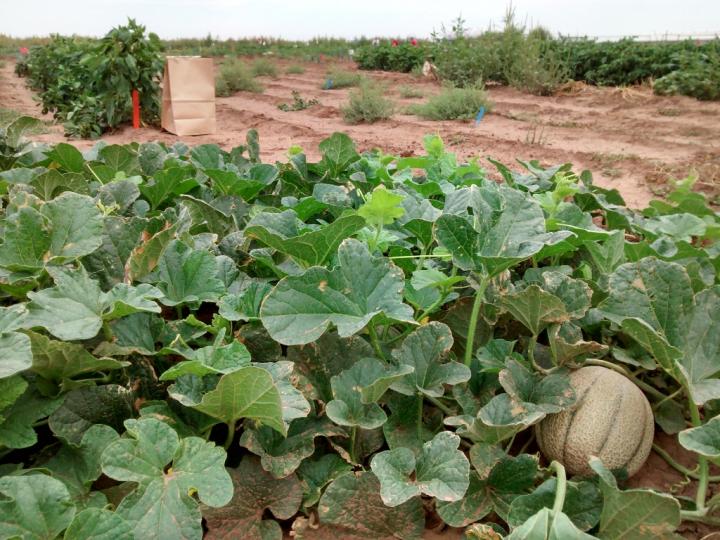
IMAGE

Credit: (Texas A&M AgriLife Research photo)

COLLEGE STATION — More than $4.4 million is being funded to discover ways to improve the U.S. melon industry through a grant to scientists with Texas A&M AgriLife Research and in seven other states.

The monies, provided by the U.S. Department of Agriculture's National Institute of Food and Agriculture, were part of $35 million given to 12 projects to find "science-based solutions and new technology for the specialty crop industry."

The four-year project, "A Sustainable, Systems-based Approach for a Safer and Healthier Melon Supply Chain in the U.S.," will be led by Dr. Bhimu Patil, director of AgriLife Research's Vegetable and Fruit Improvement Center in College Station. It is believed to be the largest grant ever awarded within the Texas A&M University horticultural sciences department, where Patil is also a professor.

In announcing the funding, USDA-NIFA director, Dr. Sonny Ramaswamy, said, "NIFA investments in specialty crop research provide high-tech solutions to the needs of farmers and processors. They foster a competitive U.S. industry that offers abundant, nutritious, safe, and affordable food sources."

He said that is why the AgriLife Research effort to enhance the sustainability and profitability of melon production in the U.S., emphasizing consumer preferences and industry-driven needs, was awarded.

Patil said that since 1990, cantaloupes have been associated with 36 U.S. foodborne disease outbreaks and pathogen-based recalls predominantly linked to salmonella.

The research will focus on cantaloupe and honeydew, Patil said, because the surface area of these fruits are such that they are harder to wash and thus pathogens can accumulate on the outside and contaminate the flesh when cut.

But cantaloupes also have a lot of healthy aspects for consumers and a lot of resistance to disease while growing in fields, he said.

"We are interested in developing varieties based on consumer needs," he said. "And we have more than 20 scientists in seven states collaborating to make this happen."

Patil and the team will conduct consumer evaluations and conduct sensory panels to consider what is desired in the fruit. They also will work with growers and grocery store chains to initiate and continue dialogue about what is desired in developing new, healthier varieties.

"The long-term goal of this multidisciplinary project is to enhance the sustainability and profitability of melon production in the U.S., emphasizing consumer preferences and industry-driven needs," Patil added. "It will be advantageous for both groups."

###

Media Contact

Kathleen Phillips
[email protected]
979-845-2872
@texasagwriter

http://today.agrilife.org
Share12Tweet8Share2ShareShareShare2

Related Posts

Florida Cane Toad: Complex Spread and Selective Evolution

Florida Cane Toad: Complex Spread and Selective Evolution

February 7, 2026
New Study Uncovers Mechanism Behind Burn Pit Particulate Matter–Induced Lung Inflammation

New Study Uncovers Mechanism Behind Burn Pit Particulate Matter–Induced Lung Inflammation

February 6, 2026

DeepBlastoid: Advancing Automated and Efficient Evaluation of Human Blastoids with Deep Learning

February 6, 2026

Navigating the Gut: The Role of Formic Acid in the Microbiome

February 6, 2026
Please login to join discussion

POPULAR NEWS

  • Robotic Ureteral Reconstruction: A Novel Approach

    Robotic Ureteral Reconstruction: A Novel Approach

    82 shares
    Share 33 Tweet 21
  • Digital Privacy: Health Data Control in Incarceration

    63 shares
    Share 25 Tweet 16
  • Study Reveals Lipid Accumulation in ME/CFS Cells

    57 shares
    Share 23 Tweet 14
  • Breakthrough in RNA Research Accelerates Medical Innovations Timeline

    53 shares
    Share 21 Tweet 13

About

We bring you the latest biotechnology news from best research centers and universities around the world. Check our website.

Follow us

Recent News

Evaluating Pediatric Emergency Care Quality in Ethiopia

TPMT Expression Predictions Linked to Azathioprine Side Effects

Improving Dementia Care with Enhanced Activity Kits

Subscribe to Blog via Email

Success! An email was just sent to confirm your subscription. Please find the email now and click 'Confirm' to start subscribing.

Join 73 other subscribers
  • Contact Us

Bioengineer.org © Copyright 2023 All Rights Reserved.

Welcome Back!

Login to your account below

Forgotten Password?

Retrieve your password

Please enter your username or email address to reset your password.

Log In
No Result
View All Result
  • Homepages
    • Home Page 1
    • Home Page 2
  • News
  • National
  • Business
  • Health
  • Lifestyle
  • Science

Bioengineer.org © Copyright 2023 All Rights Reserved.