• HOME
  • NEWS
  • EXPLORE
    • CAREER
      • Companies
      • Jobs
    • EVENTS
    • iGEM
      • News
      • Team
    • PHOTOS
    • VIDEO
    • WIKI
  • BLOG
  • COMMUNITY
    • FACEBOOK
    • INSTAGRAM
    • TWITTER
Tuesday, October 20, 2026
BIOENGINEER.ORG
No Result
View All Result
  • Login
  • HOME
  • NEWS
  • EXPLORE
    • CAREER
      • Companies
      • Jobs
        • Lecturer
        • PhD Studentship
        • Postdoc
        • Research Assistant
    • EVENTS
    • iGEM
      • News
      • Team
    • PHOTOS
    • VIDEO
    • WIKI
  • BLOG
  • COMMUNITY
    • FACEBOOK
    • INSTAGRAM
    • TWITTER
No Result
View All Result
Bioengineer.org
No Result
View All Result
Home NEWS Science News Health

Novel HEP-FIB score combined with machine learning models for non-invasive prediction of significant hepatic fibrosis in chronic hepatitis B patients: a single-center, internally validated study

by
October 20, 2026
in Health
Reading Time: 2 mins read
0
Novel HEP-FIB score combined with machine learning models for non-invasive prediction of significant hepatic fibrosis in chronic hepatitis B patients: a single-center, internally validated study

New HEP-FIB Score and Machine Learning Predict Liver Fibrosis in Hepatitis B Without Biopsy

Share on FacebookShare on TwitterShare on LinkedinShare on RedditShare on Telegram

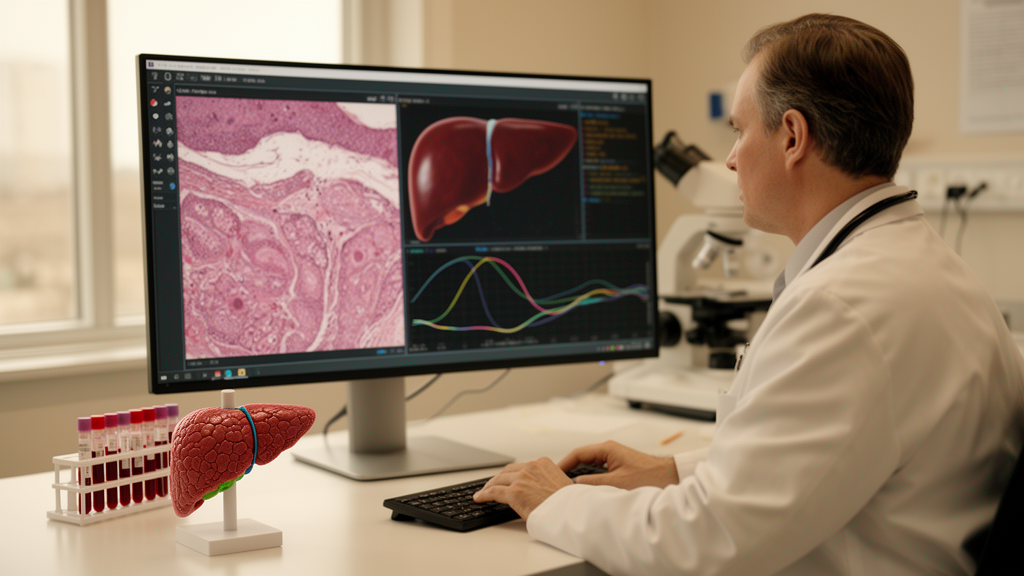
In a retrospective, single-center study of 382 patients with chronic hepatitis B, a newly developed HEP-FIB score showed strong performance for identifying significant hepatic fibrosis, while an XGBoost model achieved the best predictive performance among 10 machine-learning approaches evaluated. HEP-FIB produced an area under the receiver operating characteristic curve of 0.892 (95% CI, 0.859–0.925), and the machine-learning model achieved an AUC of 0.914 (95% CI, 0.857–0.971) in the validation dataset. The study authors said external validation is required before the score can be recommended for routine clinical use.

Researchers used least absolute shrinkage and selection operator regression followed by multivariable logistic regression to identify independent predictors of fibrosis. They then developed HEP-FIB from routinely available laboratory parameters, including platelet count, liver-function measures and lipid biomarkers. The score’s diagnostic performance was assessed with ROC-curve analysis, bootstrap internal validation and calibration analysis, and was compared with established non-invasive indices: APRI, FIB-4 and GPR. Ten machine-learning algorithms were also constructed and evaluated using measures of discrimination, classification performance, calibration and overall predictive ability. Decision curve analysis was used separately for HEP-FIB and the machine-learning models to examine clinical utility.

At an optimal HEP-FIB cutoff of 4 or higher, the score had a sensitivity of 78%, specificity of 89% and overall accuracy of 88%. Its AUC was higher than those for APRI, FIB-4 and GPR, which were 0.724, 0.654 and 0.773, respectively; all three comparisons had p values below 0.001 by the DeLong test. Bootstrap validation produced an optimism-corrected AUC of 0.881. Calibration analysis indicated good agreement between predicted and observed fibrosis probabilities, while decision curve analysis favored HEP-FIB over the default strategies assessed.

XGBoost performed best among the machine-learning approaches in the validation dataset, with an AUC of 0.914, accuracy of 0.88, sensitivity of 0.72, specificity of 0.93, balanced accuracy of 0.83 and Matthews correlation coefficient of 0.74. Its Brier score was 0.095, and the reported false-positive and false-negative rates were 0.062 and 0.275, respectively. The machine-learning models showed a marginal performance advantage over HEP-FIB and greater net clinical benefit than test-all and test-none strategies in decision curve analysis. These findings come from a retrospective cohort at one center and were supported only by internal bootstrap validation. The study did not establish performance in independent or diverse populations, so the results do not yet establish routine clinical use or replacement of existing fibrosis-assessment methods.

Subject of Research: Internal validation of HEP-FIB and machine-learning models for non-invasive prediction of significant hepatic fibrosis in chronic hepatitis B

Article Title: Novel HEP-FIB score combined with machine learning models for non-invasive prediction of significant hepatic fibrosis in chronic hepatitis B patients: a single-center, internally validated study

Article References: Bashir, A., Arora, R., Mehrotra, D., Bala, M., Parry, A. H., & Iqball, A. (2026). Novel HEP-FIB score combined with machine learning models for non-invasive prediction of significant hepatic fibrosis in chronic hepatitis B patients: a single-center, internally validated study. BMC Infectious Diseases. https://doi.org/10.1186/s12879-026-14508-8

Image Credits: AI Generated

DOI: 10.1186/s12879-026-14508-8

Keywords: chronic hepatitis B, hepatic fibrosis, HEP-FIB, machine learning, XGBoost, non-invasive testing, diagnostic accuracy, internal validation, clinical utility, Novel, score, combined

News Source: Kristina Jarvis. (October 20, 2026). Novel HEP-FIB score combined with machine learning models for non-invasive prediction of significant hepatic fibrosis in chronic hepatitis B patients: a single-center, internally validated study. Scienmag.


Tags: chronic hepatitis Bclinical utilitycombineddiagnostic accuracyHEP-FIBhepatic fibrosisinternal validationMachine LearningNon-invasive TestingnovelscoreXGBoost
Share12Tweet7Share2ShareShareShare1

Related Posts

Retrospective study finds heterogeneity in recorded postoperative symptoms across assessors

Retrospective study finds heterogeneity in recorded postoperative symptoms across assessors

October 20, 2026
Virtual Wards for Acute Care Patients: A Scoping Review

Virtual Wards for Acute Care Patients: A Scoping Review

October 20, 2026

Markov model estimates $1.2 billion 2023 NAFLD burden in Sri Lanka including diabetes

October 20, 2026

Eight-week telenursing trial reports improved caregiver outcomes in a small Egyptian sample

October 20, 2026

POPULAR NEWS

  • Retrospective study finds heterogeneity in recorded postoperative symptoms across assessors

    Retrospective study finds heterogeneity in recorded postoperative symptoms across assessors

    29 shares
    Share 12 Tweet 7
  • Novel HEP-FIB score combined with machine learning models for non-invasive prediction of significant hepatic fibrosis in chronic hepatitis B patients: a single-center, internally validated study

    29 shares
    Share 12 Tweet 7
  • Review maps nanofiltration strategies for separating magnesium and lithium from brines

    29 shares
    Share 12 Tweet 7
  • Virtual Wards for Acute Care Patients: A Scoping Review

    29 shares
    Share 12 Tweet 7

About

We bring you the latest biotechnology news from best research centers and universities around the world. Check our website.

Follow us

Recent News

Retrospective study finds heterogeneity in recorded postoperative symptoms across assessors

Novel HEP-FIB score combined with machine learning models for non-invasive prediction of significant hepatic fibrosis in chronic hepatitis B patients: a single-center, internally validated study

Review maps nanofiltration strategies for separating magnesium and lithium from brines

Subscribe to Blog via Email

Enter your email address to subscribe to this blog and receive notifications of new posts by email.

Join 85 other subscribers
  • Contact Us

Bioengineer.org © Copyright 2023 All Rights Reserved.

Welcome Back!

Login to your account below

Forgotten Password?

Retrieve your password

Please enter your username or email address to reset your password.

Log In
No Result
View All Result
  • Homepages
    • Home Page 1
    • Home Page 2
  • News
  • National
  • Business
  • Health
  • Lifestyle
  • Science

Bioengineer.org © Copyright 2023 All Rights Reserved.