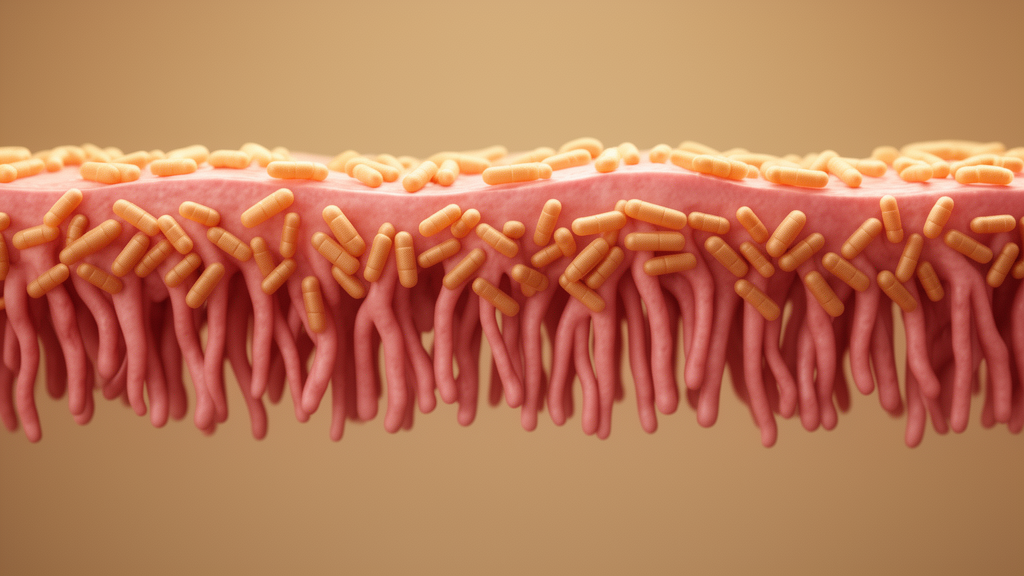
A randomized experiment in 32 male Wistar albino rats found that oral Bacillus clausii partially attenuated intestinal injury induced by cyclophosphamide, according to the study’s published abstract. Cyclophosphamide impaired body-weight gain, changed stool consistency, reduced leukocyte and lymphocyte counts, and damaged the intestinal mucosa. Rats receiving B. clausii after cyclophosphamide showed improved stool consistency, partial recovery of leukocyte parameters, better-preserved mucosal architecture, and less inflammatory infiltration and fibrosis than animals given cyclophosphamide with saline.
The researchers assigned the rats to four groups: a control group, a cyclophosphamide-plus-saline group, a saline-plus-B. clausii group, and a cyclophosphamide-plus-B. clausii group. Immunosuppression and intestinal mucositis were induced through intraperitoneal administration of cyclophosphamide, followed by oral B. clausii treatment. The abstract reports that clinical findings, hematological measurements, intestinal histopathology, histomorphometry, cytokine levels, and miR-146a expression were evaluated.
Cyclophosphamide alone was associated with villus shortening, epithelial disruption, inflammatory infiltration, fibrosis, and depletion of goblet cells. Compared with controls, rats receiving cyclophosphamide alone had 10.58% shorter villi and 44.20% fewer goblet cells, with both differences reported as P < 0.001. In the cyclophosphamide-plus-B. clausii group, villus length increased by 17.81% and goblet-cell count by 66.34% relative to the cyclophosphamide-plus-saline group, also with P < 0.001 for both comparisons. B. clausii treatment attenuated the cyclophosphamide-associated increases in the pro-inflammatory cytokines TNF-α and IL-6.
The findings support a partial protective effect within this rat model, rather than evidence of a clinical benefit in people receiving chemotherapy. miR-146a expression remained reduced in both cyclophosphamide-treated groups, and the abstract states that the mechanisms behind the observed protective effects remain unclear. The authors also identify effects on miR-146a, the intestinal microbiota, inflammatory pathways, and intestinal barrier function as subjects for further research. Because the experiment involved 32 male rats and assessed an intervention after experimentally induced injury, it cannot establish efficacy, dosing, safety, or benefit in human patients. The available evidence therefore supports continued mechanistic and clinical investigation, but not clinical recommendations.
Subject of Research: Effects of oral Bacillus clausii on cyclophosphamide-induced intestinal injury in rats
Article Title: Protective effects of Bacillus clausii in cyclophosphamide-induced immunosuppression and intestinal mucositis in rats: histopathological and inflammatory evaluation
Article References: Ekinci, G., Daldaban, F., Tüfekçi, E., Yıldız, G., Balcıoğlu, E., Akyüz, B., Güneş, V., & Arslan, K. (2026). Protective effects of Bacillus clausii in cyclophosphamide-induced immunosuppression and intestinal mucositis in rats: histopathological and inflammatory evaluation. Molecular Biology Reports, 53(1), Article 1588. https://doi.org/10.1007/s11033-026-12773-z
Image Credits: AI Generated
DOI: 10.1007/s11033-026-12773-z
Keywords: Bacillus clausii, cyclophosphamide, intestinal mucositis, immunosuppression, rat experiment, goblet cells, intestinal inflammation, TNF-α, IL-6, miR-146a, Protective, effects
News Source: Drew Townsend. (October 20, 2026). Bacillus clausii partially attenuated intestinal injury in randomized rat experiment. Scienmag.