Credit: Cath Waller
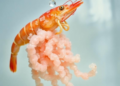
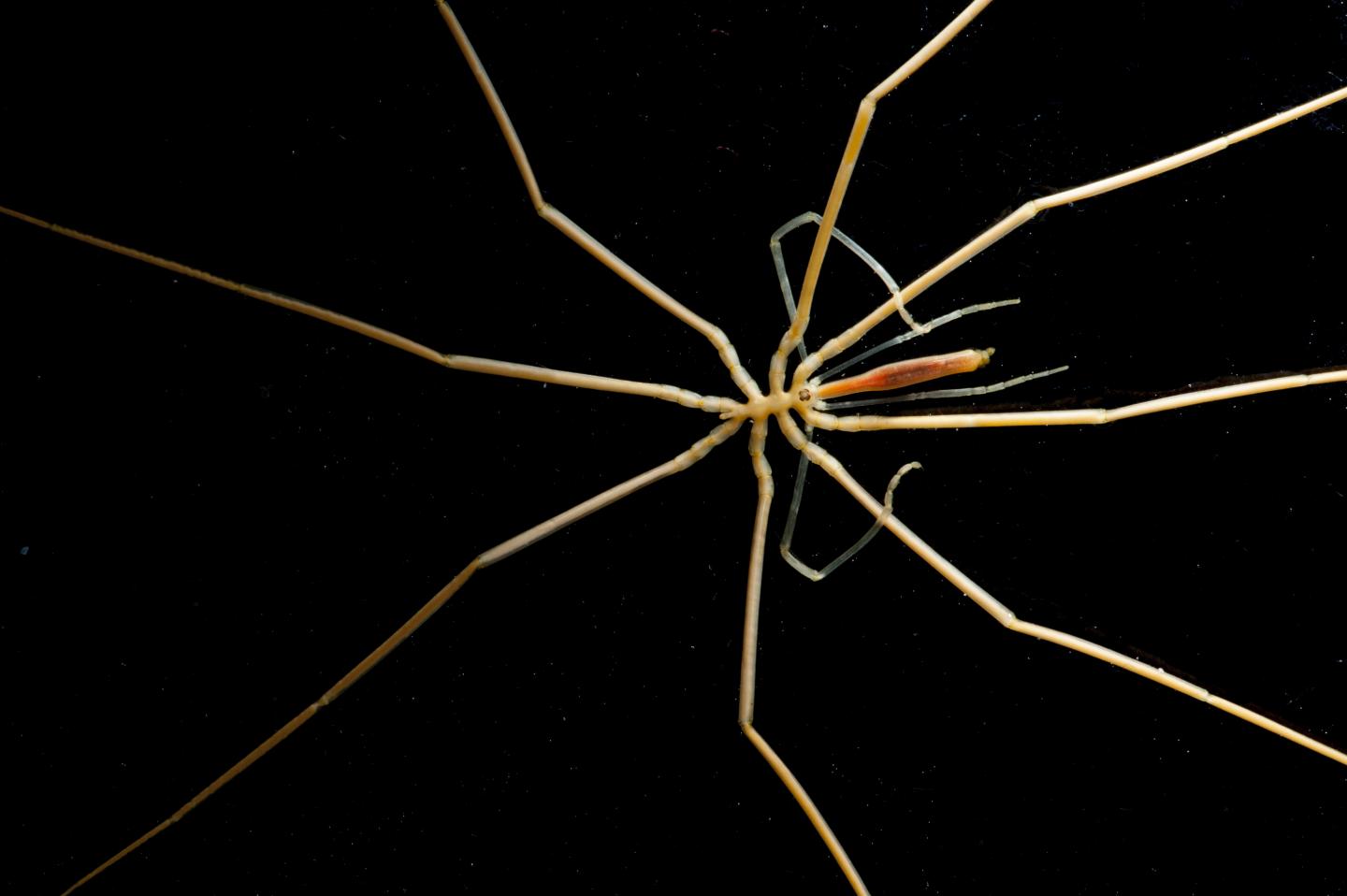
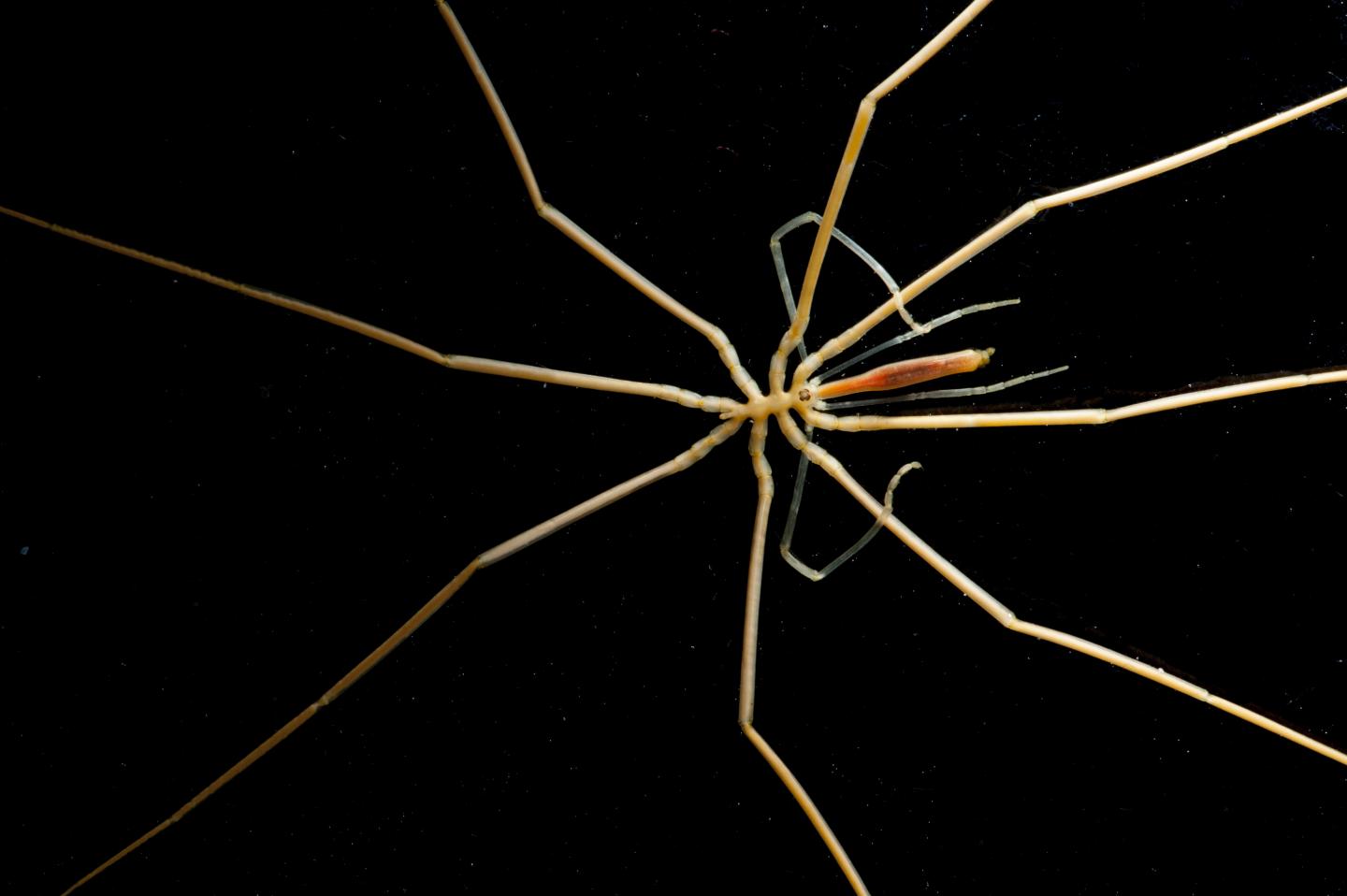
A new study of the marine invertebrates living in the seas around Antarctica reveals there will be more 'losers' than 'winners' over the next century as the Antarctic seafloor warms. The results are published in the journal Nature Climate Change this week (Monday 4 September).
A team at British Antarctic Survey (BAS) examined the potential distribution of over 900 species of shelf-dwelling marine invertebrates under a warming scenario produced by computer models. They conclude that, while some species in some areas will benefit, 79% of the species native to the region will lose out. This has important implications for future resource management in the region.
An average warming of 0.4 of a degree is predicted by 2099, and whilst this warming will not be enough to allow any species from other neighbouring continents to invade or colonise Antarctica, it will cause the unique local species to change their distribution. More animals will lose suitable habitat than will gain it, with those animals especially adapted to the coldest water on Earth (for example in the Weddell and Ross Sea) losing out the most. Areas of the West Antarctic Peninsula may become too warm for many native species.
The seafloor animals of the Southern Ocean shelf have long been isolated by the deep ocean surrounding Antarctica and the Antarctic Circumpolar Current, with little scope for southward migration.
Lead author, Dr Huw Griffiths from BAS says:
"While a few species might thrive at least during the early decades of warming, the future for a whole range of invertebrates from starfish to corals is bleak, and there's nowhere to swim to, nowhere to hide when you're sitting on the bottom of the world's coldest and most southerly ocean and it's getting warmer by the decade."
Dr Andrew Meijers, an oceanographer at BAS says:
"The waters around Antarctica are isolated, deep and very cold but they are not beyond the reach of climate change. Southern Ocean seafloor water temperatures are projected to warm by an average of 0.4 °C over this century with some areas possibly increasing by as much as 2°C. We've shown that the effects of this warming will have dramatic consequences for the future biodiversity of the region."
###
Issued by the Press Office at British Antarctic Survey.
Athena Dinar, Senior Communications Manager, British Antarctic Survey, tel: +44 (0)1223 221441; mobile +44 (0)7909 008516; email: [email protected]
More losers than winners in a century of future Southern Ocean seafloor warming by Huw J. Griffiths, Andrew J.S. Meijers and Thomas J. Bracegirdle is published in Nature Climate Change on Monday 4 September 2017.
Notes to Editors:
Images of marine invertebrates and video of the seafloor are available from the BAS Press Office as above.
Of the 963 seabed species analysed, 577 are likely to experience a reduction in thermally suitable habitat with projected warming. Of these 398 (41% of all species) are expected to experience a range of loss of under 10% of their present-day suitable temperature potential habitat. 18.6% of species are projected to lose between 10-40% of their present-day potential habitat.
This study was a result of the new and ambitious ORCHESTRA programme, funded by NERC. The programme spans five years and use a combination of data collection, analyses, and computer simulations to radically improve our ability to measure, understand and predict the circulation of the Southern Ocean and its role in the global climate. It will make unique and important new measurements in the Southern Ocean using a range of techniques, including use of RRS James Clark Ross and RRS Sir David Attenborough, as well as deployments of autonomous surface and underwater vehicles, the BAS meteorological aircraft, and other innovative techniques for collecting data. It will also involve the development and use of advanced ocean and climate simulations, to improve our ability to predict climatic change in coming decades. More here: https://www.bas.ac.uk/project/orchestra/#about
British Antarctic Survey (BAS), an institute of the Natural Environment Research Council (NERC), delivers and enables world-leading interdisciplinary research in the Polar Regions. Its skilled science and support staff based in Cambridge, Antarctica and the Arctic, work together to deliver research that uses the Polar Regions to advance our understanding of Earth as a sustainable planet. Through its extensive logistic capability and know-how BAS facilitates access for the British and international science community to the UK polar research operation. Numerous national and international collaborations, combined with an excellent infrastructure help sustain a world leading position for the UK in Antarctic affairs. For more information visit http://www.bas.ac.uk
Media Contact
Athena Dinar
[email protected]
44-122-322-1441
@BAS_News
http://www.nerc-bas.ac.uk
Related Journal Article
http://dx.doi.org/10.1038/nclimate3377